
Vote on Projects
Best Custom Home
Sterling Homes
GG130
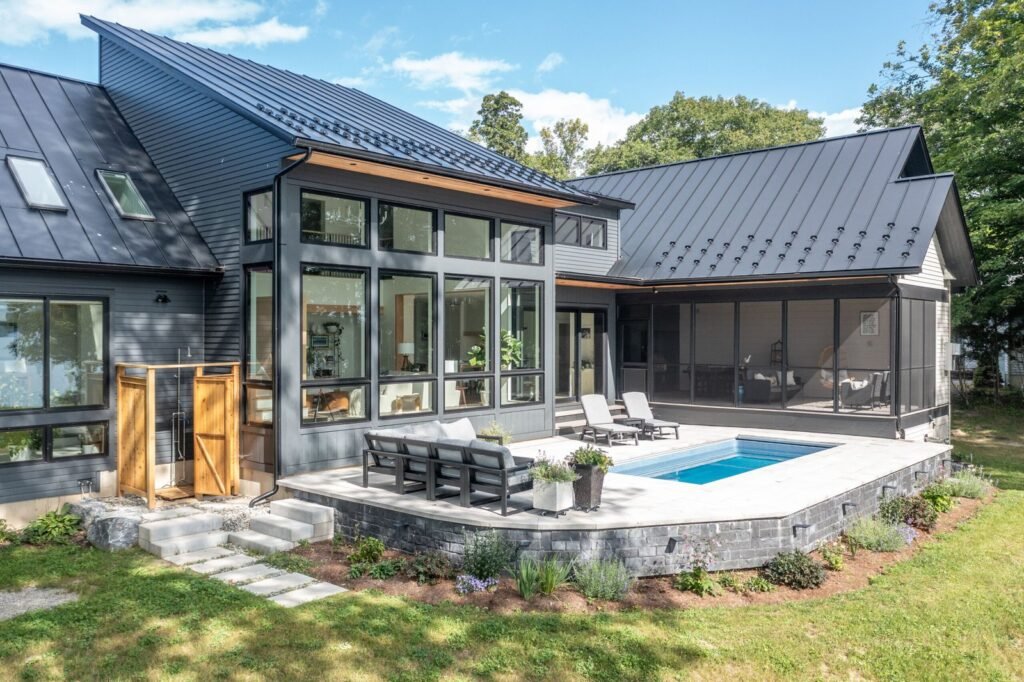
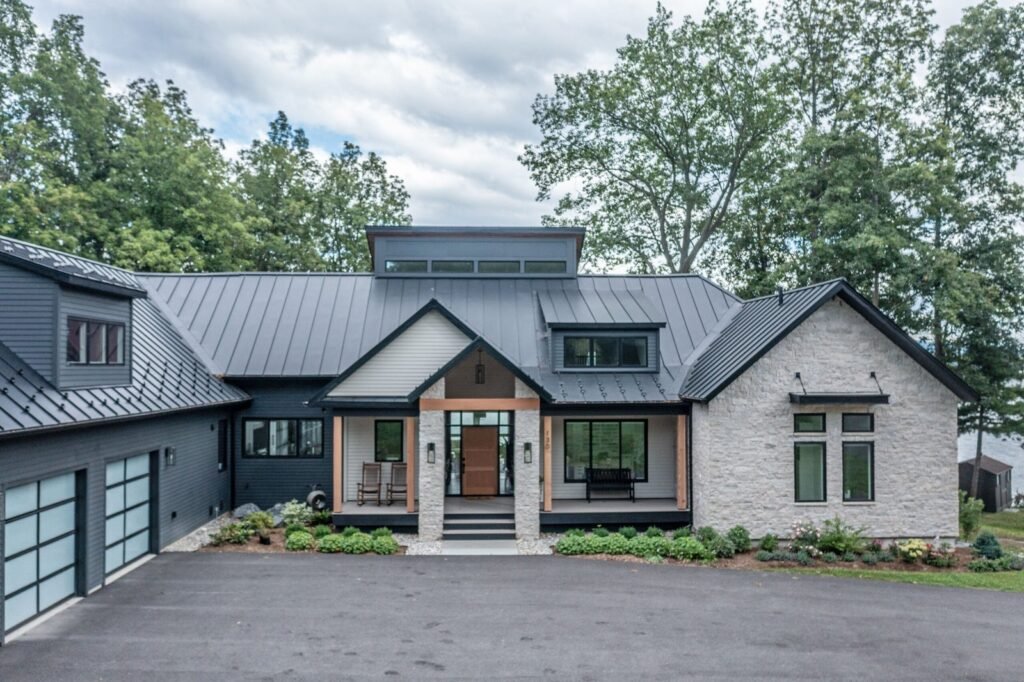
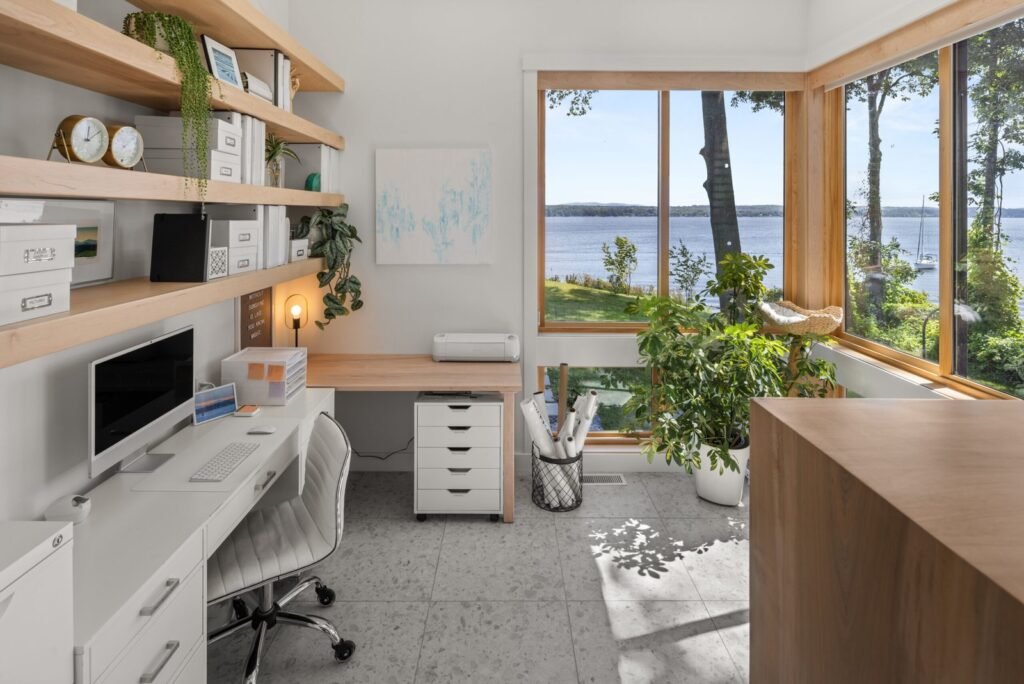
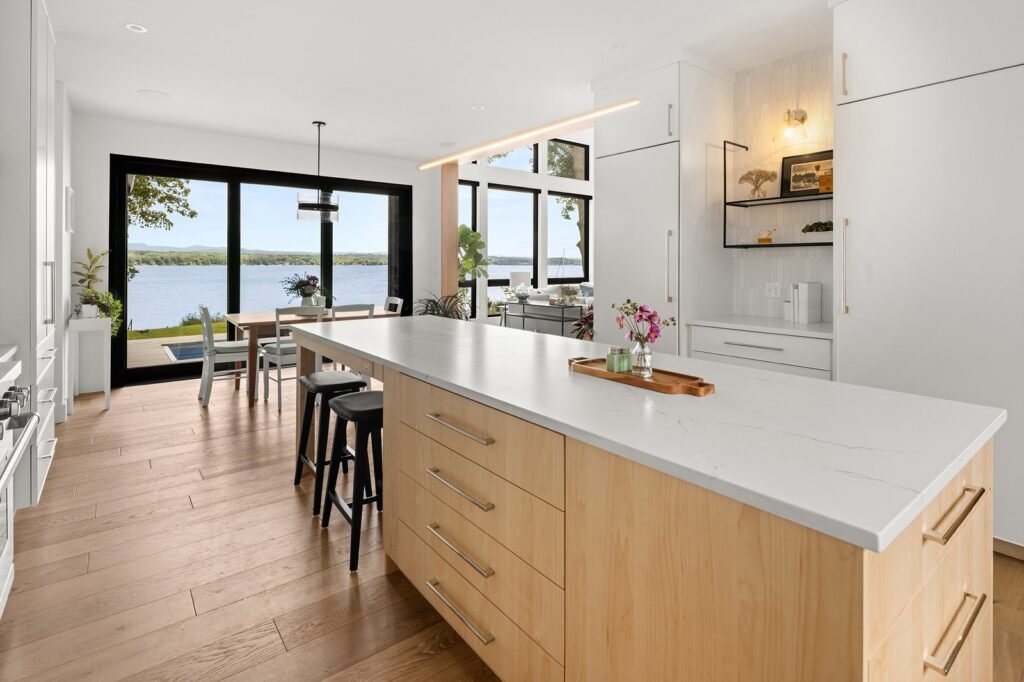
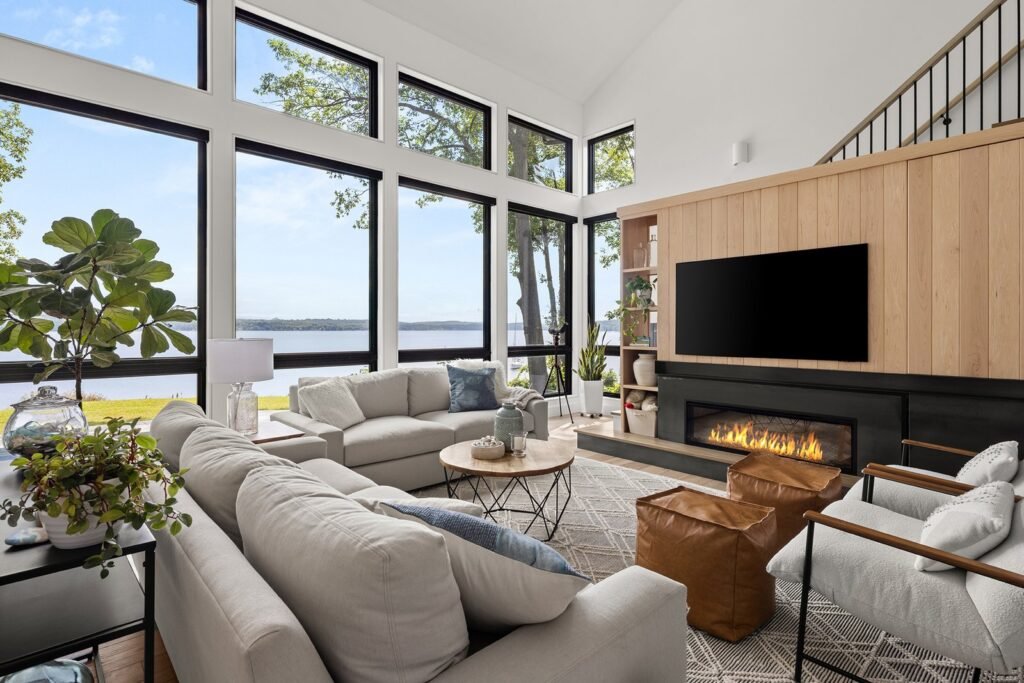
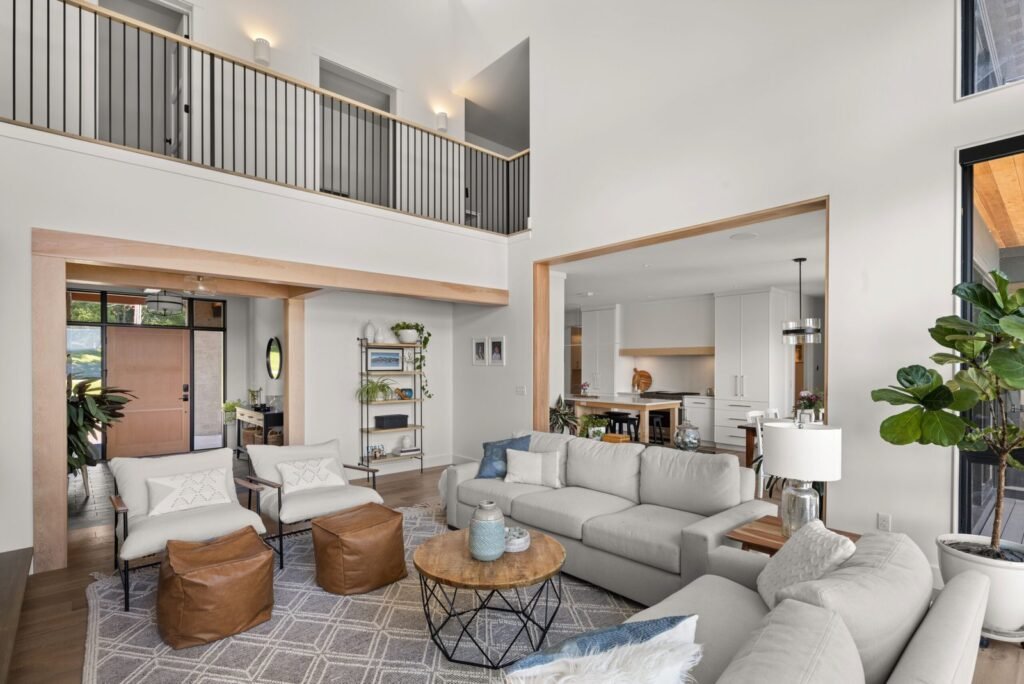
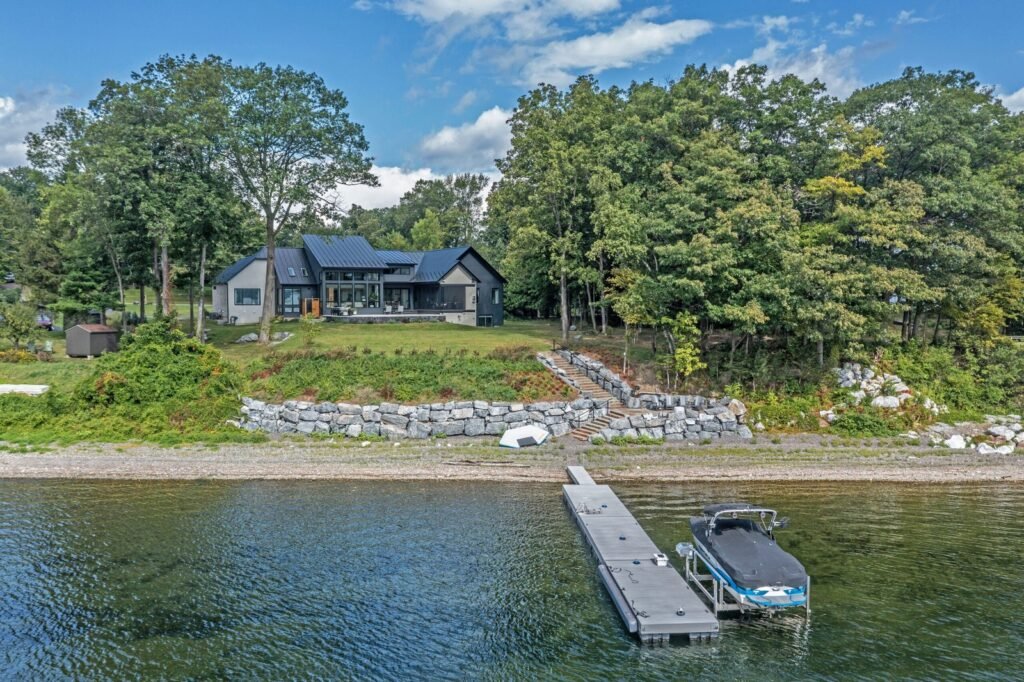
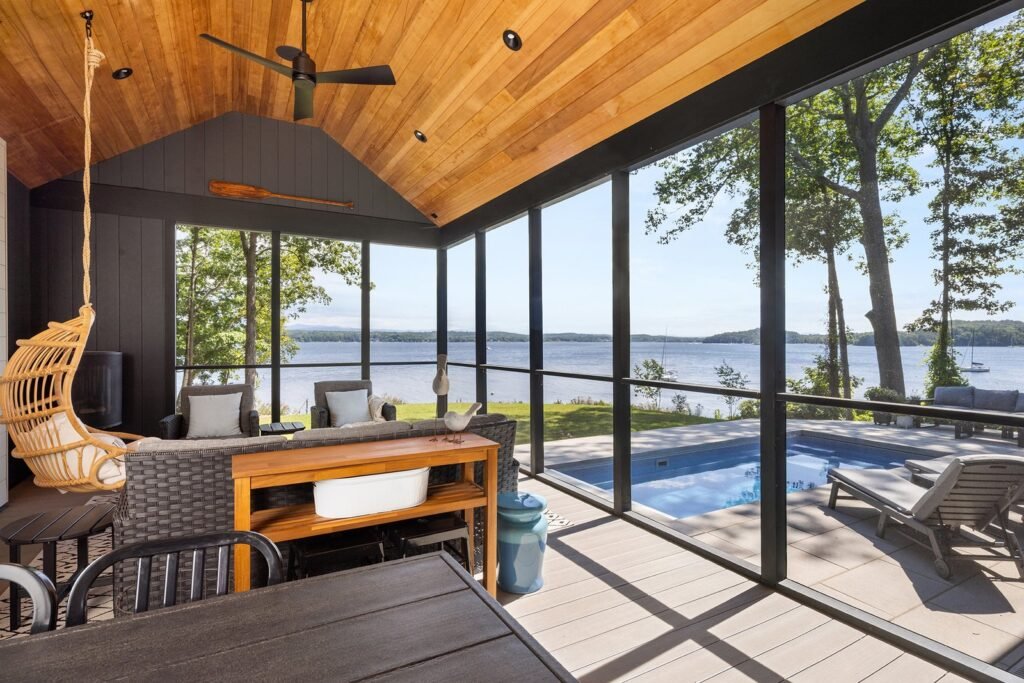
Set along the shores of Shelburne Bay with sweeping views of Vermont’s Green Mountains, this custom home was conceived as a true dream home, one that would celebrate its extraordinary setting while thoughtfully reflecting the way the homeowners live, work, entertain, and spend time together as a family.
From the beginning, the vision was to create a home that felt artistic and distinctive without sacrificing comfort or function. Every aspect of the design was carefully considered to balance site requirements, architectural beauty, and the practical needs of a busy family.
The building envelope was defined by three fixed site conditions: the septic location, the edge and orientation of the lake, and the required path of the drive. Rather than treating those constraints as limitations, the design used them to shape the home’s placement, circulation, and outward views, resulting in a plan that feels intentional, efficient, and closely tied to the property.
The home’s organization was designed around the family’s desire for both connection and privacy. Generous kitchen and living spaces form the heart of the home, providing an inviting setting for everyday family life as well as larger gatherings. At the same time, separate wings for children and parents create a sense of retreat and independence. This thoughtful separation allows the home to accommodate different schedules, routines, and activities while maintaining a strong sense of togetherness.
The homeowners’ professional and personal needs were also incorporated into the design. Two dedicated home offices provide quiet, functional workspaces while allowing the rest of the home to remain focused on family and entertainment. On the lower level, a large entertainment area expands the home’s capacity to host friends and family, while guest quarters provide comfortable accommodations for overnight visitors.
One of the home’s most meaningful interior features is the use of repurposed wood milled by family members that was thoughtfully incorporated throughout the home in accents and built ins. This material adds warmth, character, and a tangible connection to the family’s history, while demonstrating how personal materials can be transformed into functional architectural details. Together, the carefully selected materials and exceptional craftsmanship support the architectural vision while creating a residence that feels warm, enduring, and welcoming.
That same attention to detail carries through to the home’s relationship with its extraordinary setting. Large windows and carefully positioned living spaces frame views of Lake Champlain and the Green Mountains, bringing the Vermont landscape into the everyday experience of the home. Outdoor living spaces extend that connection even further. A substantial screened porch with outdoor kitchen provides a comfortable place to enjoy summer evenings, while a pool and expansive patio create a natural gathering space for warm-weather recreation.
The connection to the landscape continues at the shoreline. A private landing and boat dock give the homeowners direct access to the water, transforming the property from simply a house with a view into a true four-season destination centered around the landscape and activities the family enjoys.
Throughout the project, the goal was not simply to build a beautiful house, but to create a home that feels uniquely theirs. The architecture and interiors were developed with an artistic eye, while the planning remained grounded in how the family actually lives. Spaces are generous where they need to be, private where they should be, and connected to the outdoors wherever possible.
This home represents the possibilities of truly custom residential construction: a residence shaped deeply by the people who ultimately call it home. Its thoughtful layout, distinctive design, exceptional craftsmanship, and seamless relationship with its surroundings come together to create a home that is as functional as it is beautiful and, most importantly, a place where the homeowners’ vision for their dream home has become a reality.
Vote For Best Custom Home
Best Outdoor Feature
TS Renovations
The Spruce Outdoors
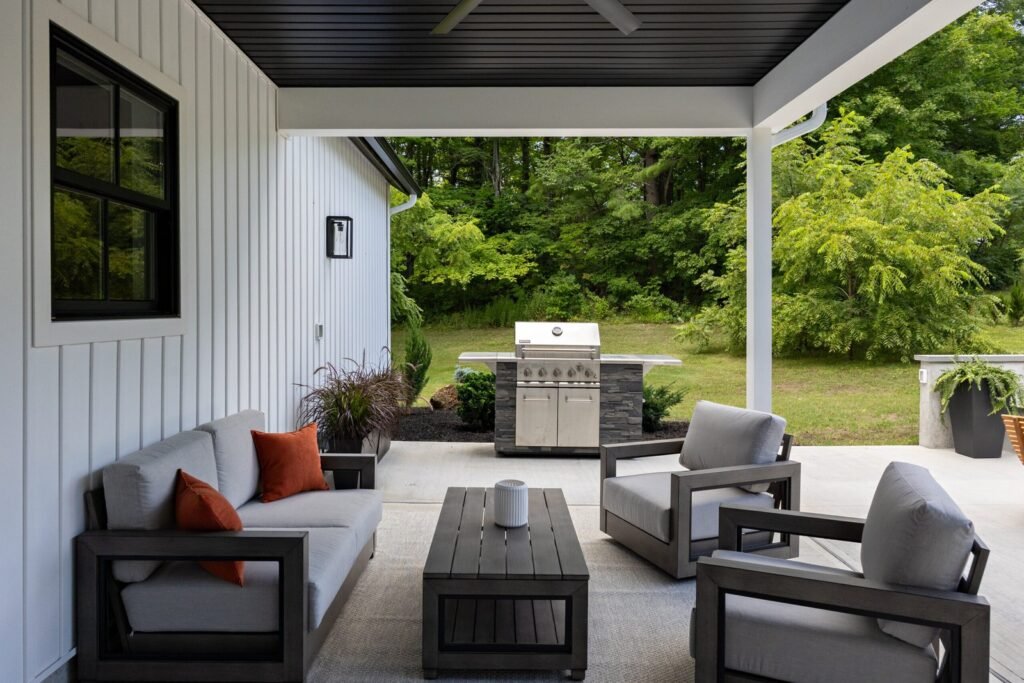
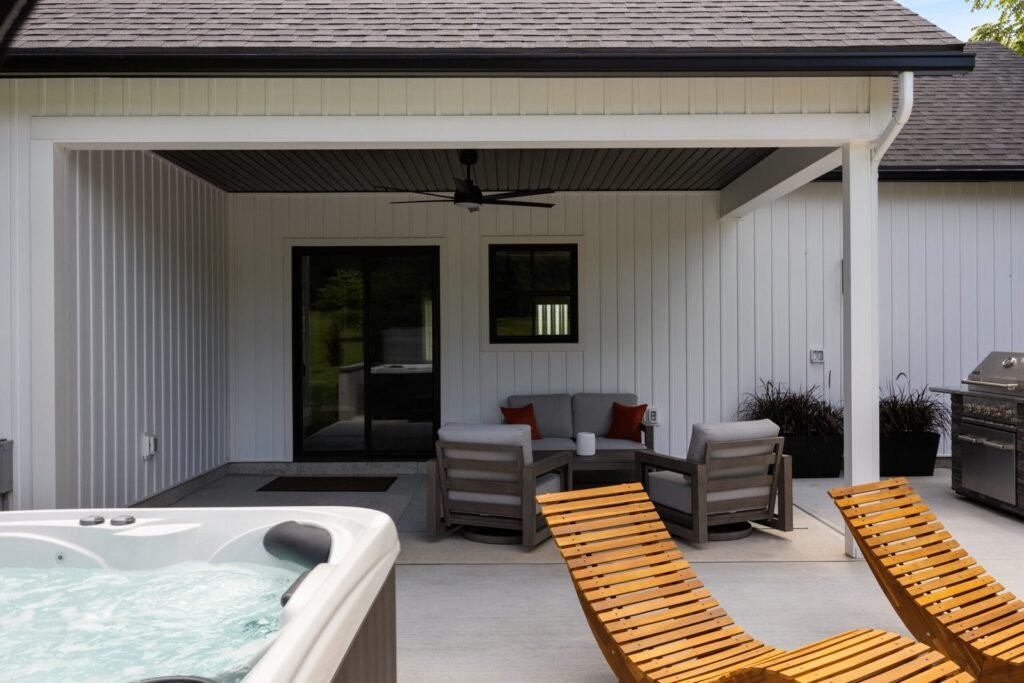
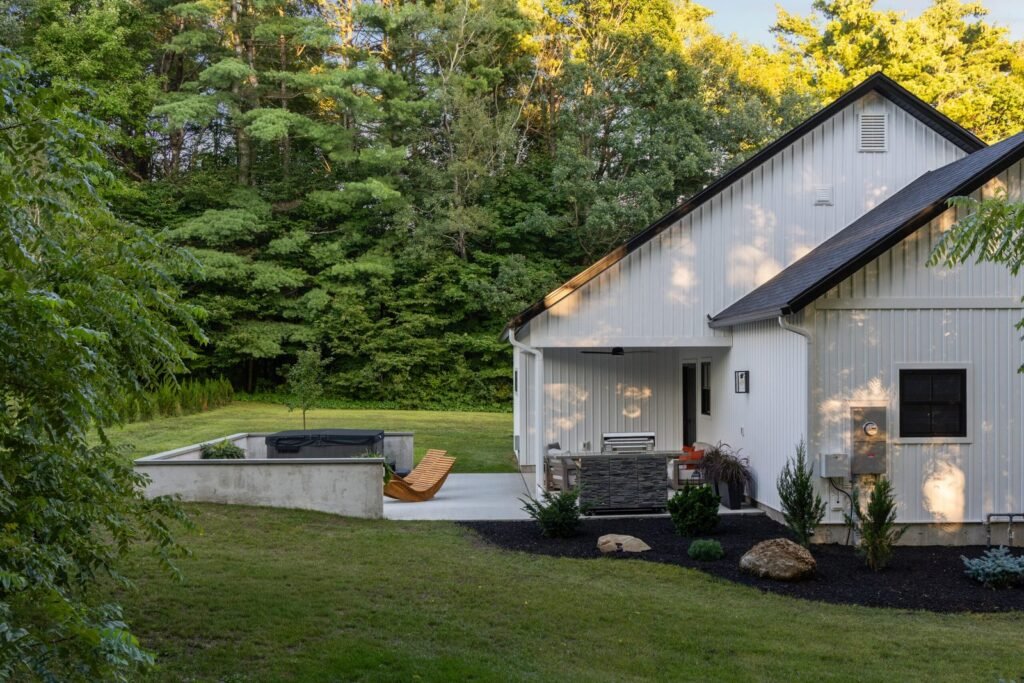
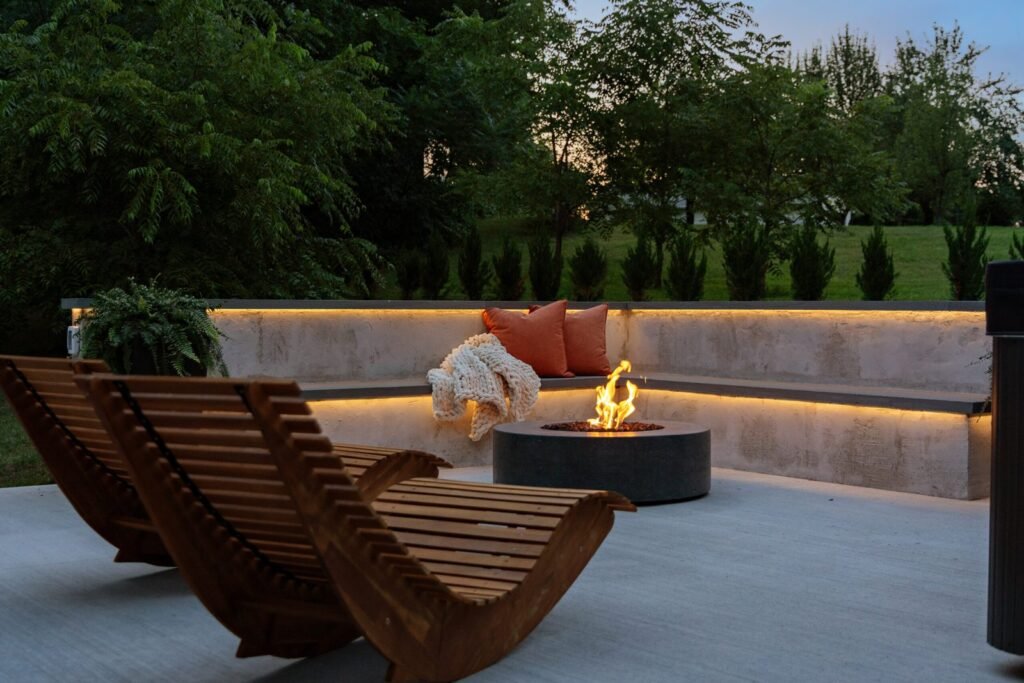
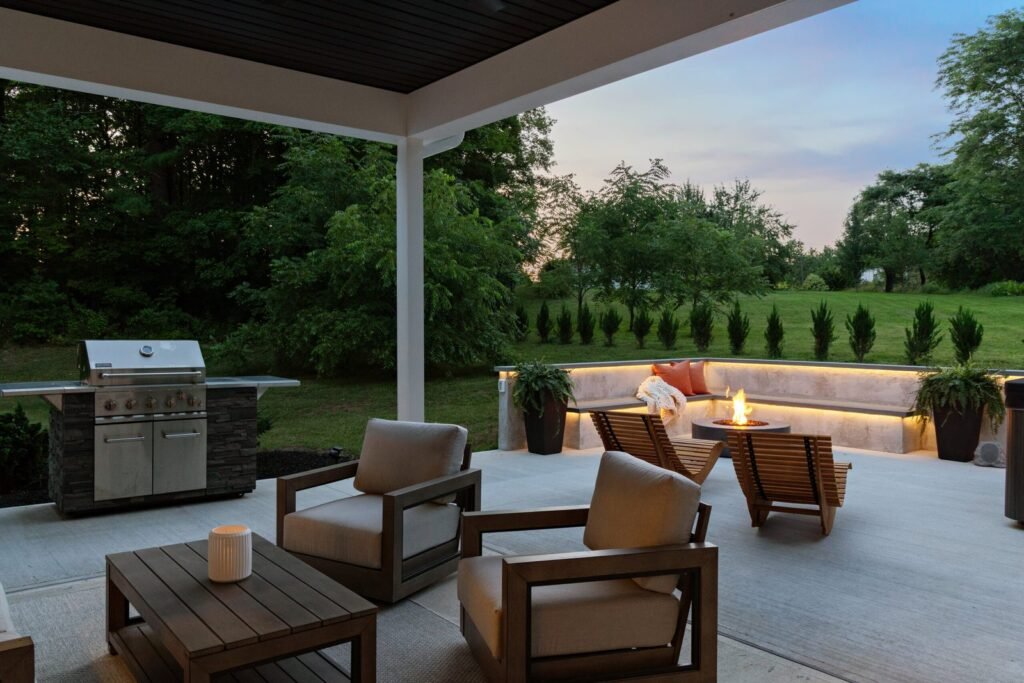
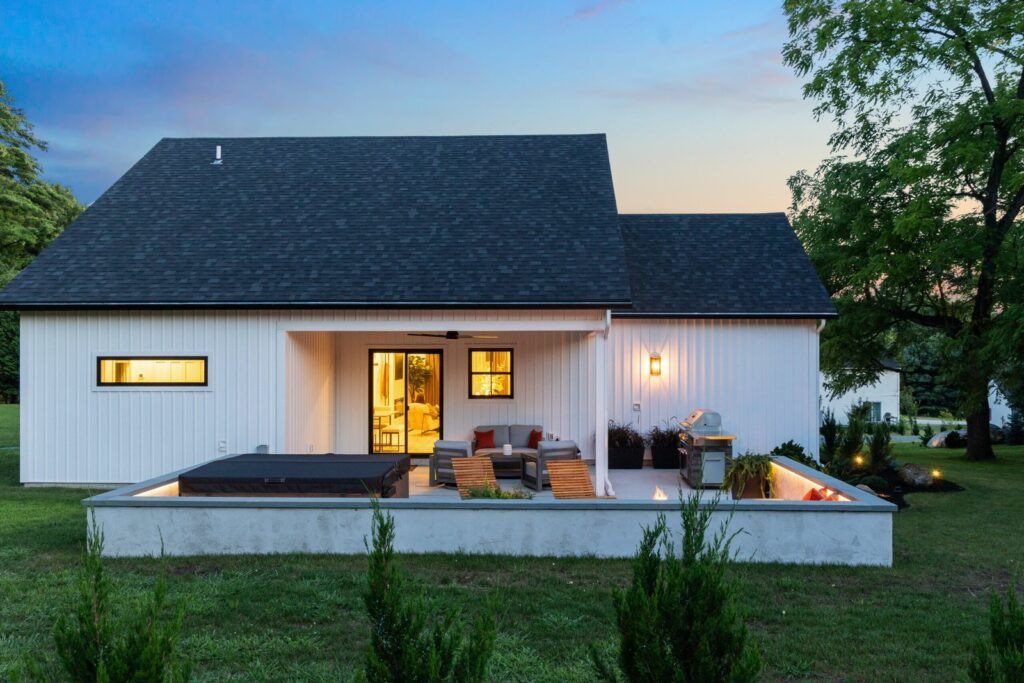
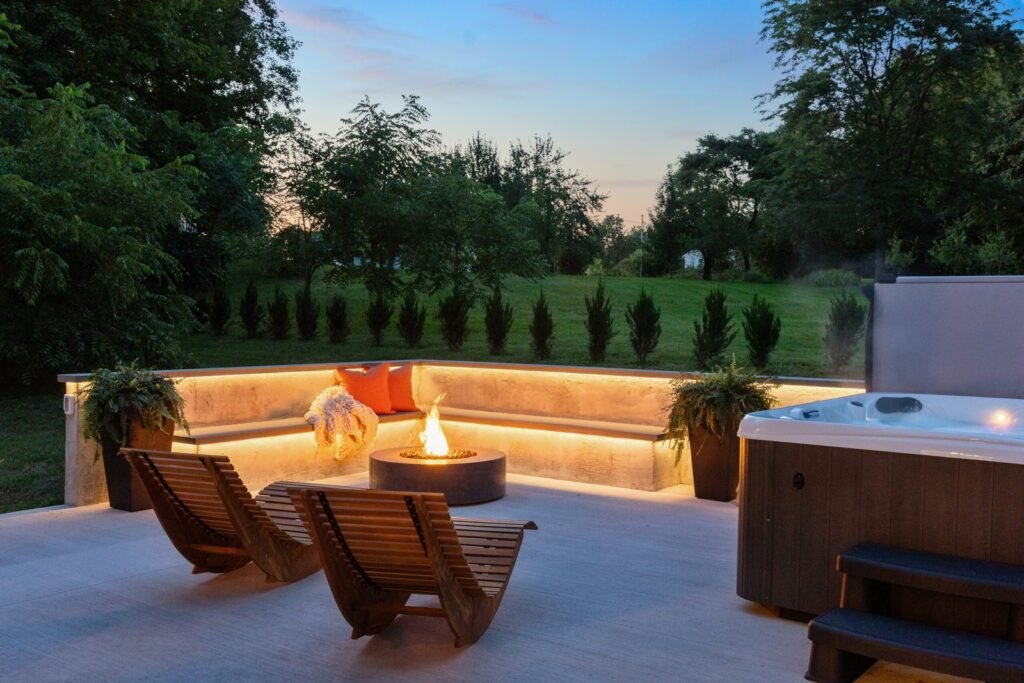
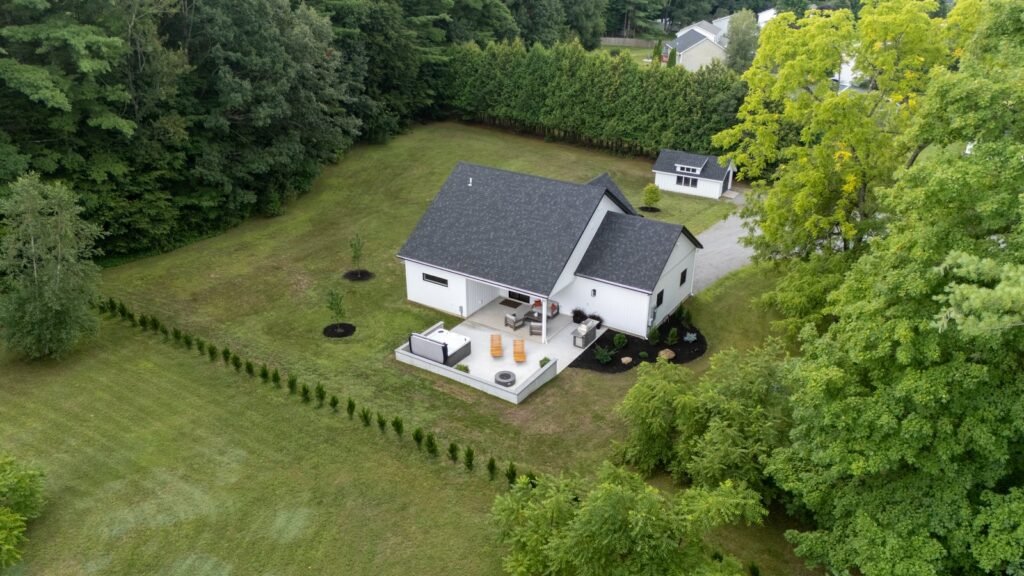
This outdoor living experience unfolds in layers, moving from the shelter of a covered porch into an open-air patio designed for gathering, relaxing, and enjoying the landscape well into the evening. Each space serves a distinct purpose, while thoughtful transitions and integrated details connect them into one cohesive outdoor environment. The result is a space designed to be enjoyed throughout the seasons, from the shade of a hot summer afternoon and the sound of rain overhead to evenings gathered around the fire on a crisp fall night.
The covered porch establishes the first layer of the outdoor experience, creating a comfortable, sheltered place to relax while remaining connected to the landscape. It offers the perfect pause from the heat of the day, a front-row seat to a summer storm, or a cozy place to watch the leaves change. Just beyond, the patio opens to the sky and expands the space for entertaining and gathering. A grill positioned just off the porch keeps cooking and conversation connected, allowing the experience to flow naturally from one space to the next.
The surrounding grade created an opportunity to make the concrete retaining wall more than a functional element. Carefully integrated into the landscape, the wall defines the patio and establishes a strong architectural edge. In one corner, it transitions into a built-in bench that wraps the fire pit, creating an intimate gathering spot and giving the structure a second purpose. The result is a detail that feels effortless, but is rooted in thoughtful design and careful construction.
As the fire comes to life, this corner of the patio takes on an entirely different character. The glow of the flames warms the surrounding materials, shadows move across the concrete, and conversations naturally stretch later into the evening. The built-in bench draws people closer to the fire and creates a place to settle in, linger, and simply enjoy being outside.
Across the patio, the hot tub creates another destination within the landscape. It is an easy invitation on a warm summer night and an even better one when the air turns crisp and cool. Together, the fire and hot tub give the space a sense of warmth and energy that carries well beyond sunset.
Bluestone caps the retaining wall and built-in bench, adding a natural, timeless material against the clean concrete. Recessed lighting is tucked discreetly beneath the bluestone caps, hidden from view but carefully positioned to create a soft, warm glow after dark. Light catches the stone, washes across the concrete, and adds just enough illumination to make the space feel inviting without competing with the firelight.
It is these details that make the experience feel complete. The glow of the fire, the warmth of the bluestone, the soft light tucked beneath its edge, and steam rising from the hot tub all come together to create a space that feels alive long after the sun goes down. Every element was thoughtfully considered and carefully executed, creating an outdoor environment that does more than look beautiful. It invites people to stay, gather, and make the most of every season.
Snyder Homes
The Annex Community Park
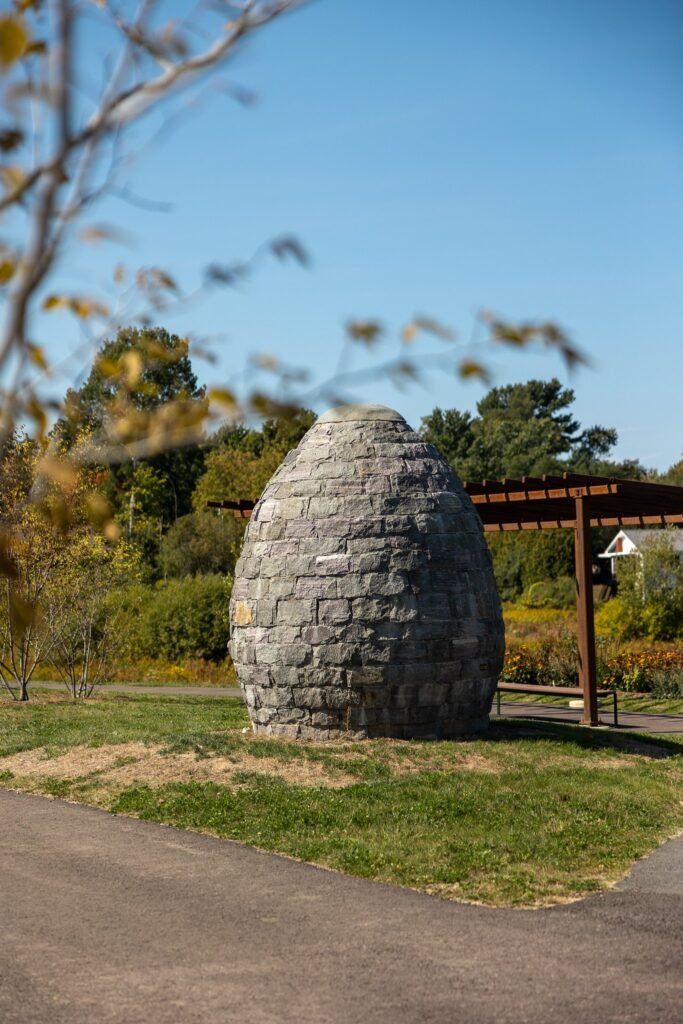
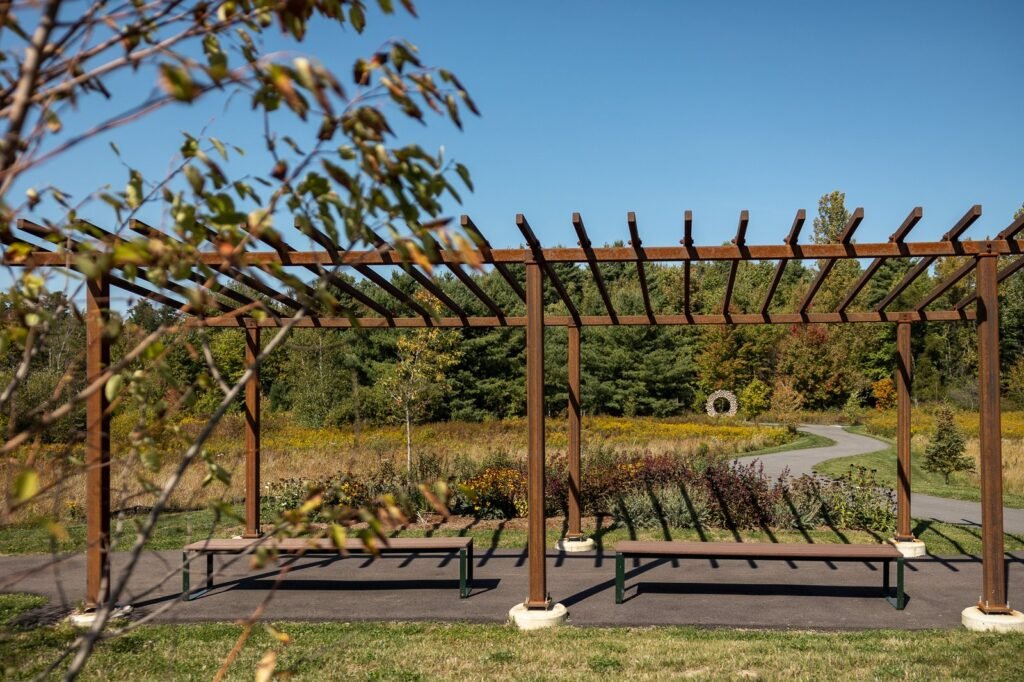
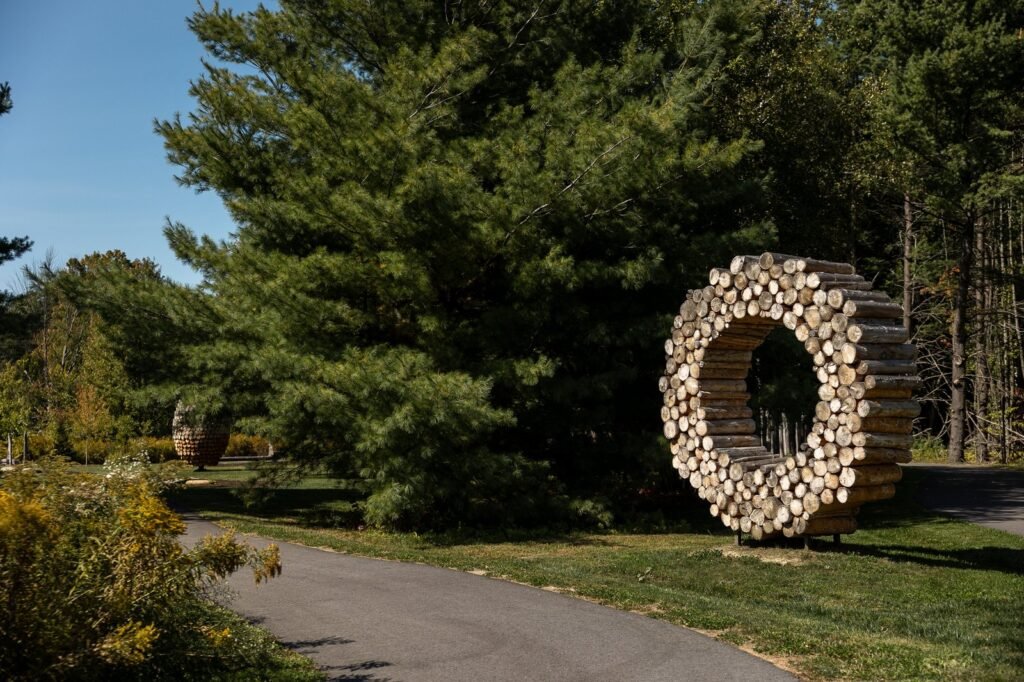
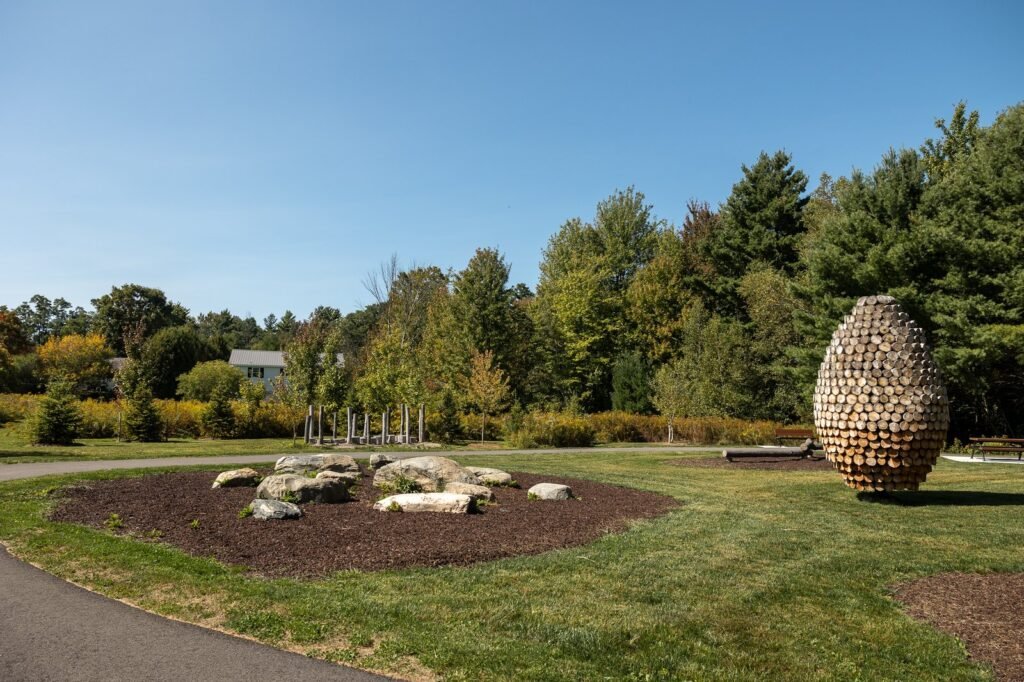
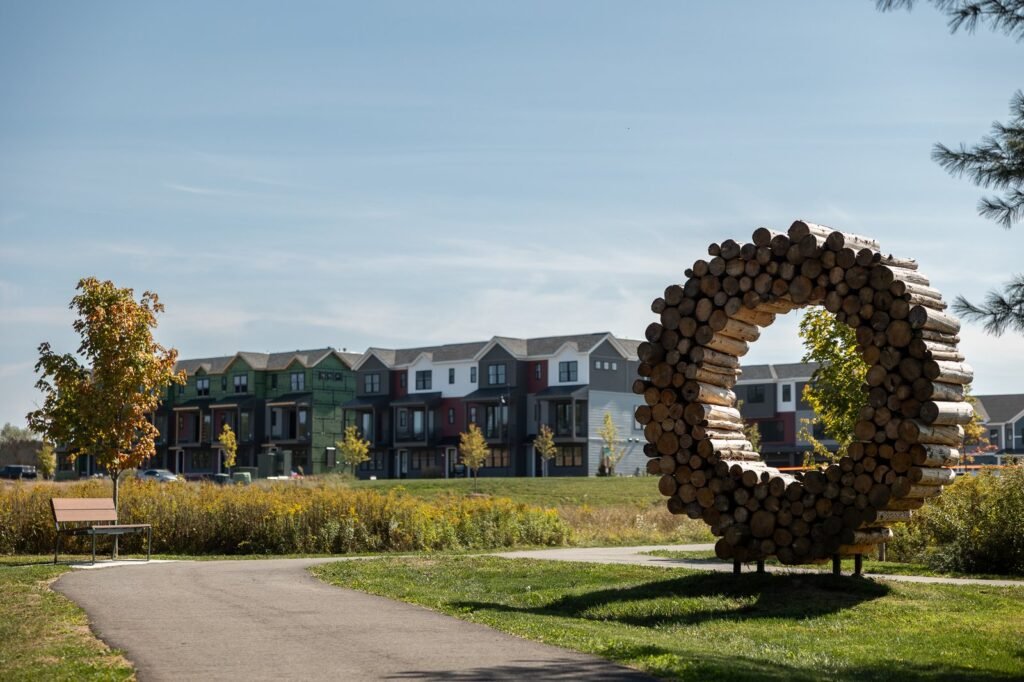
The Annex Community Park is a project we are immensely proud of. We wanted to create a place where homeowners would feel comfortable spending time outdoors, whether walking through the park, meeting neighbors, sitting quietly, or taking part in a community event. At the same time, we wanted to respect the natural character of the site and work with the existing trees, meadow, and open spaces. New paths, seating, public art, and an open metal pergola were added to give homeowners more ways to experience and enjoy the space.
We started by looking closely at what was already there. Rather than removing the existing landscape and starting over, the team designed around it. The existing trees and meadow became important parts of the layout, and we wanted the new elements to feel like a natural extension of the site.
Art became an important part of the park and helped give the space its own identity. The sculptures are placed throughout the park to create points of interest as homeowners walk through. One is a large, rounded stone sculpture at the beginning of the walking path. Its natural stone surface and simple form work well with the surrounding landscape.
The large timber sculpture is made from individual logs and arranged into a rounded form. We wanted the timber to feel natural to the setting and connect visually with the existing trees and meadow. Its size and shape make it something that catches your attention, while the natural wood keeps it from feeling out of place.
The metal pergola provides another gathering point within the park. It’s simple, open structure creates a defined place to stop without separating homeowners from the surrounding landscape. A couple of benches give residents a place to sit, rest, or meet with friends and neighbors while still feeling connected to the park around them.
One of our biggest challenges was finding the right balance between adding features and keeping the park open. We wanted to provide places for homeowners to gather without filling the site with structures. The placement of the pergola, sculptures, seating, and paths was carefully considered so the open lawn and existing landscape would remain an important part of the experience.
The paths help tie everything together and give homeowners an effortless way to move through the park. As you walk, the views change. You may notice the sculptures, pergola, trees, meadow, or open lawn at different points along the way. The paths make it easy to explore the park without making the experience feel directed or forced.
Planting was another important part of the design. The existing trees provide shade and give the park a sense of maturity, while the meadow areas add movement, texture, and seasonal interest. The open lawn provides flexibility for recreation, informal activities, and community events. Together, these elements give the park a different feeling throughout the year.
We also wanted the park to work for a wide range of uses. It can be a place for a quiet walk, a family afternoon on the lawn, neighbors meeting at the pergola, or the community coming together for an event. The combination of open space, gathering areas, art, and natural landscape allows the park to change depending on how homeowners choose to use it.
For us, the project is a reminder that good landscape design does not always mean adding more. Sometimes the best approach is to recognize what is already working and build from there. By respecting the existing site and choosing features and materials that complement it, we created a park that feels natural, inviting, and useful.
Most importantly, we hope the homeowners enjoy the space and make it their own. Whether someone comes for a walk, sits at the pergola, stops to look at the sculptures, meets a neighbor, or gathers for an event, the park provides a reason to spend time outside. Seeing the finished park become a place where homeowners can gather, explore, and enjoy the landscape is what makes this project so rewarding for us.
Vote For Best Outdoor Feature
Best Kitchen Remodel
TS Renovations
Marble Island Lakehouse Kitchen
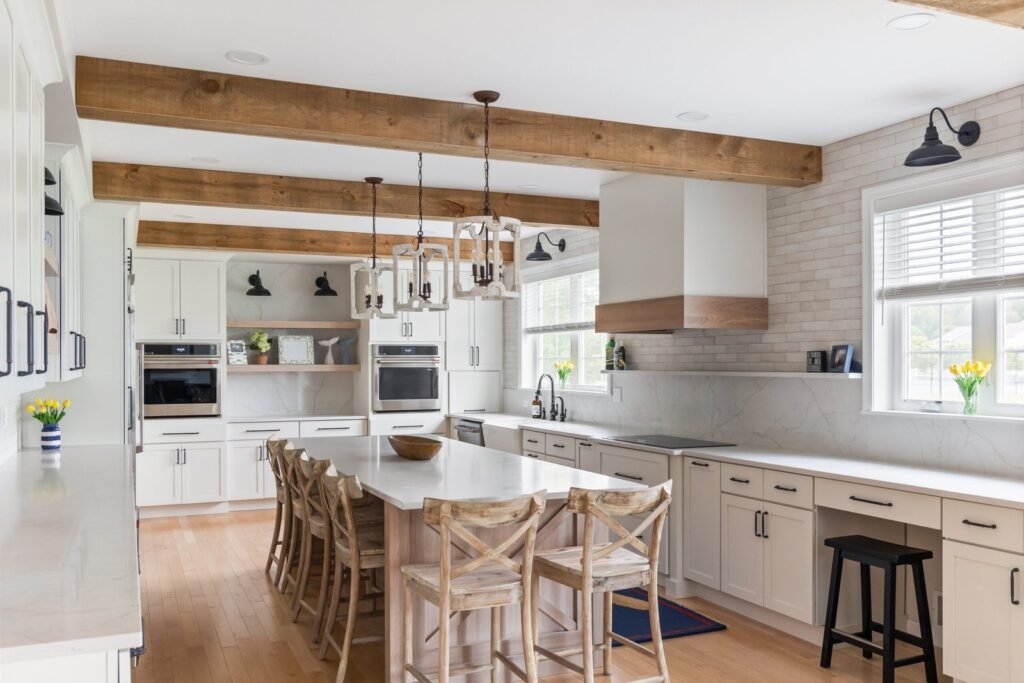
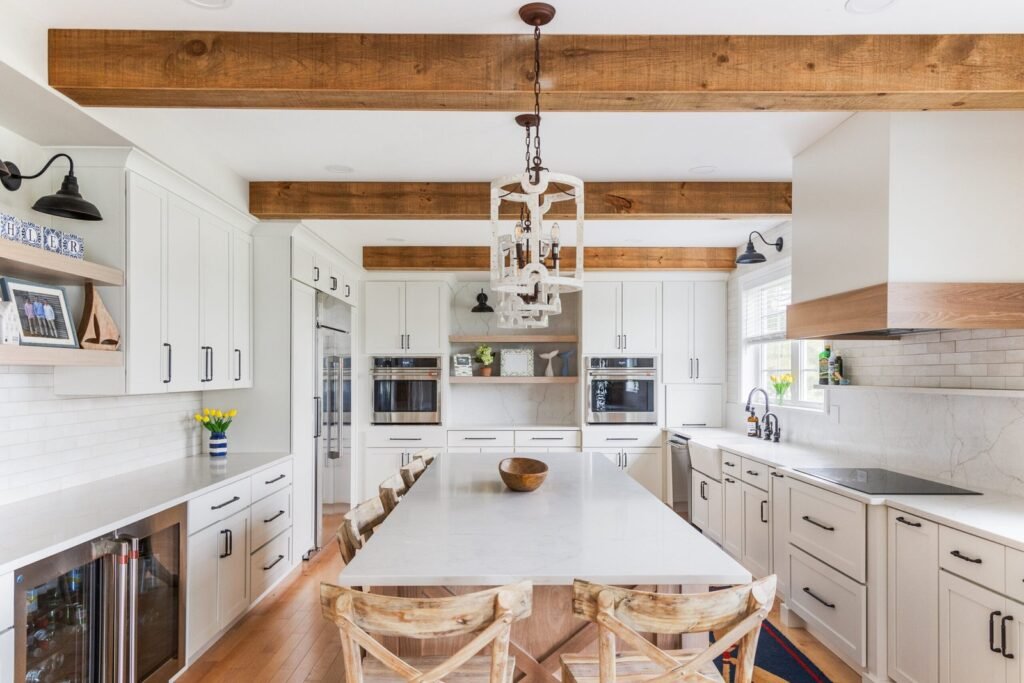
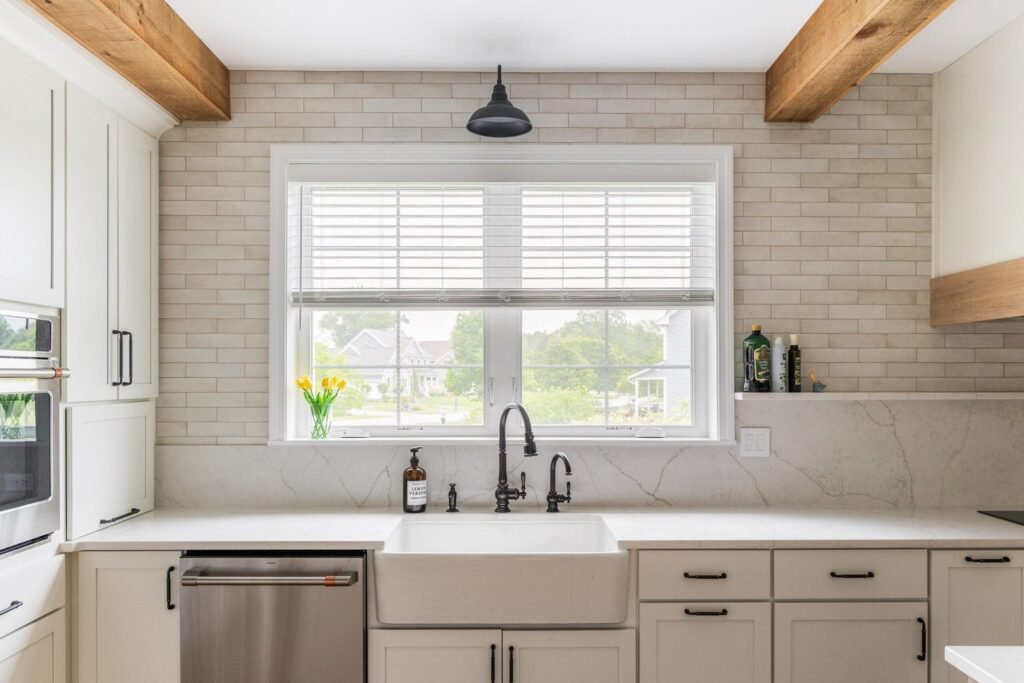
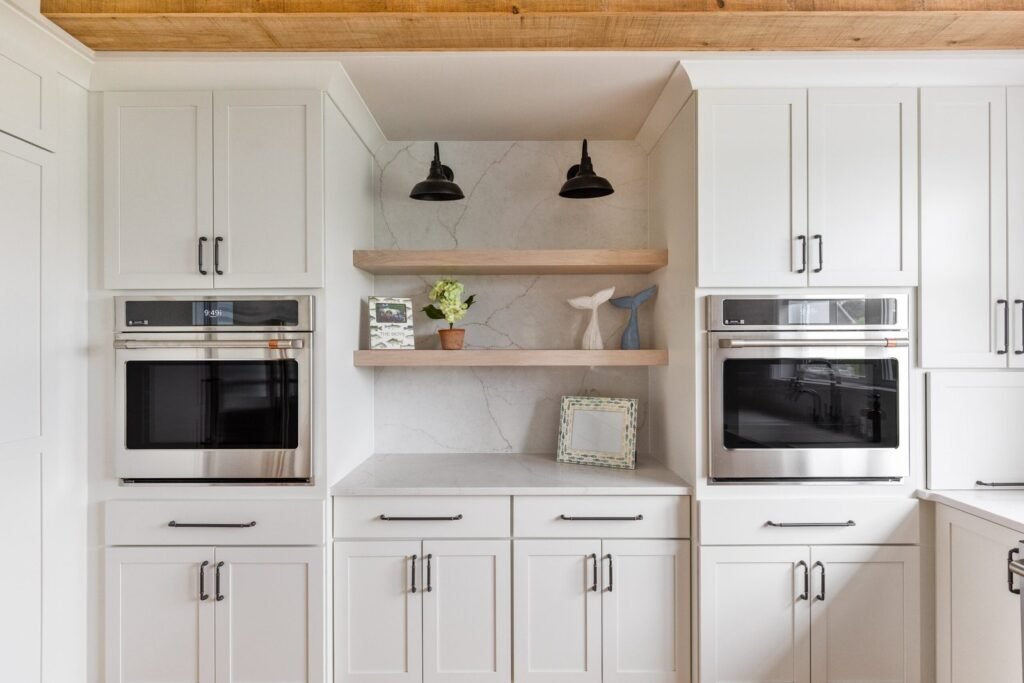
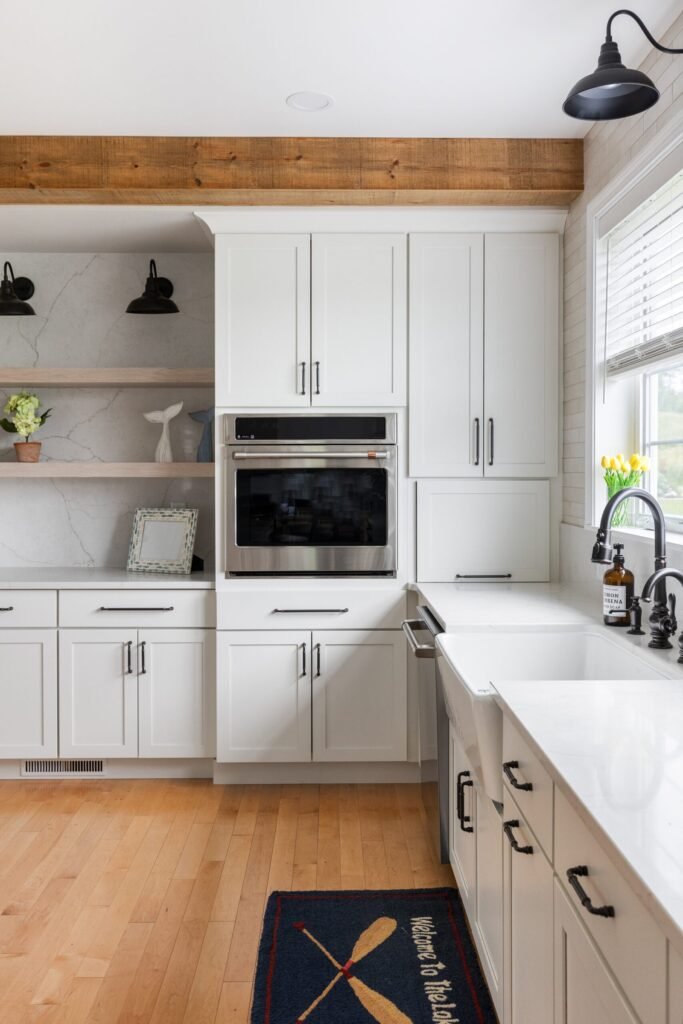
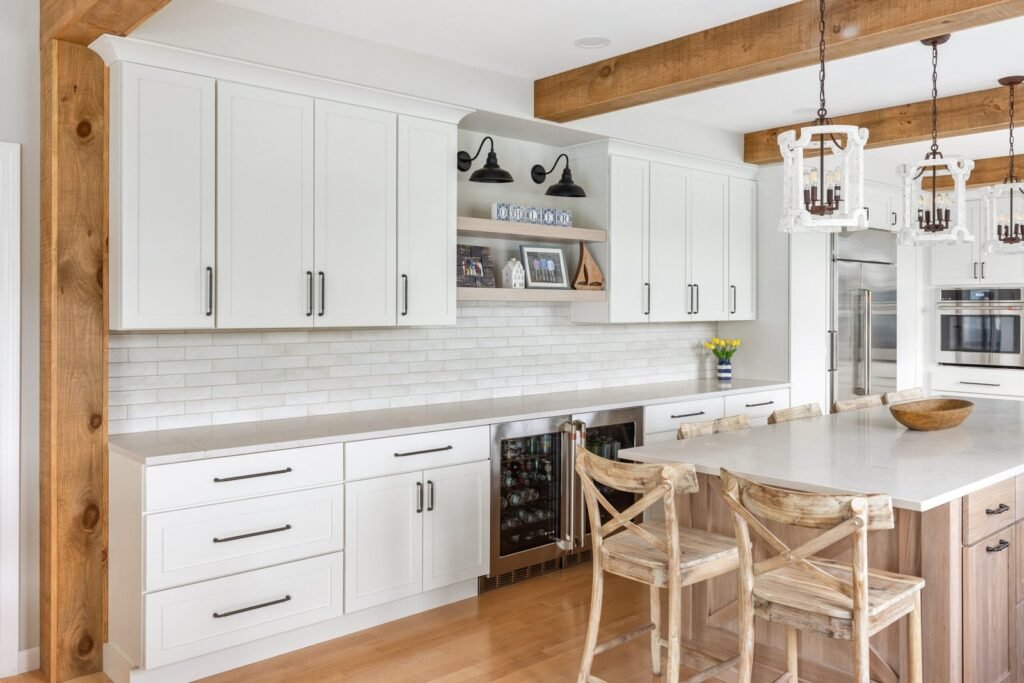
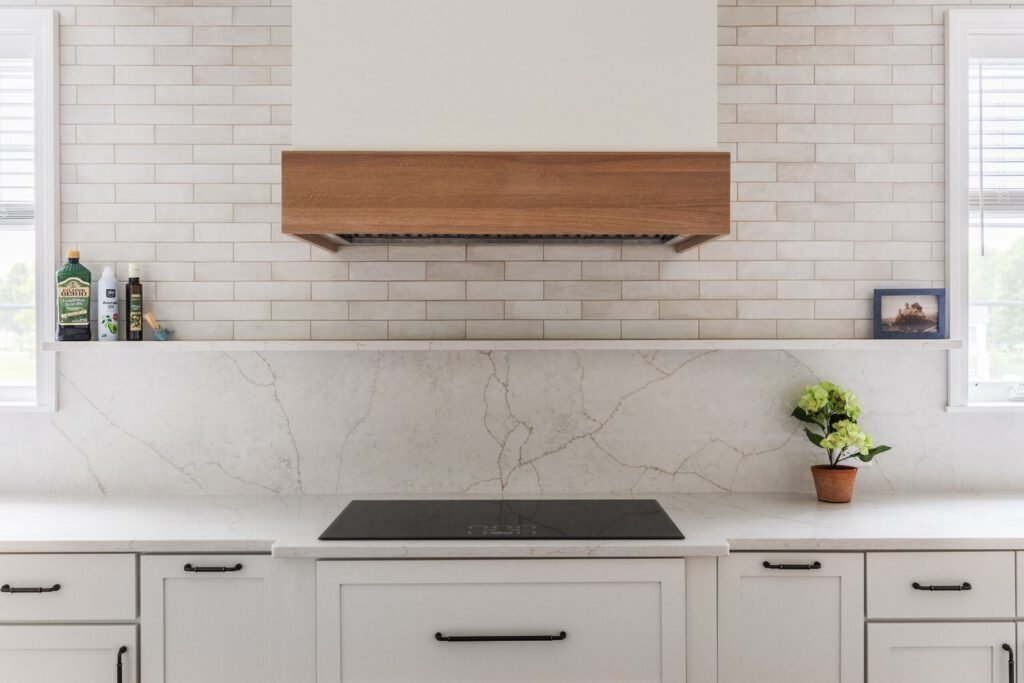
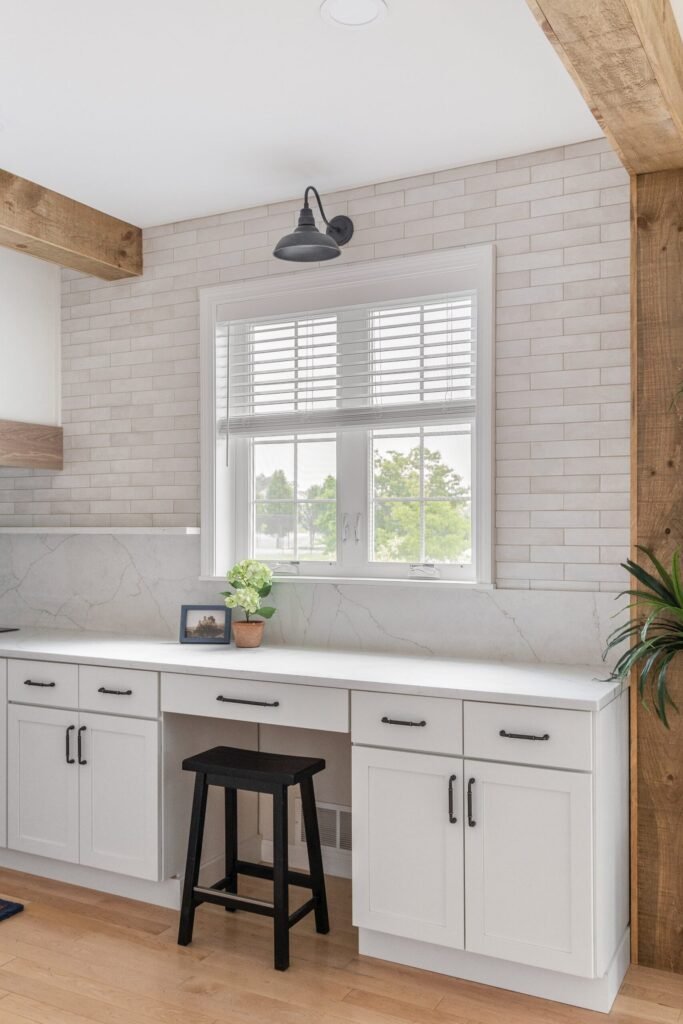
This kitchen remodel began by removing the wall between the kitchen and what used to be a formal dining room, combining both into one larger, open space. The layout is entirely new: windows were reworked, plumbing relocated, and every appliance given a new home, including several that weren’t there before.
The cooktop and its custom range hood now sit on an exterior wall between two large windows. Double wall ovens sit on either side of a floating-shelf display finished in full-height Quartz Calacatta Valentin, and a built-in microwave tucks into the island.
The cabinetry is Cabico’s Unique line, full overlay, in a warm white throughout. Whitewashed white oak adds texture to the island, the hood, and the floating shelves. Behind the range, the quartz continues fifteen inches up the wall before giving way to a ledge, useful for everyday bottles and oils, then large textured subway tile finished in walnut grout carries the wall the rest of the way to the ceiling.
A 42-inch refrigerator and double beverage fridges built into the surrounding cabinetry complete an all GE Cafe appliance suite. A Kohler farmhouse sink sits at the window across the room.
Rustic pendants hang over the 10-foot island. Soffits were added to anchor the oak beams overhead, tying in the wood accents that run throughout the room. Gooseneck sconces and recessed lighting finish a kitchen with real farmhouse character.
Kitchen by Design
Ledgewood
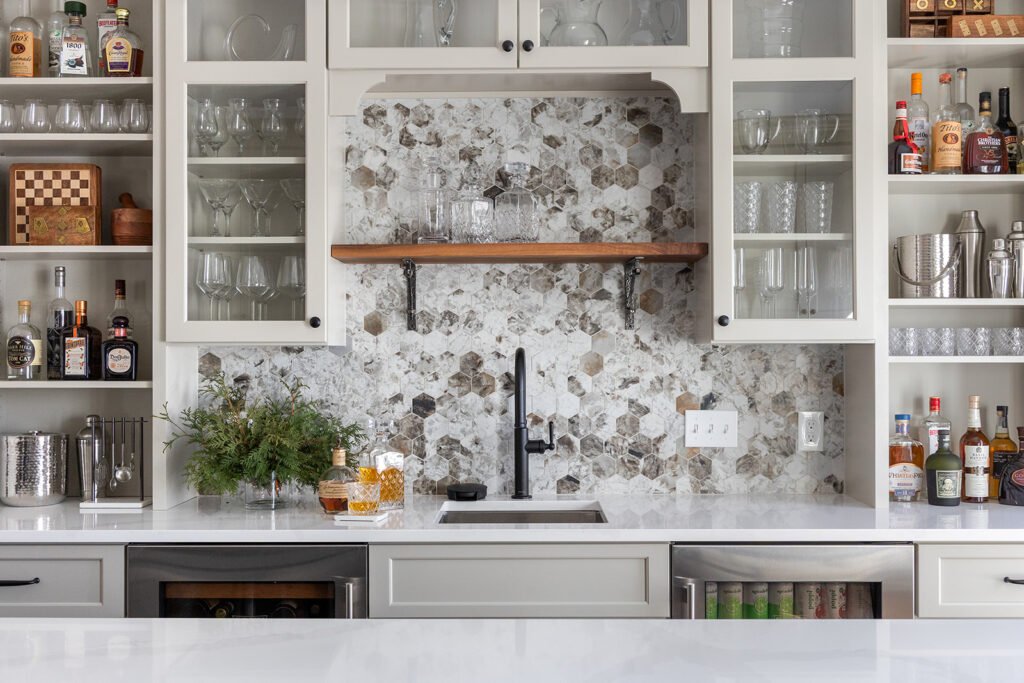
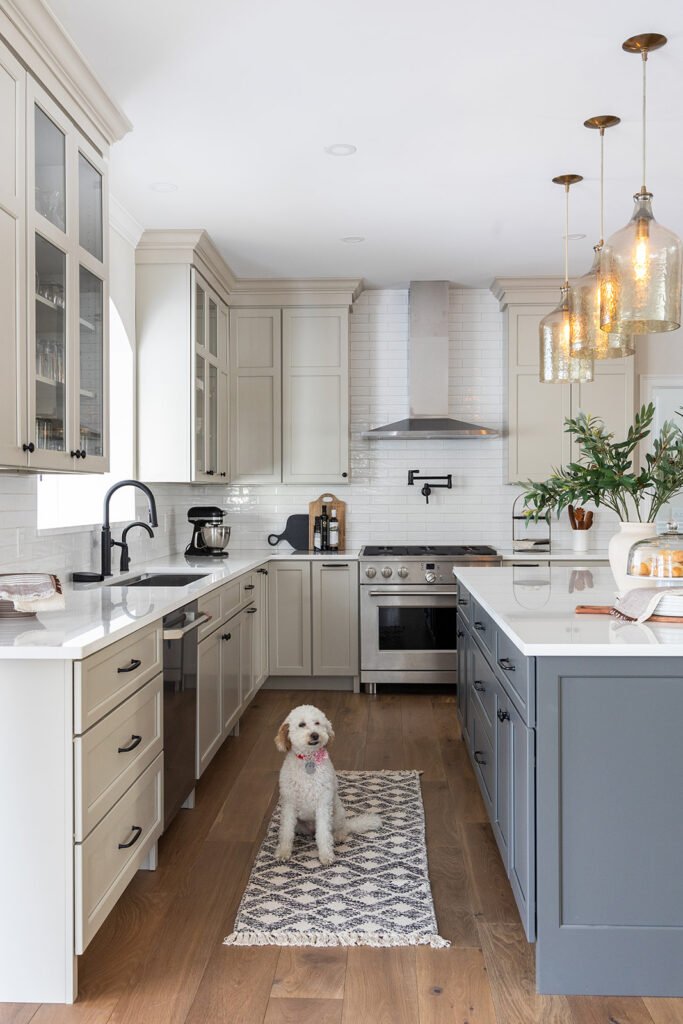
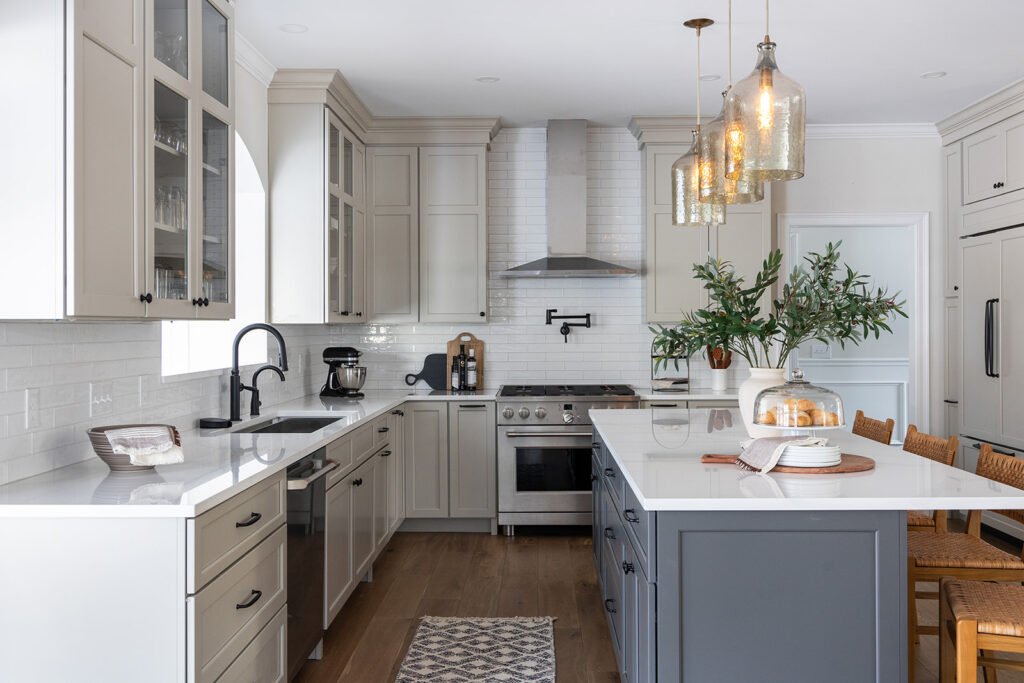
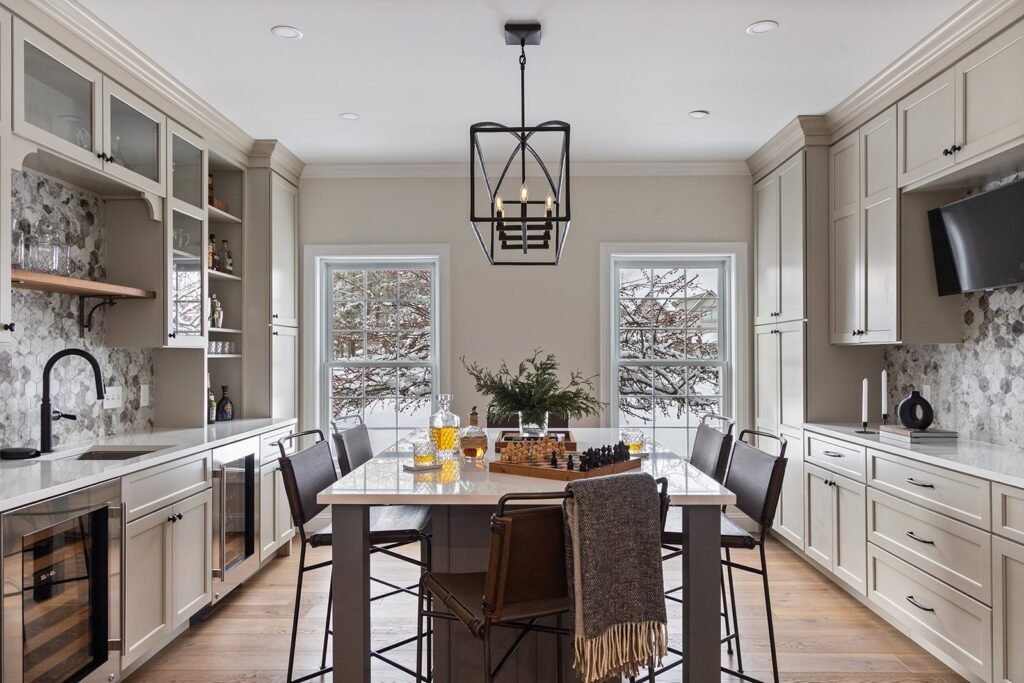
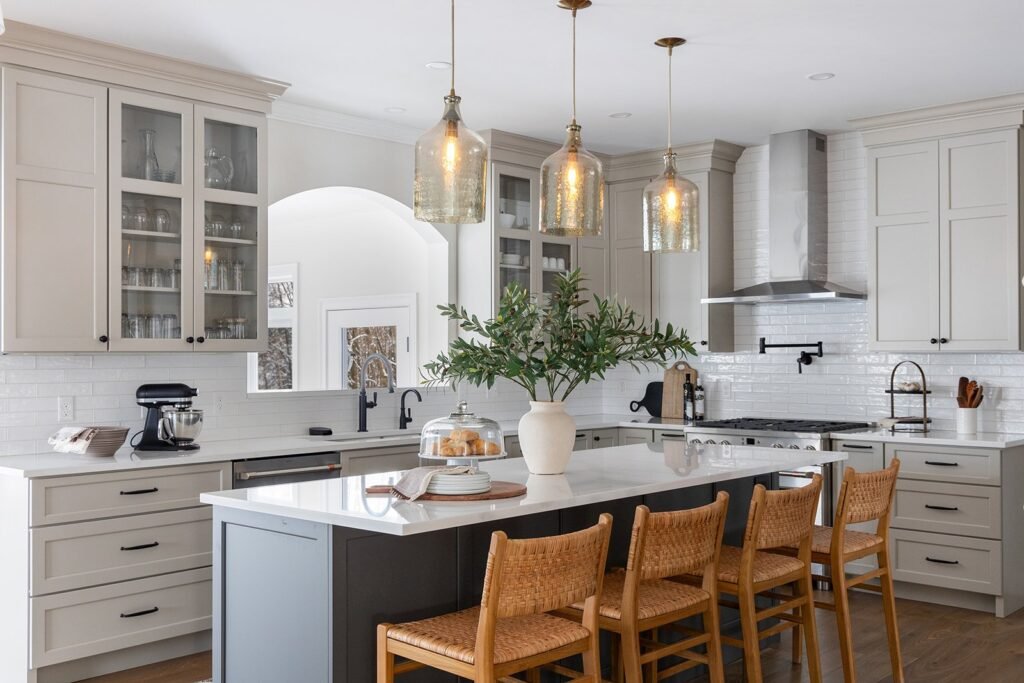
The vision for the Ledgewood remodel began with a simple goal: to create a home that better reflected the way this busy family lives, gathers, and entertains. The existing kitchen felt dark and dated and lacked the warmth, functionality, and connection the homeowners wanted for their family of four. With two active boys and a love of entertaining, they needed spaces that could work hard every day while still feeling comfortable, inviting, and elevated when welcoming family and friends.
Our design direction centered on bringing warmth and light into the kitchen while maintaining a sense of character. We wanted the kitchen to feel timeless, approachable, and lived-in—a natural gathering place for everyday family life and larger celebrations.
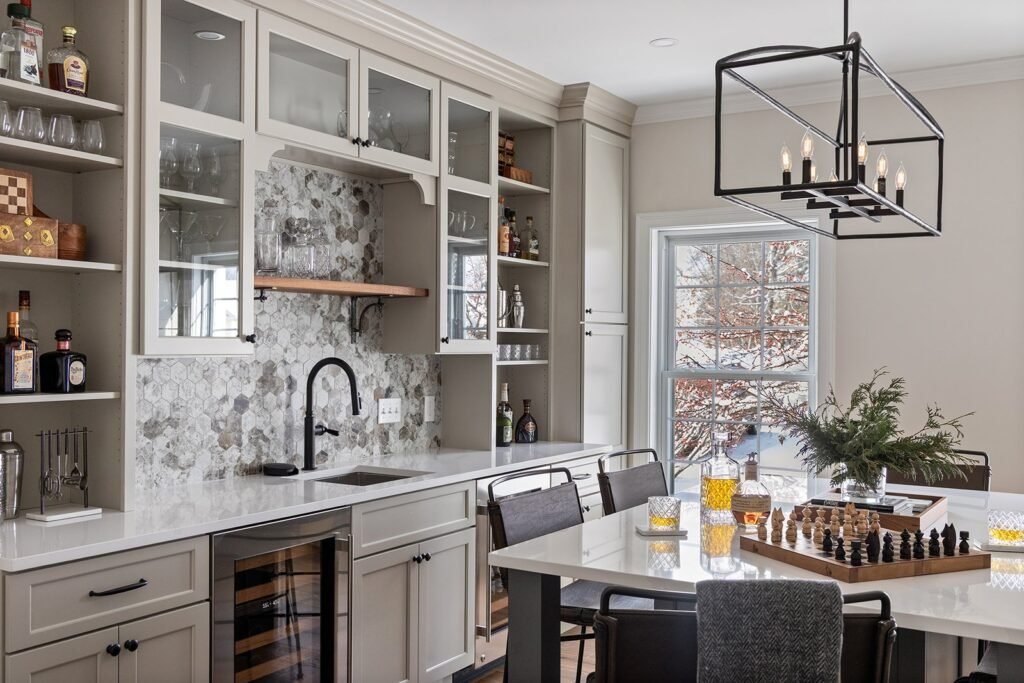
The adjoining formal dining room presented a different opportunity. The homeowners wanted to retain its ability to function as a dining room while transforming it into a more useful extension of the kitchen. Their wish list included additional pantry storage, wine and liquor storage, beverage refrigeration, and a secondary sink—all without feeling overly utilitarian. The result is a multifunctional space the family affectionately calls “The Saloon.”
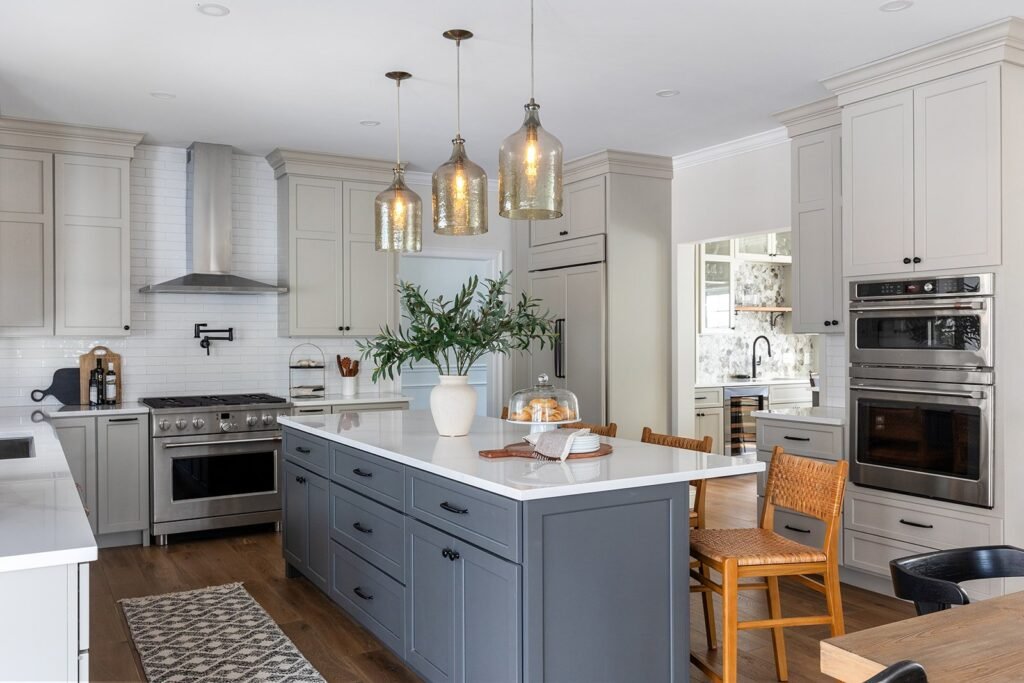
Cabinetry played an important role in establishing a cohesive palette between the two spaces. We selected Candlelight Cabinetry in a custom Benjamin Moore Revere Pewter finish for the perimeter cabinetry. The warm greige tone brings softness and depth while reflecting natural light and providing a timeless backdrop for the other materials. For contrast, the kitchen island was finished in Benjamin Moore Kendall Charcoal, grounding the room and creating a strong visual centerpiece. Calacatta Sol quartz countertops were used throughout, creating continuity between the lighter perimeter cabinetry and darker island while providing the durability needed for an active household.
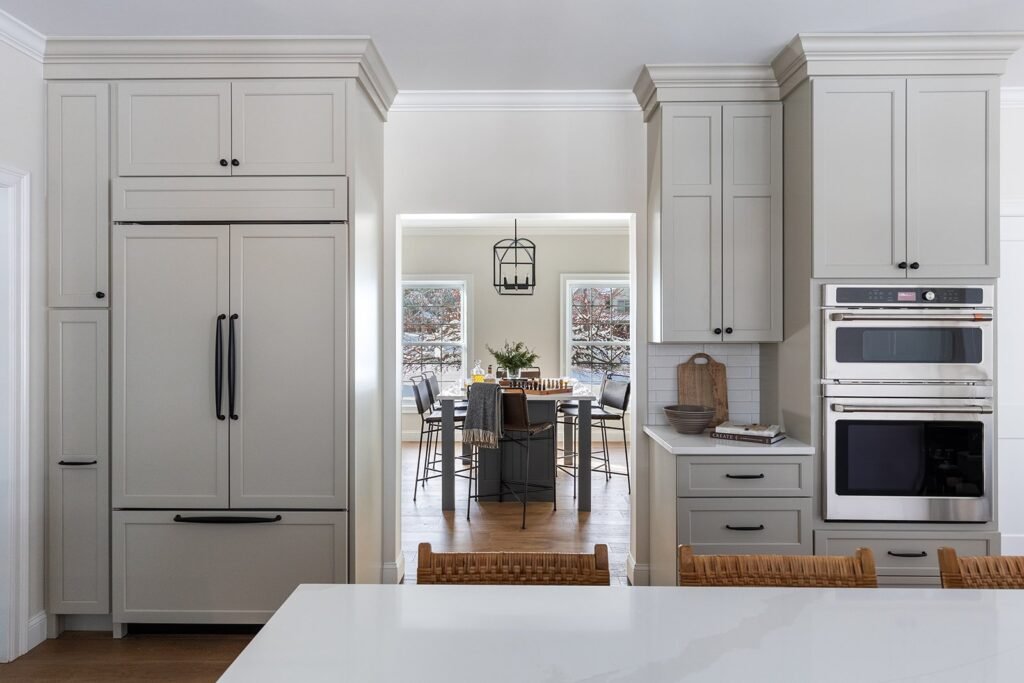
The appliance package was thoughtfully selected to support both everyday family life and entertaining. A 42-inch paneled Sub-Zero French door refrigerator integrates seamlessly into the kitchen cabinetry and is complemented by a suite of Café appliances, including a 36-inch dual-fuel range, dishwasher, and combination speed and wall oven. In the Saloon, dual Sub-Zero Designer Beverage Centers provide dedicated refrigeration for beverages, allowing family members and guests to help themselves without interrupting activity in the main kitchen.
We also widened the opening between the kitchen and the Saloon. This architectural change had a significant impact, allowing more natural light to reach the kitchen while strengthening the visual and physical connection between the two rooms. The expanded opening also allows the spaces to function together more naturally when entertaining.
One of the project’s greatest design challenges was meeting the extensive wish list for the former formal dining room without compromising its character or overwhelming it with cabinetry. Rather than treating each need separately, we approached the Saloon as a flexible extension of the kitchen. Custom cabinetry provides overflow storage while incorporating dedicated pantry space, wine and liquor storage, beverage refrigeration, and a secondary sink.
The Saloon was designed to transition naturally with the family throughout the day. In the morning, it offers a comfortable place to enjoy coffee or tea while catching up on the news. During the day, it can serve as a home office or workspace. Evenings might bring family dinner, game night, or drinks with friends. On a guys’ night, the beverage centers and bar keep everything close at hand while the game is on and a poker game unfolds around the table. During holidays and larger gatherings, the room becomes a natural extension of the kitchen, providing another welcoming place for guests to gather while keeping traffic away from the primary cooking area.
Thoughtful custom details bring additional character and craftsmanship to the project. Above the kitchen sink, a floating shelf supported by custom-forged metal brackets introduces an artisanal element that pairs beautifully with the cabinetry, countertops, and wall tile. The combination of painted cabinetry, contrasting finishes, quartz, tile, and handcrafted metalwork creates a layered material palette that feels warm and collected rather than overly coordinated.
What makes this project special is not any single material or feature, but the way the two rooms work together to support the homeowners’ lifestyle. The kitchen is now brighter, warmer, and significantly more functional, while the former formal dining room has evolved from an infrequently used space reserved for special occasions into one of the home’s most versatile and frequently enjoyed rooms. Rather than eliminating the formal dining room, we reimagined what it could be.
Ultimately, this remodel is about creating spaces that are as functional as they are beautiful. Thoughtful storage, durable materials, custom details, improved natural light, and flexible spaces allow the home to transition effortlessly from morning to night and from quiet family routines to large gatherings.
For this family, the transformation created more than an updated kitchen and dining room. It created a connected heart of the home—one designed around how they live today and how they will continue to gather for years to come.
Curtis Lumber
Terrien Kitchen Remodel
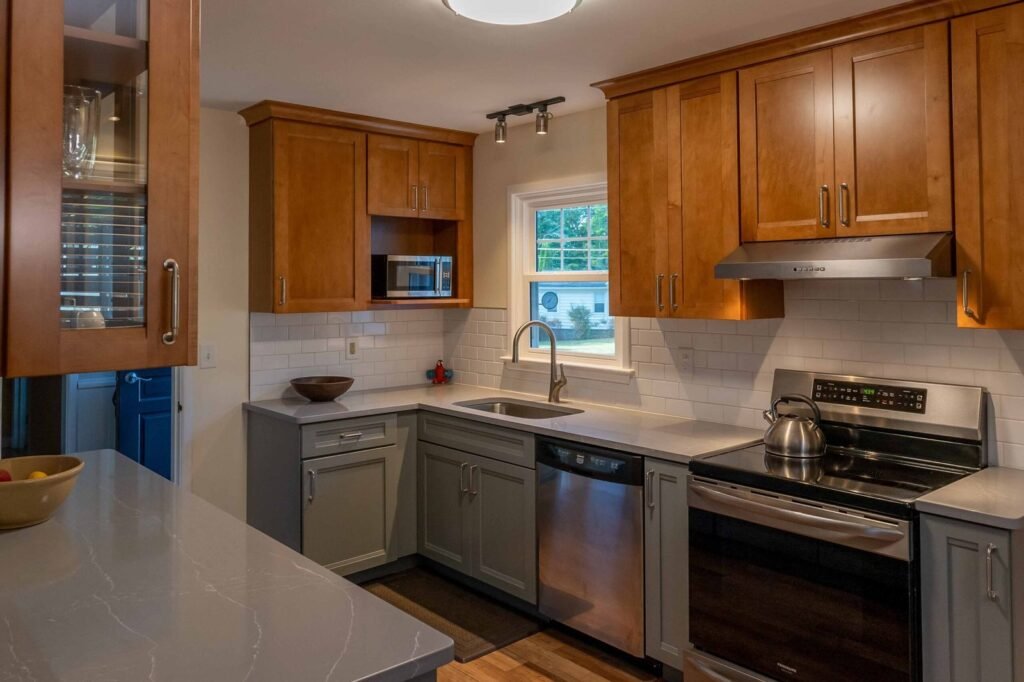
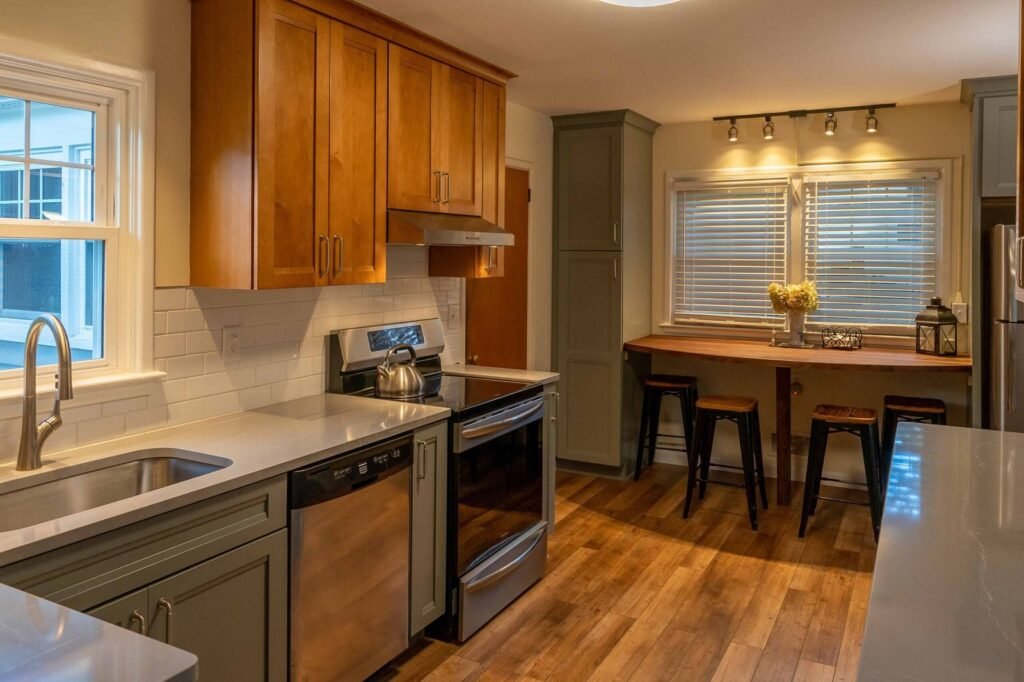
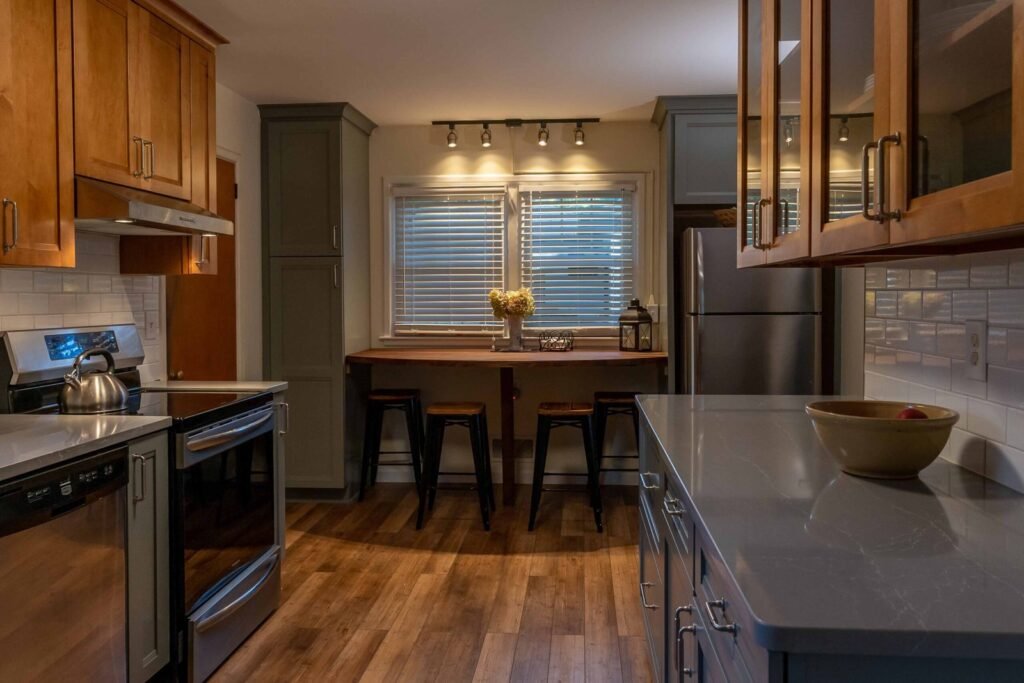
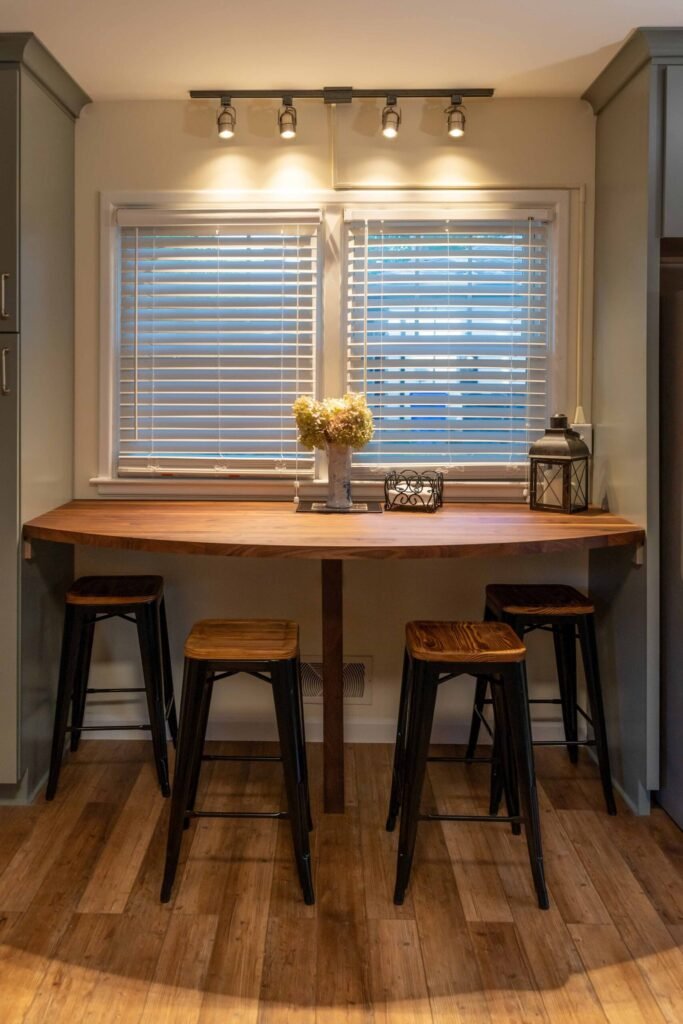
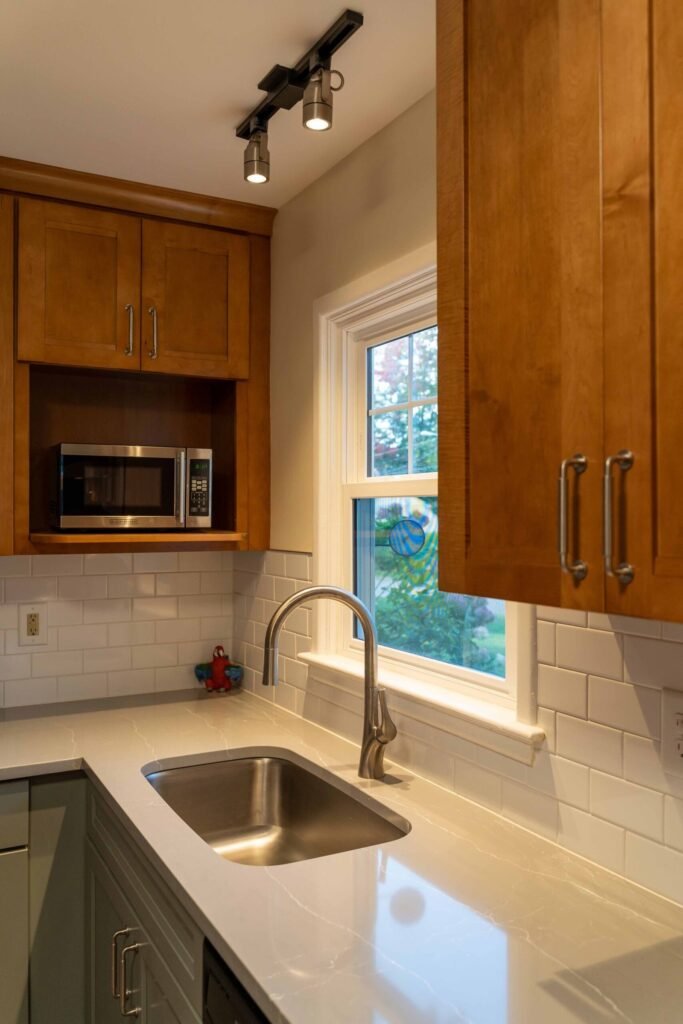
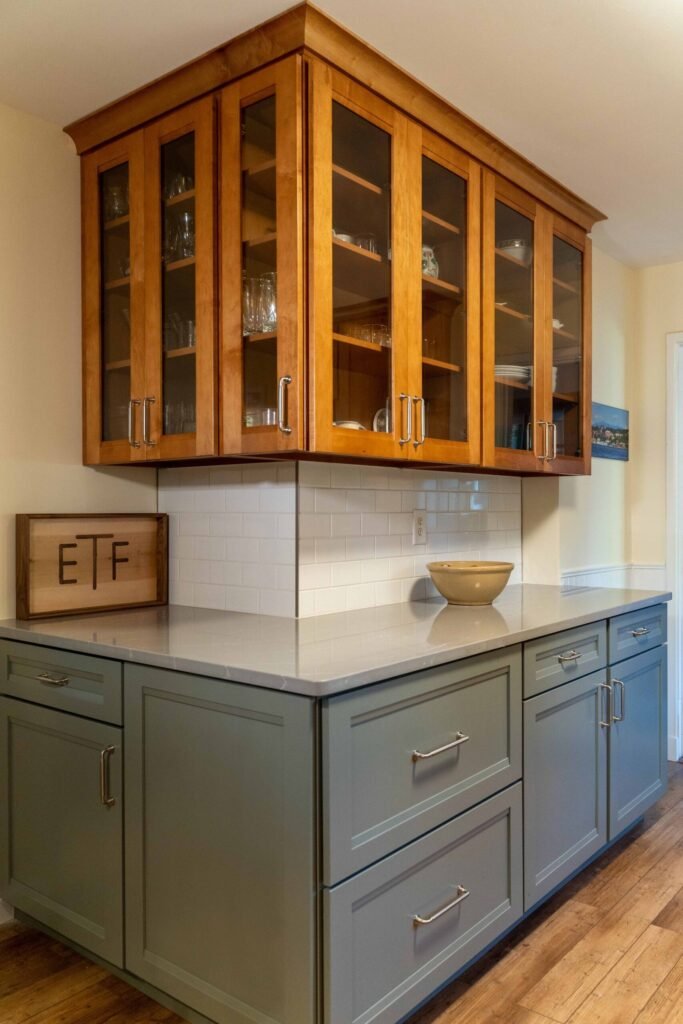
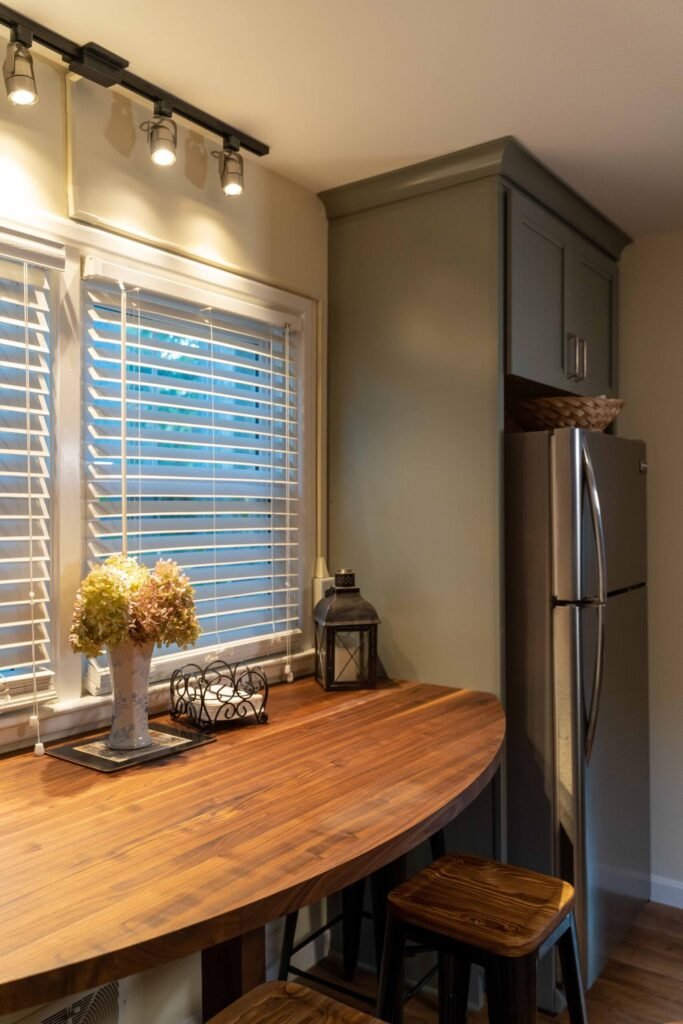
This kitchen renovation demonstrates how thoughtful design can transform a compact footprint into a highly functional and inviting space without sacrificing beauty. Designed for a homeowner living alone, the goal was to create more than a place to prepare meals, it was to create a kitchen that could seamlessly support cooking, everyday prep, storage, and casual dining while feeling warm, open, and timeless.
Working within a limited footprint presented the primary design challenge. Rather than allowing the size of the room to dictate what was possible, the cabinetry was strategically wrapped around the walls to maximize every available inch of storage. The design utilizes vertical space through substantial upper cabinetry, while a carefully considered combination of closed and glass-front storage keeps the room functional without making it feel visually heavy.
The cabinetry, from Merillat Masterpiece, is the foundation of the design. A two-tone palette was selected to create contrast and warmth while maintaining a classic aesthetic. Painted base cabinets provide a lighter visual foundation, allowing the warm wood-look Shaw luxury vinyl plank flooring to remain an important part of the room’s character. Above, stained wall cabinetry introduces natural warmth and gives the kitchen an almost furniture-like quality.
One of the defining features of the design is the use of glass-front upper cabinetry that wraps the corner of the kitchen. Rather than treating these cabinets as simple storage, they become an architectural feature. The glass allows the cabinetry to visually recede while providing an opportunity to display treasured pieces and everyday items. The result adds depth, lightness, and personality to what could otherwise have been a visually imposing wall of cabinetry.
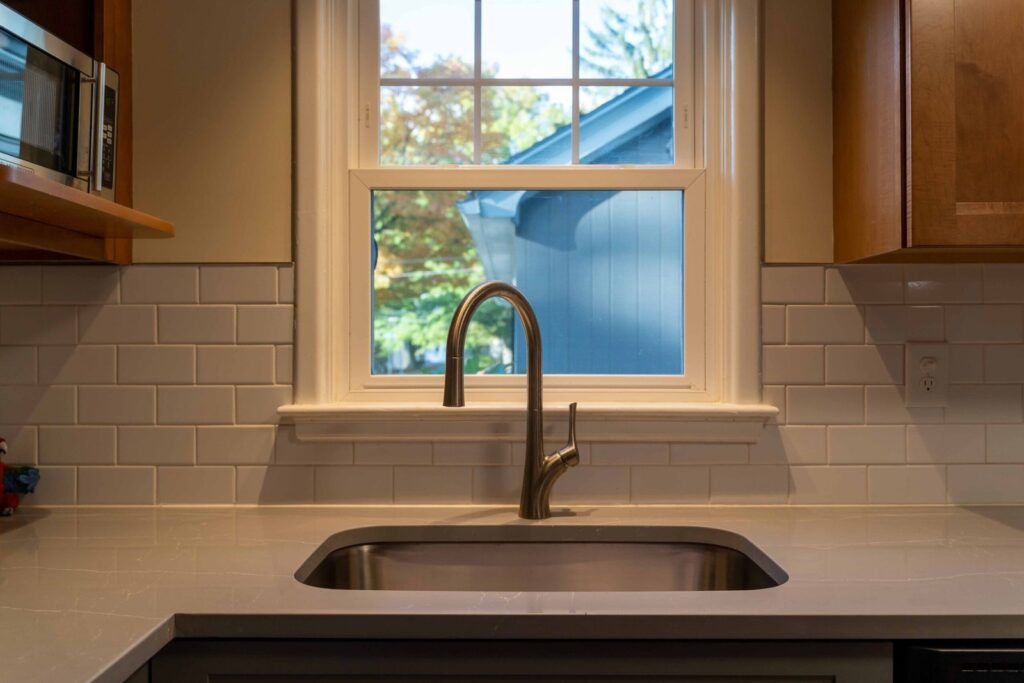
The countertop, Cambria quartz in the Clareanne design, was selected for its refined appearance and durability. Its subtle pattern complements both the painted and stained cabinetry, while providing a durable surface capable of supporting the kitchen’s everyday demands for years to come. A classic white subway tile backsplash reinforces the timeless character of the space and provides a clean transition between the countertop and cabinetry.
Natural light became another important element of the design. The window above the sink provides a focal point and brings the outdoors into the kitchen, while the surrounding light finishes help reflect that natural light throughout the space. Stainless appliances and understated hardware provide modern functionality without overwhelming the traditional warmth of the cabinetry.
Perhaps the most unique aspect of the renovation is the way the kitchen incorporates a dedicated breakfast nook into such a compact footprint. Rather than treating dining as a separate or secondary function, the cabinetry creates a visual frame around the nook, giving it a distinct sense of place. The warm walnut wood table and seating introduce another natural element and soften the stronger architectural lines of the cabinetry. The result is an intimate area where the homeowner can enjoy breakfast, work, read, or simply spend time in the heart of the home.
The flooring further unifies the space. Shaw wood-look luxury vinyl plank provides the warmth and visual character of wood while offering the practicality and durability appropriate for a busy kitchen environment. Its natural appearance connects beautifully with the stained cabinetry and creates continuity throughout the room.
Ultimately, this project is about maximizing function without making compromises in design. Every decision from the wrapped cabinetry and glass-front corner units to the two-tone finishes, durable quartz surfaces, natural lighting, and integrated breakfast nook was made with the homeowner’s lifestyle and the limitations of the space in mind.
The finished kitchen feels larger, warmer, and more purposeful than its footprint suggests. It is a space designed not around trends, but around longevity: a timeless kitchen that maximizes every inch, reflects the personality of its homeowner, and is built to be enjoyed for a lifetime.
Vote For Best Kitchen Remodel
Best Multi-Family (under 5 units)
Sterling Homes
DWC
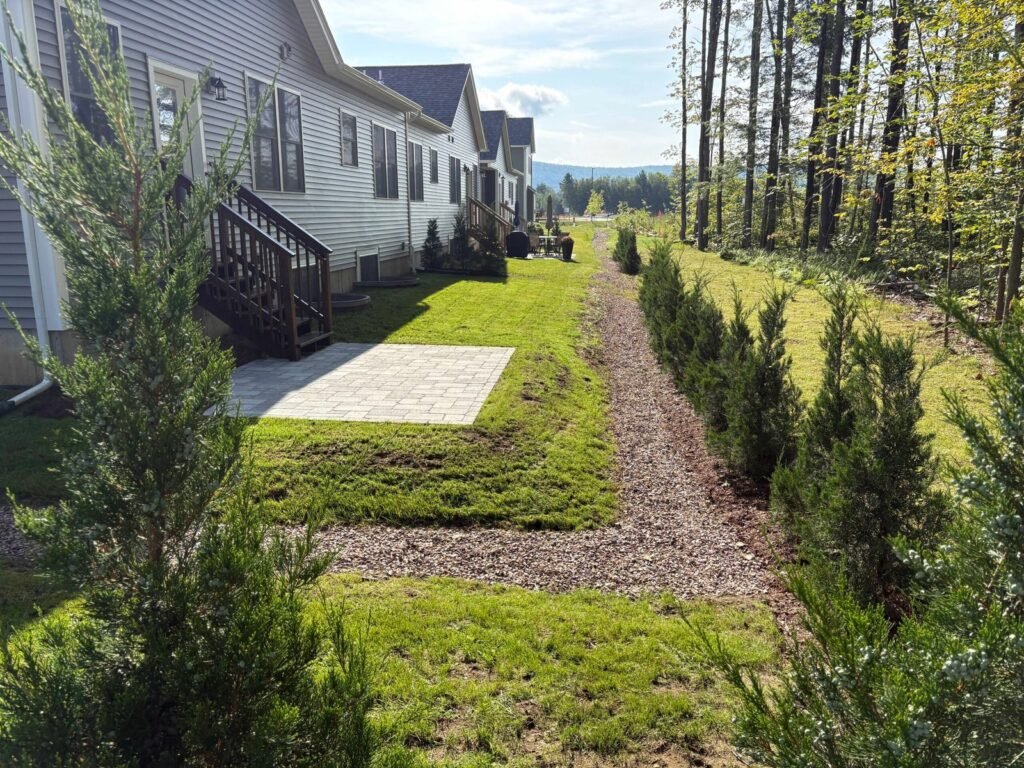
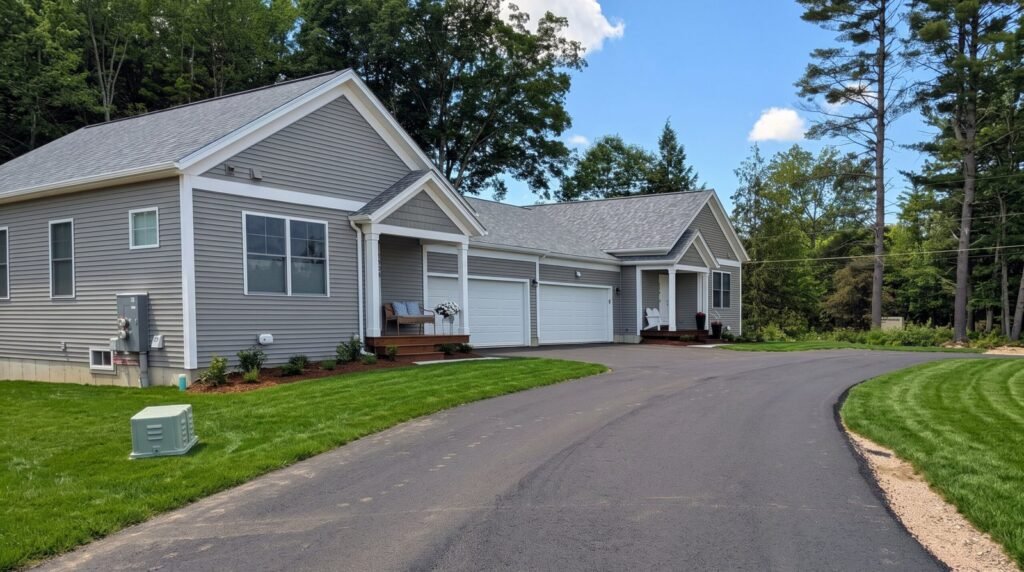
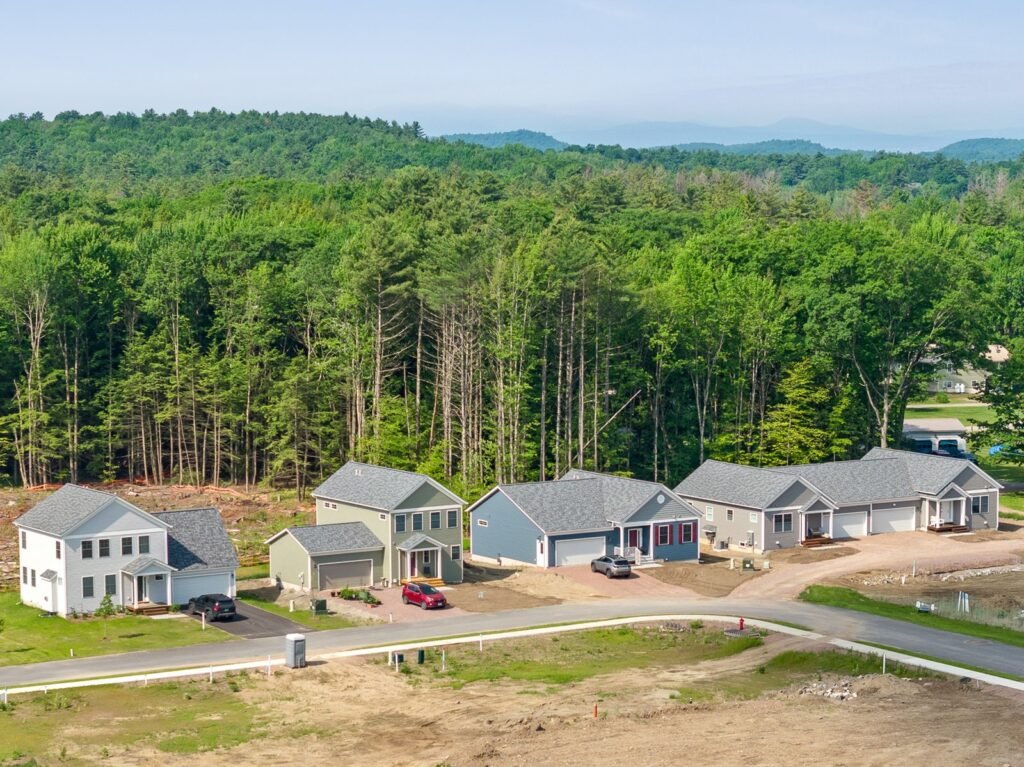
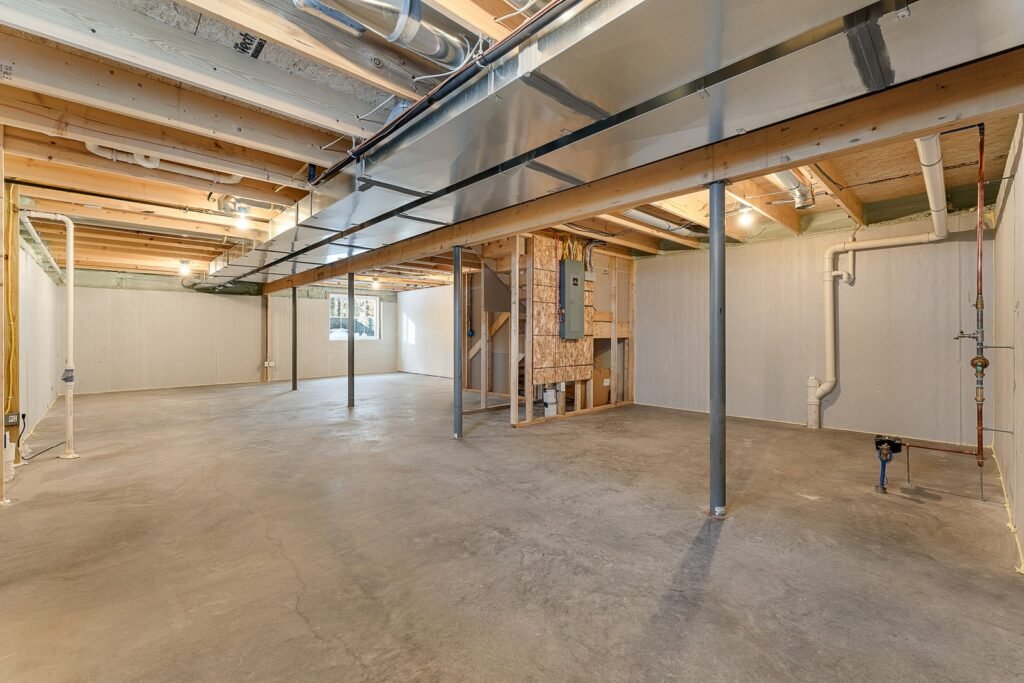
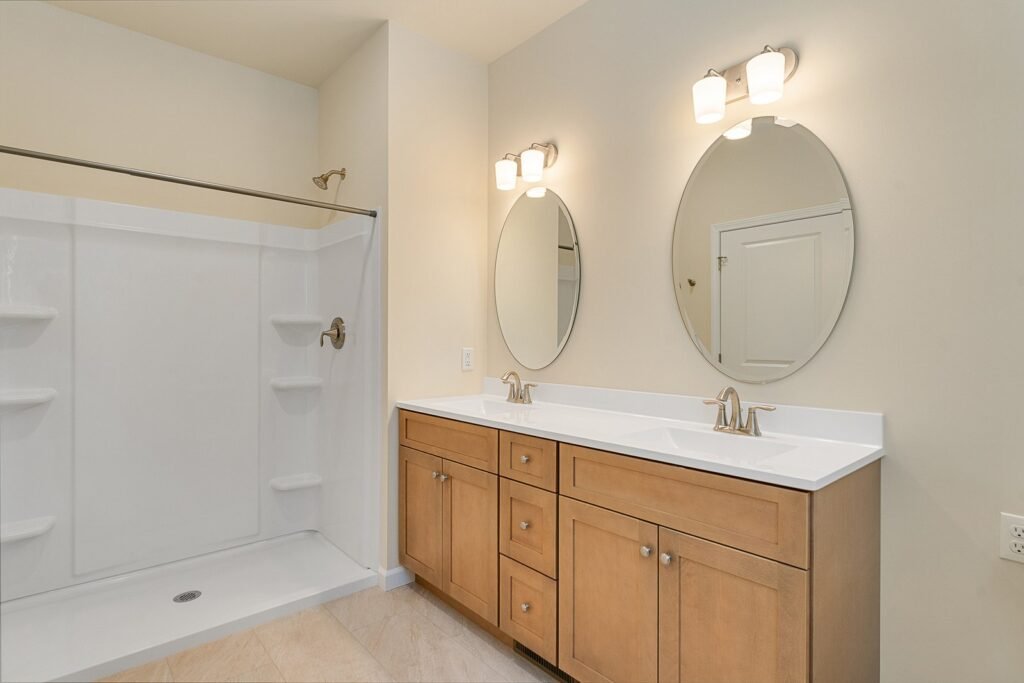
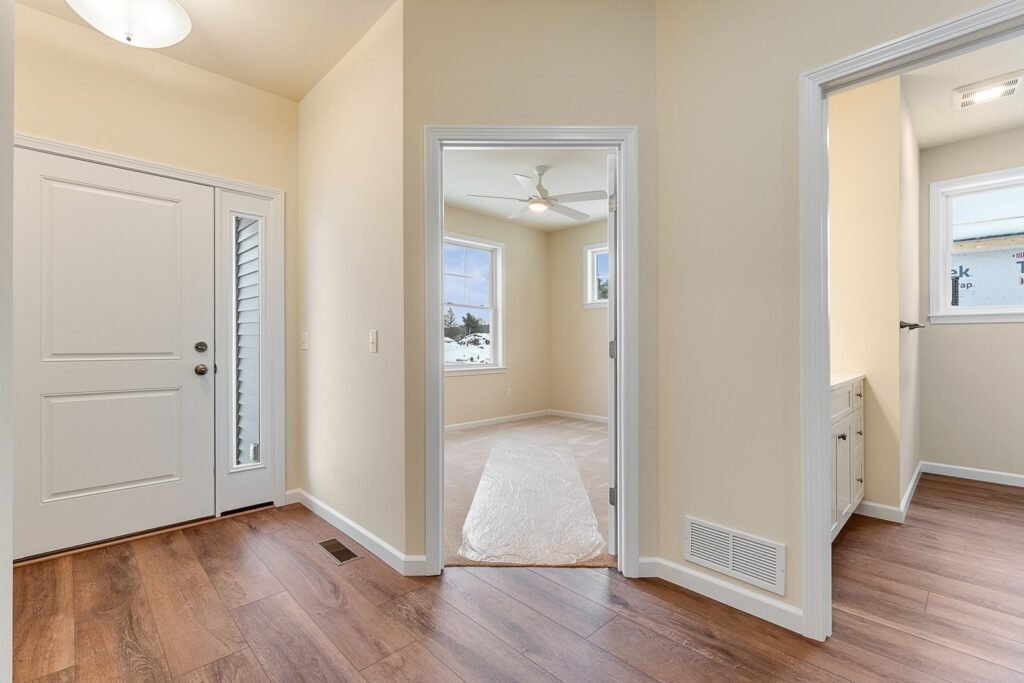
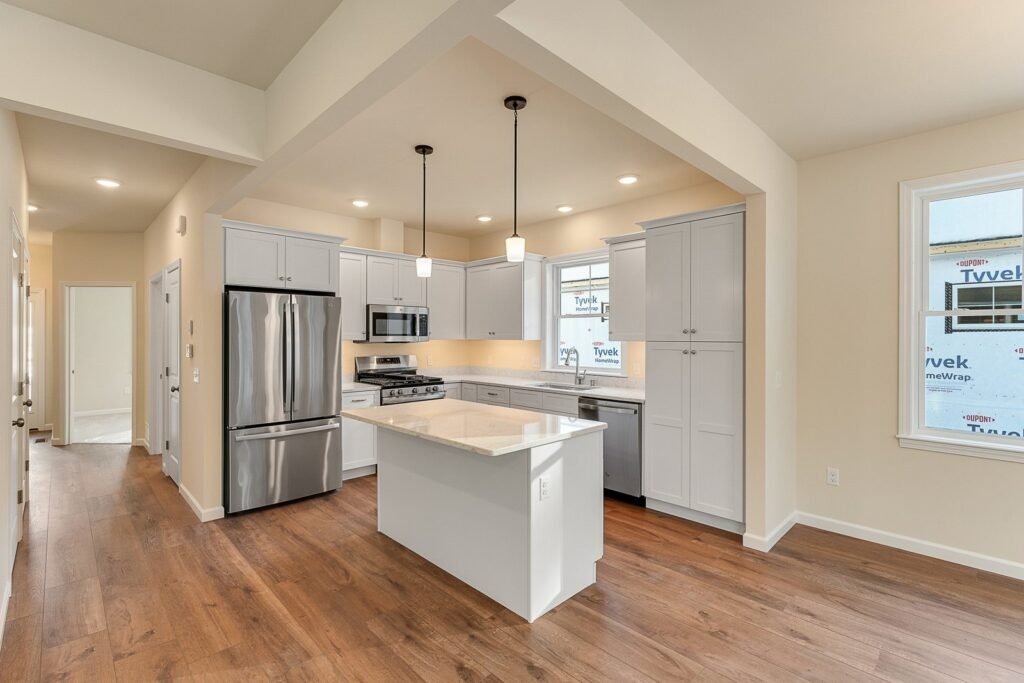
Through thoughtful planning, high-standard construction, and residential-scale design, this duplex fits comfortably into a neighborhood that includes both single-family and multi-family homes. This project provides two distinct residences that feel personal, private, and connected to the surrounding community, while demonstrating how small-scale multi-family housing can be efficient, attractive, and carefully integrated into its setting.
One of the duplex’s greatest strengths is its strong residential character. Rather than reading as a larger development or an isolated multi-family structure, the building has the approachable scale and the familiar form of a traditional home. Balanced proportions, simple rooflines, and clean exterior detailing help this duplex sit naturally beside neighboring residences. Each side maintains its own sense of identity, yet the overall composition remains cohesive and intentional.
The design succeeds because it respects the privacy and independence of each household. Separate entries, connection at the Garages, and carefully considered window placement allow the two homes to function independently while still benefiting from the efficiencies of a shared structure. This balance is especially important in a mixed residential neighborhood, where a duplex must provide the value of multi-family living without feeling out of place with its surroundings.
The exterior design responds carefully to the wooded setting where mature trees, existing vegetation, and restrained new plantings help the duplex feel settled into the landscape. Thoughtfully oriented screening adds privacy between homes, while the understated landscaping softens the transition between architecture and environment. The result is a building that complements the surrounding neighborhood instead of competing with it.
Durability and low-maintenance performance were central to the project. Vinyl siding, shingled roofing, and carefully selected exterior finishes were chosen to withstand Vermont’s seasonal climate while maintaining a clean, timeless appearance. The restrained material palette gives this duplex a polished look without relying on unnecessary ornamentation. Instead, the craftsmanship, proportions, and landscape carry the design, supporting long-term value for residents and the broader neighborhood.
This project is a strong example of efficient small-scale multi-family planning. Each residence makes effective use of its footprint while providing the features expected in a comfortable home. Each side offers 1,356 square feet of single-level living with two bedrooms and two bathrooms, supported by a lower level that matches the square footage above and provides considerable future finished space opportunity. A two-car garage for each unit offers practical vehicle and storage capacity, while appropriately sized front porches and rear patios extend daily living outdoors in a private setting.
Inside and out, the design emphasizes everyday livability. The plan avoids wasted space and unnecessary complexity, focusing instead on natural light, clear circulation, functional entries, usable living areas, privacy, and easy access to the outdoors. These choices make each residence feel complete and comfortable on its own, not like one half of a larger building.
Taken as a whole, this project shows how thoughtful duplex design can add meaningful housing while preserving the character, privacy, and scale that make a neighborhood feel cohesive. Its practical layout, durable construction, and residential warmth create a lasting contribution that feels both useful and well suited to its setting.
Snyder Homes
Spear Meadows Duplex
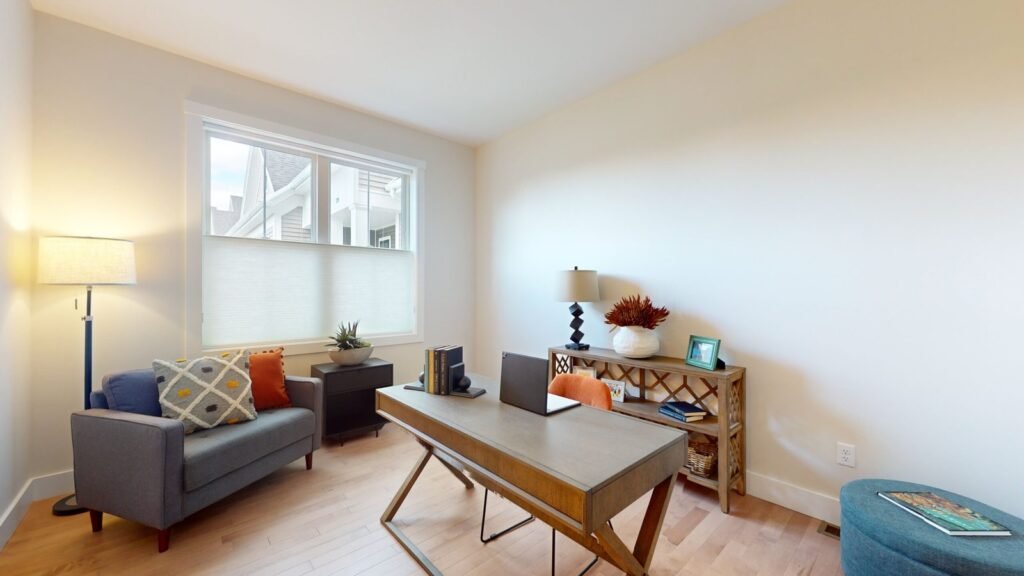
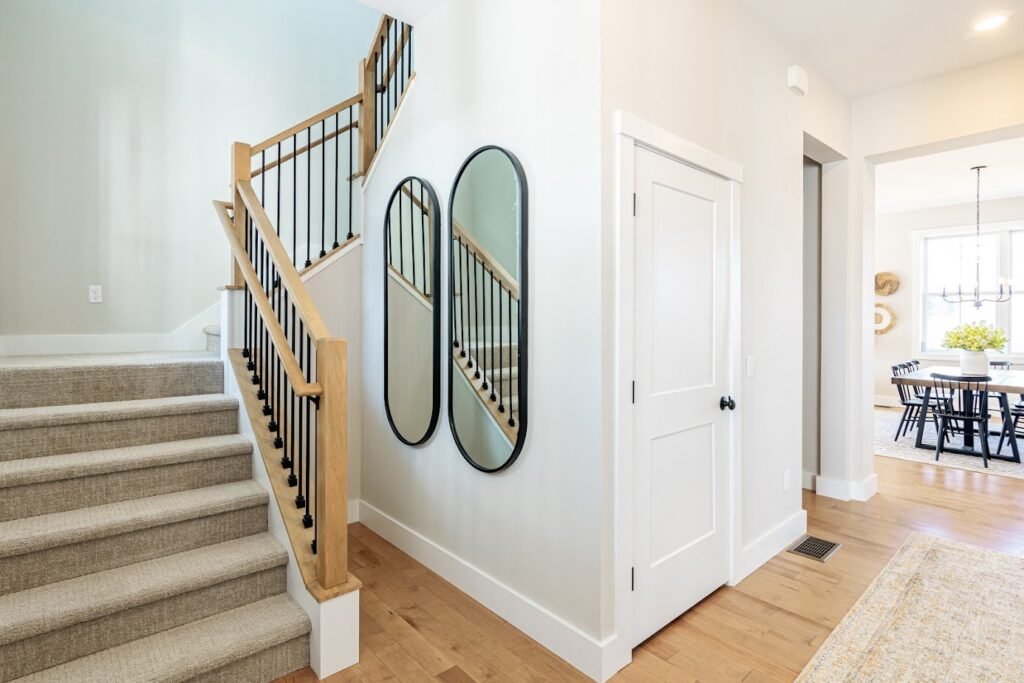
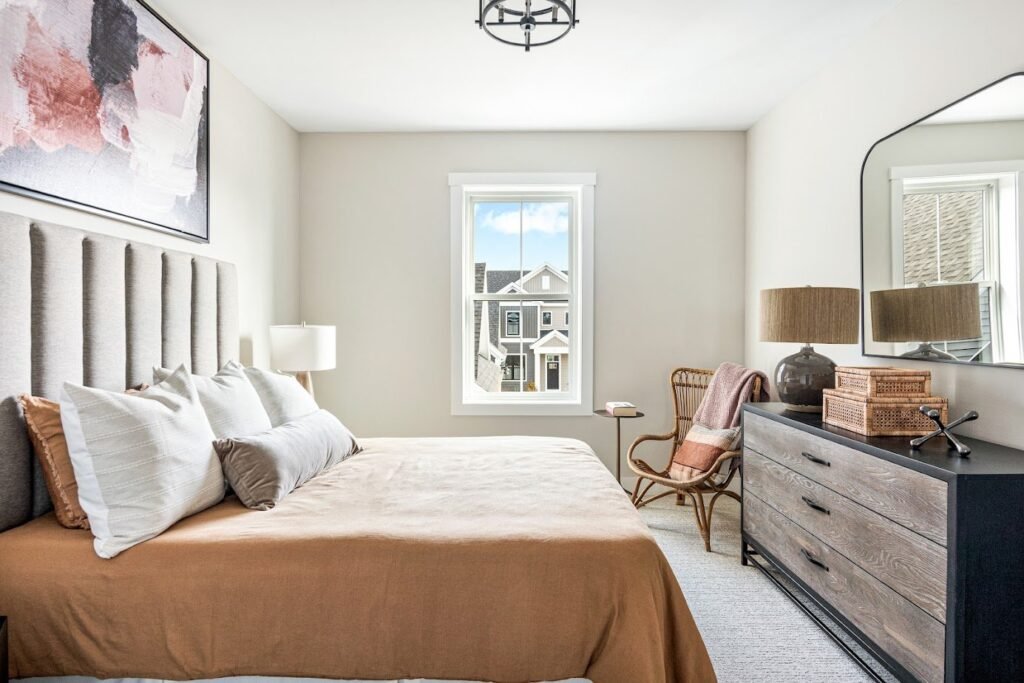
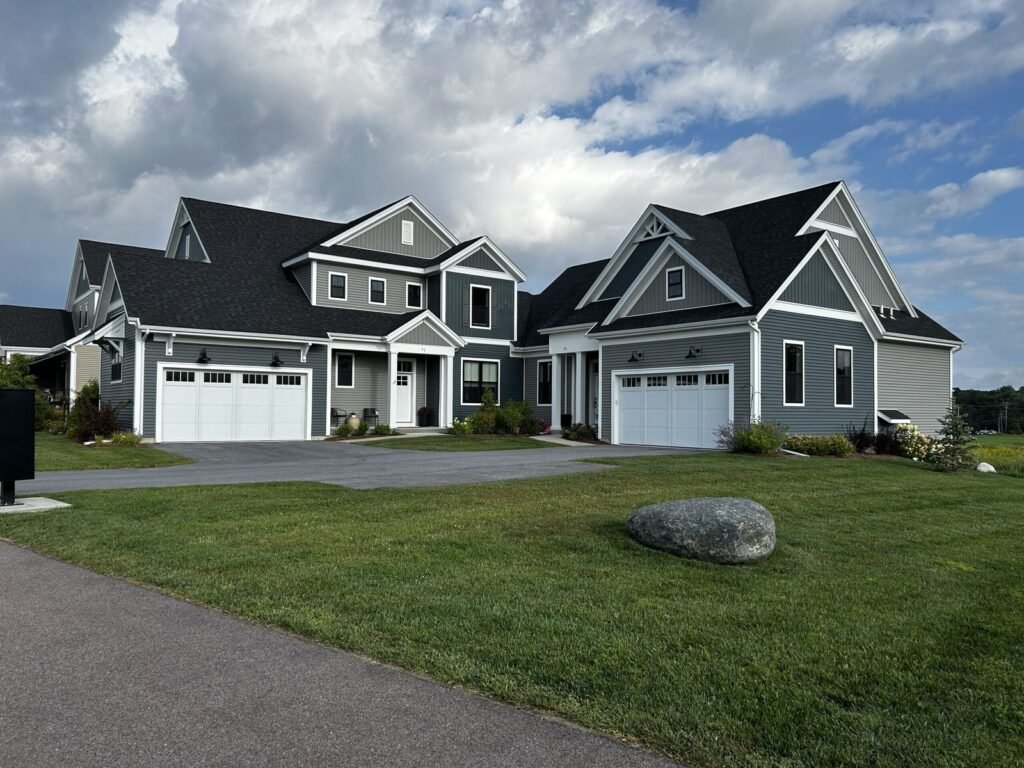
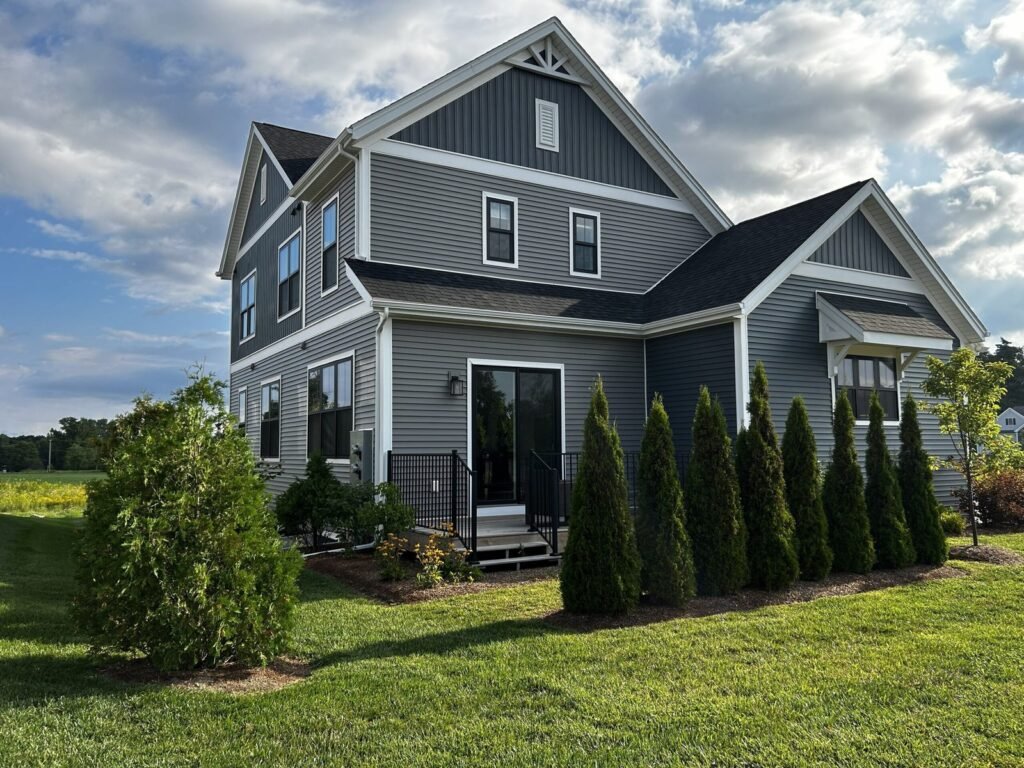
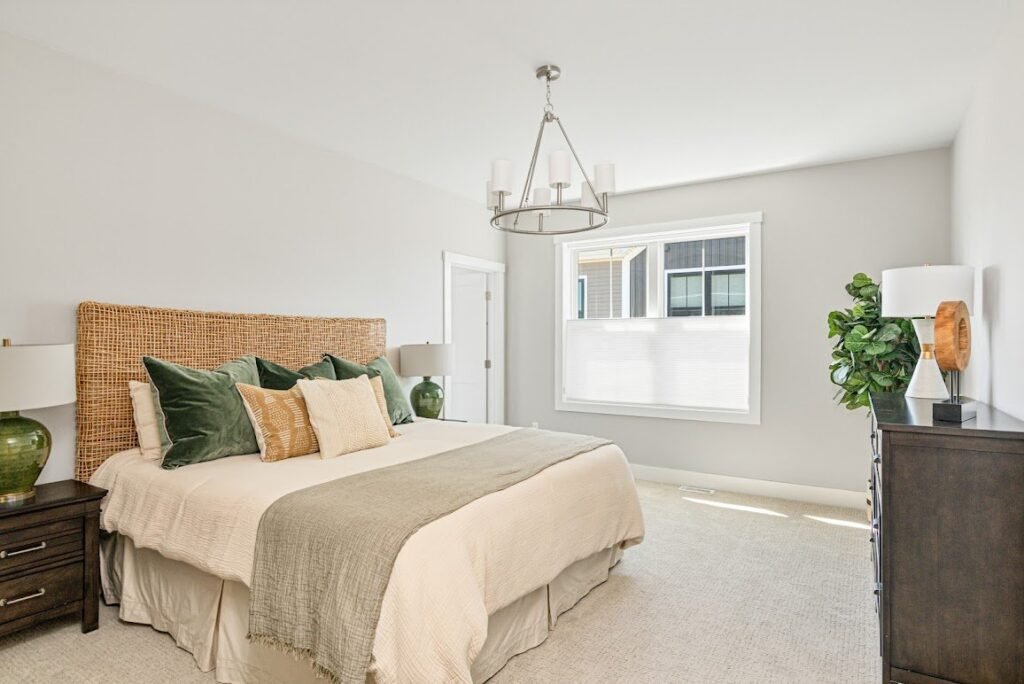
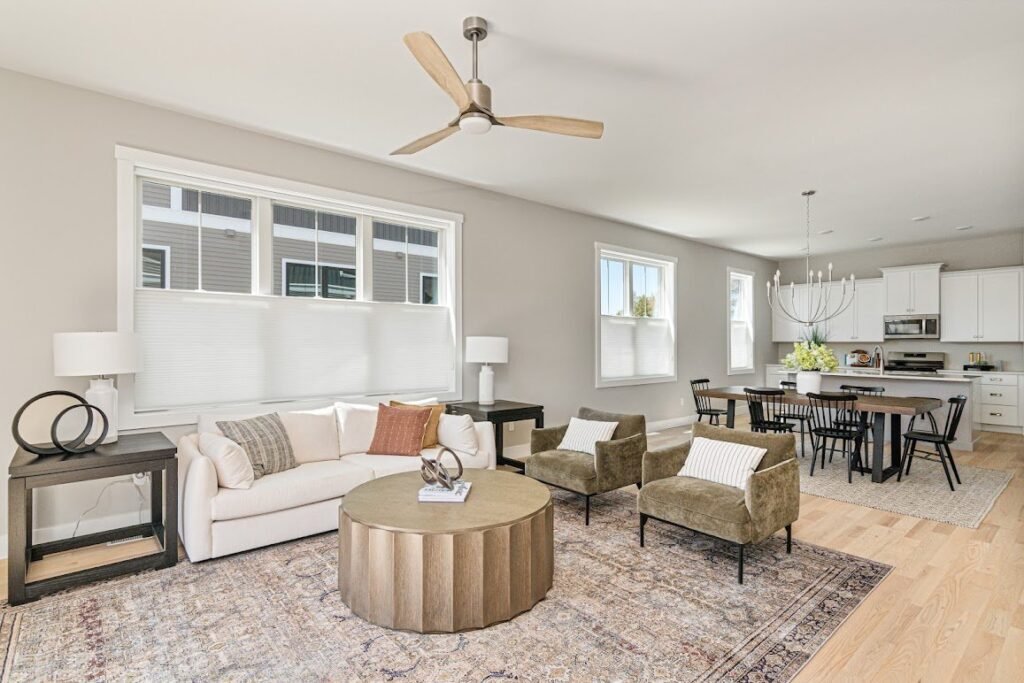
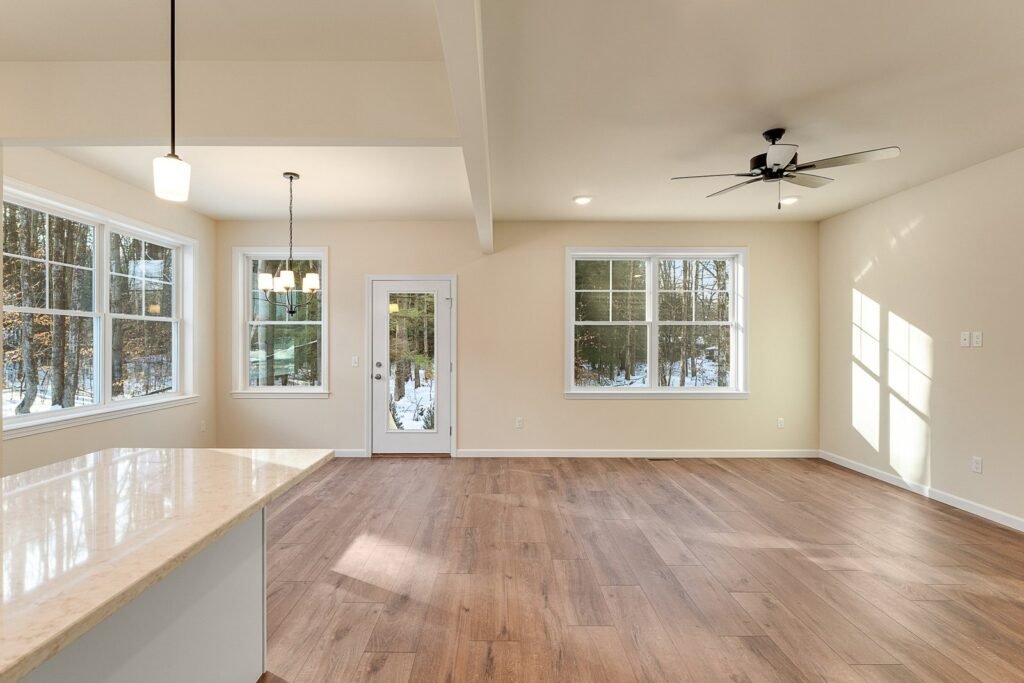
This thoughtfully designed duplex offers a flexible, modern residential arrangement that balances privacy, functionality, and long-term versatility. The plan includes two distinct homes within one cohesive structure: a single-story dwelling with two bedrooms and two full bathrooms, and a larger two-story dwelling with three bedrooms, two full bathrooms, and one-half bath. Each residence features open main-level living areas, dedicated flex space, and the option for finished basement square footage, creating adaptable homes that can respond to changing lifestyle, household, rental, or resale needs over time. Overall, the property combines the convenience of independent living with the efficiency of a shared building form, resulting in a versatile and attractive dwelling well suited for homeowners.
Beyond the thoughtful layout and flexible living options, this South Burlington location adds another layer of everyday convenience and long-term appeal. Located south of Swift Street and Spear Street, this duplex benefits from one of Chittenden County’s most convenient and desirable residential settings. The location offers a comfortable neighborhood feel while remaining close to everyday services and employment centers throughout the Burlington area. This balance of accessibility, livability, and long-term convenience makes the property especially appealing to homeowners.
The single-story dwelling is ideal for those seeking accessible, efficient living without sacrificing comfort or style. Its two-bedroom, two-bath layout provides a practical balance of shared and private space, with the primary bedroom positioned to function as a comfortable retreat and the secondary bedroom available for family, guests, or additional workspace. The open-concept main living area brings together the kitchen, dining, and living spaces, creating a bright and connected atmosphere for everyday living. With fewer interior barriers, the layout supports natural light, easy movement, and a sense of spaciousness that makes the home feel larger and more inviting.
The two-story dwelling offers a large layout with three bedrooms, two full bathrooms, and one-half baths. The main level is designed around open, shared living space, with the kitchen, dining area, and living room arranged to encourage connection and efficient use of square footage. Upstairs, the three-bedroom layout provides comfortable private space for the household. The primary suite is designed with an ensuite bathroom and closet space, while the additional bedrooms share access to a second full bath.
Both dwellings include a main-level flex space that adds important adaptability and enhances day-to-day livability. This room can serve as a private home office, homework area, hobby room, reading nook, fitness space, playroom, informal den or occasional guest area, allowing the home to evolve with the needs of its occupants. By placing these flexible rooms on the main level, the plan keeps frequently used spaces accessible and connected while still offering a degree of separation from the primary gathering areas.
Both dwellings include the option for basement square footage to be finished, creating another layer of flexibility and value. An unfinished basement may serve as practical storage, mechanical space, or future expansion area, while a finished basement could add recreation space, guest accommodations, fitness area, workshop, or additional office space. This option allows owners to adapt the property over time as budget, lifestyle, or market needs change. For rental or resale purposes, the potential for finished lower-level square footage can also broaden the appeal of the dwelling by offering a path to increased usable living area.
Snyder Homes
The Annex Townhomes
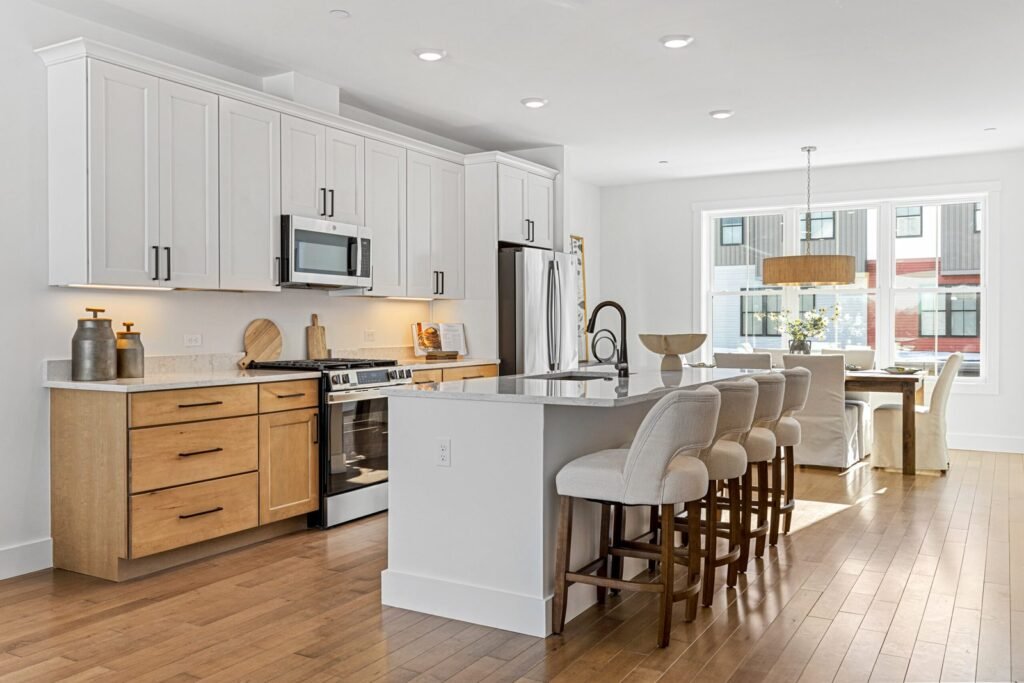
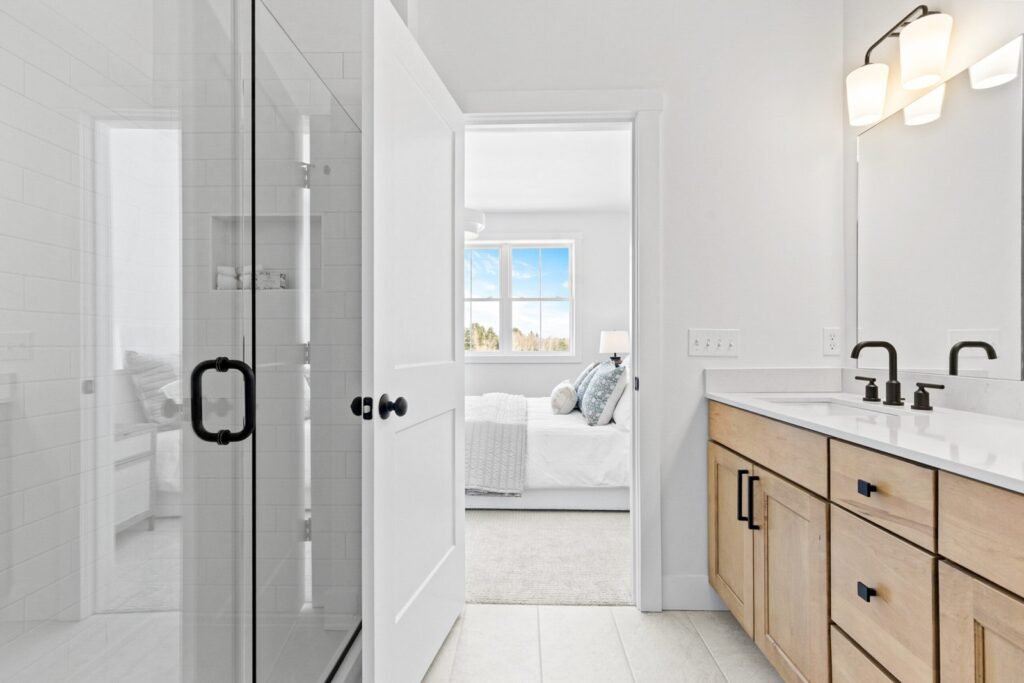
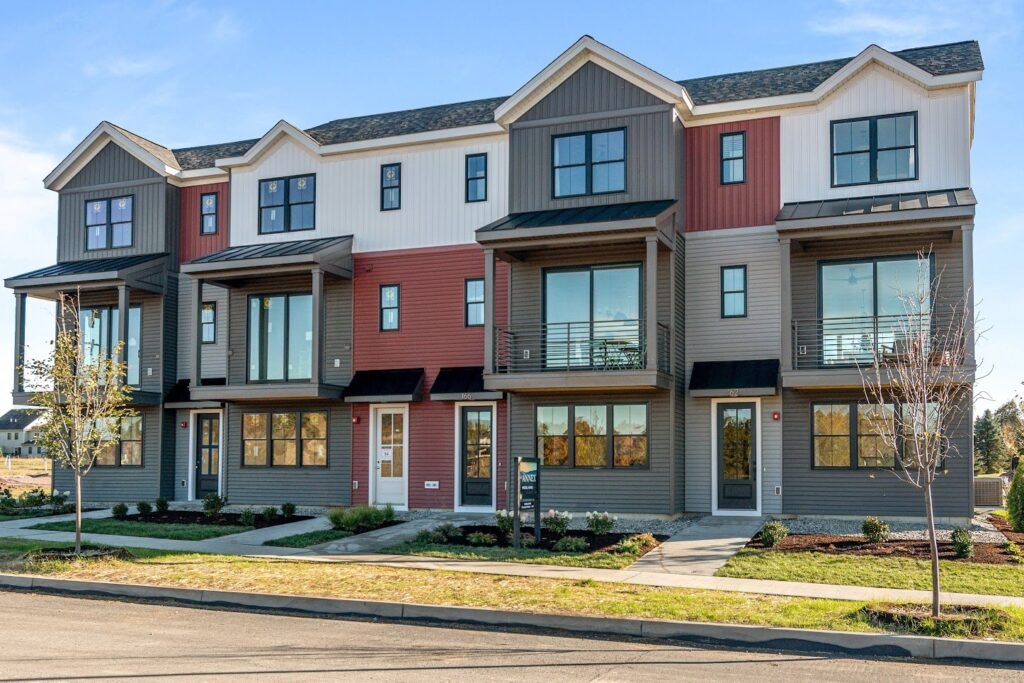
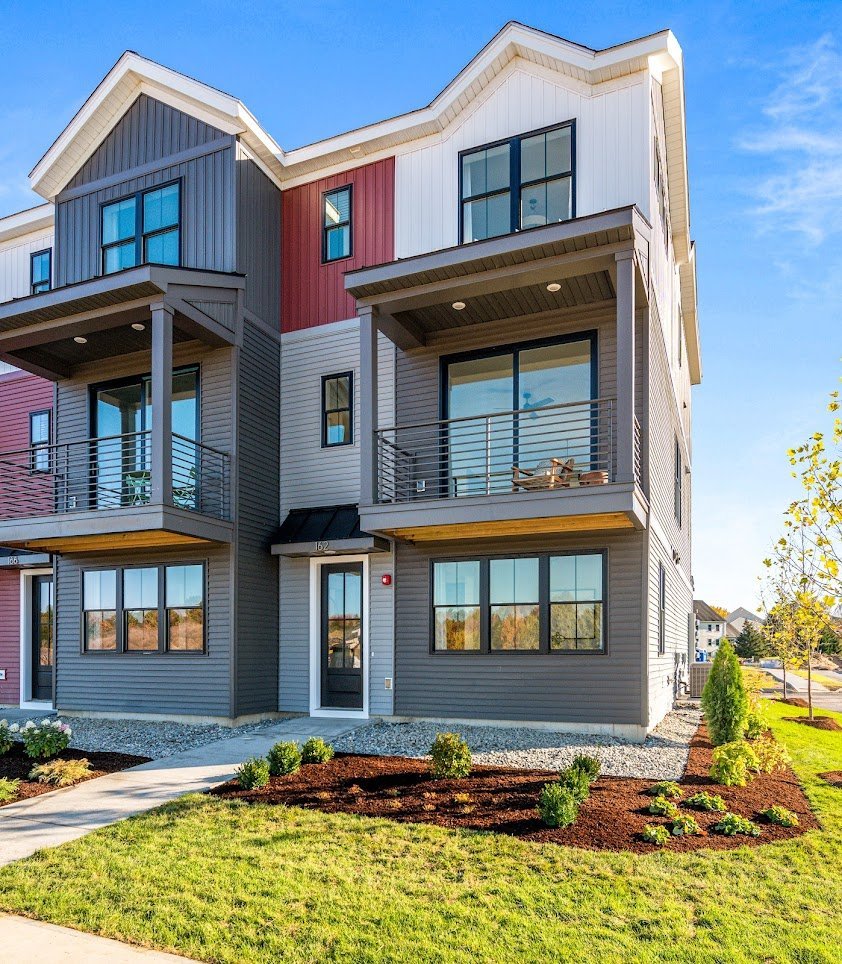
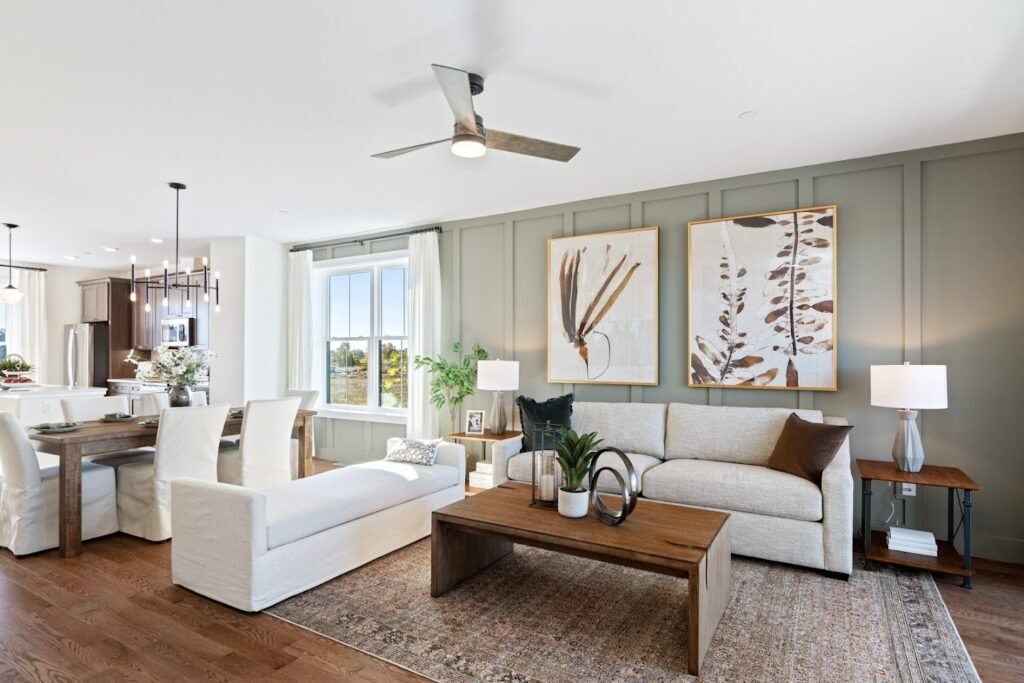
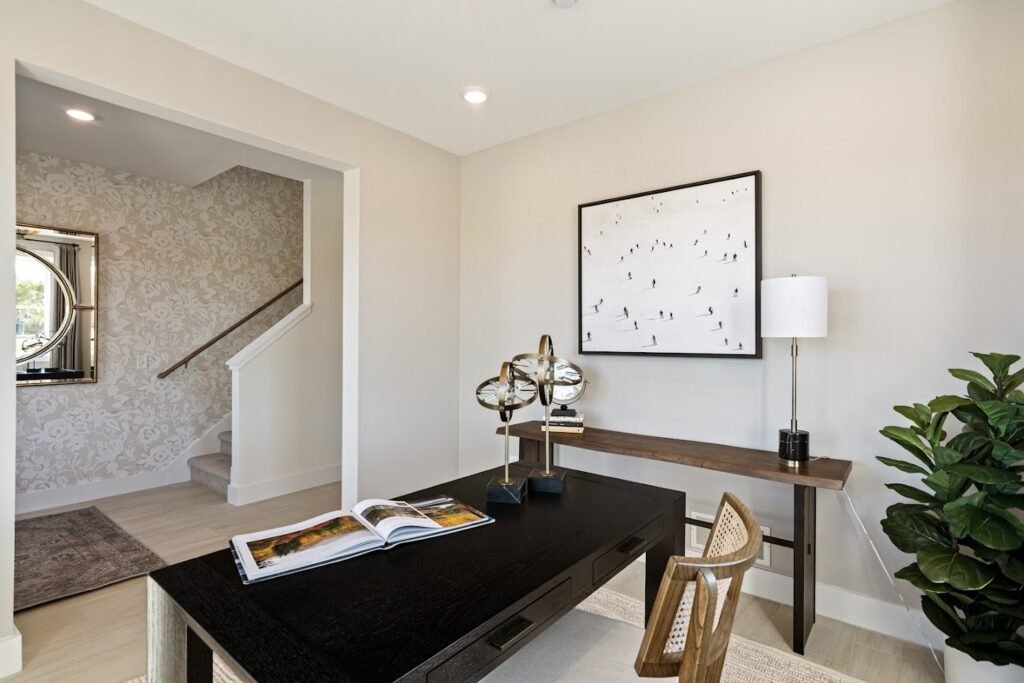
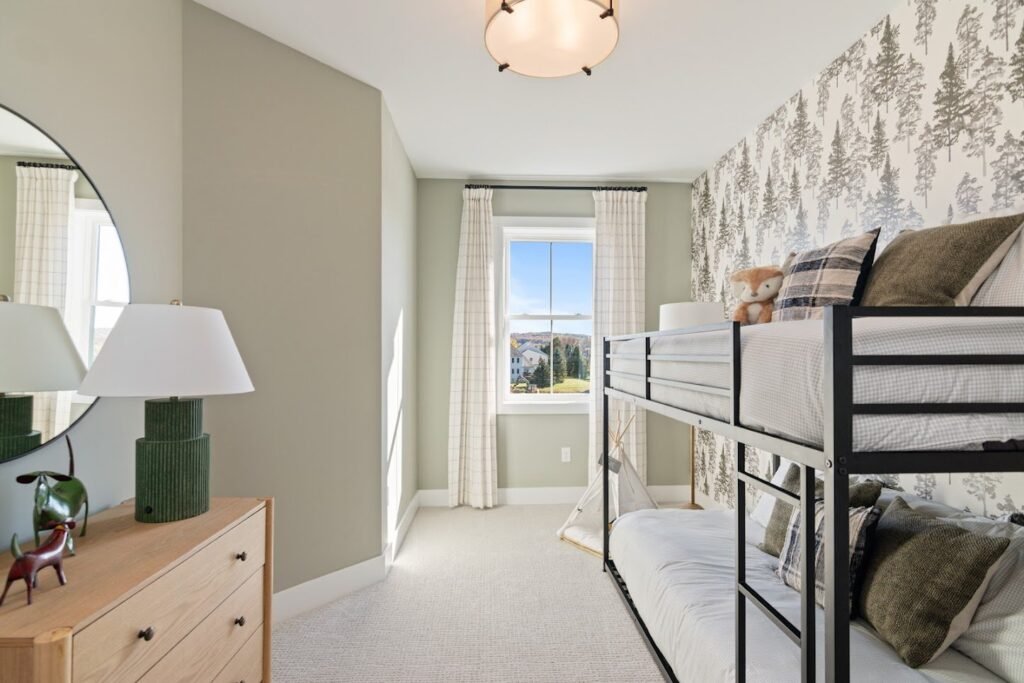
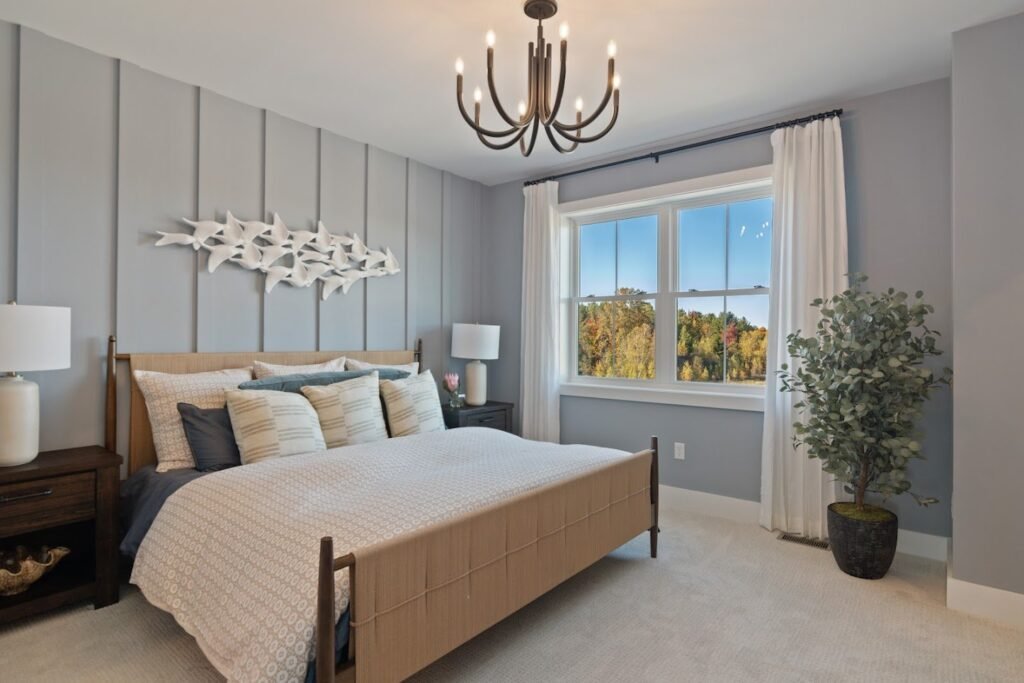
The Annex Townhomes were designed to create a multi-unit community that feels more like a neighborhood of individual homes.
For the overall neighborhood designs, we focused on the exterior elevation first. We created different rooflines and gable forms to break up the scale and give the buildings a more residential feel. The combination of white, gray, and red siding adds variation, while the dark windows and metal roof accents give the homes a clean, modern look. The covered entries and second-floor balconies also add depth to the front of the buildings.
Each residence has its own front entrance and walkway, giving homeowners a clear sense of arrival. Landscaping helps define these individual spaces while also tying the buildings together. Trees, shrubs, and planting beds create a natural transition from the sidewalk to each home.
Outdoor space was an important part of making the homes feel like individual residences. The covered balconies provide a private place for residents to sit, relax, and enjoy the outdoors. The balconies also add another layer of detail to the exterior and help create separation between the homes and the shared spaces around them.
Inside, the floor plans were designed with everyday living in mind. The Annex offers four floor plan options—Baker, Clark, Putnam, and Wheeler—giving customers the ability to choose the layout that best fits their needs. While each plan is different, they all provide open living areas, comfortable 2 or 3 bedrooms, and flexible spaces. The plans range from approximately 1,825 to 1,930 square feet.
The main living areas bring the kitchen, dining, and family rooms together to create an open space for everyday living and entertainment. The kitchen islands provide additional workspace and seating, with large windows bring natural light into the main living areas. The main floor also connects directly to the balconies, creating an easy connection between the interior and outdoor living space.
The layout of each home type creates a natural flow from floor to floor. The lower level begins with the entry and garage, providing a practical transition into the home. The main level brings the kitchen, dining area, and family room together. Creating an open and connected area for everyday living and entertainment. The upper level, where the bedrooms are located. This separation allows the main level to remain open and active while keeping the bedrooms quieter and more private. Each floor plan also includes a flex room that can be used as an office, hobby space, study area, or for whatever needs fit the homeowner’s lifestyle.
The homes also make good use of practical spaces throughout the floor plans. Pantries, walk-in closets, entry storage, and additional flexible areas provide function without taking away from the main living spaces. Each floor plan approaches the layout a little differently, giving homeowners options while keeping the overall character of The Annex consistent.
The Annex is about the balance between having your own home and being part of a larger neighborhood. Individual entrances, private outdoor spaces and multiple floor plan options help give each residence its own identity. At the same time, the buildings, sidewalks, and landscape work together to create a connected community.
We did not want to simply place multiple townhomes on a site. We wanted to create homes that feel comfortable, welcoming, and personal. By paying attention to the scale of the buildings, the spaces between them, the way the homes flow from floor to floor, and the connection between the interior and outdoors, The Annex shows how multi-unit housing can provide the feeling of individual home ownership while still creating a sense of community.
Best Multi-Family (under 5 units)
Best Remodel/Renovation
Peregrine Design Build
Gather & Grow Remodel
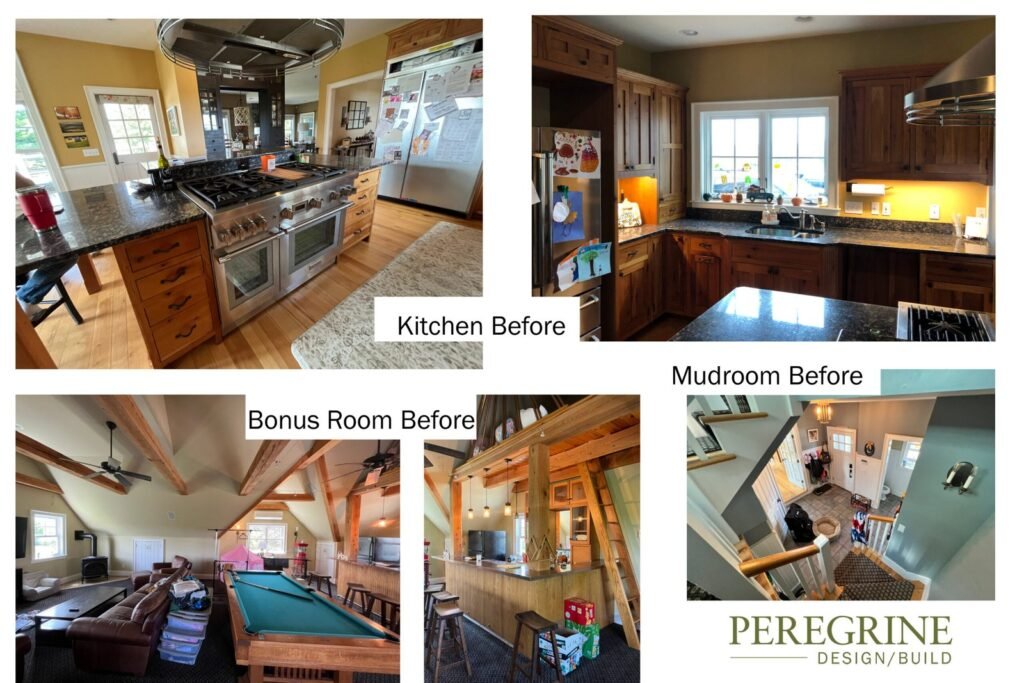
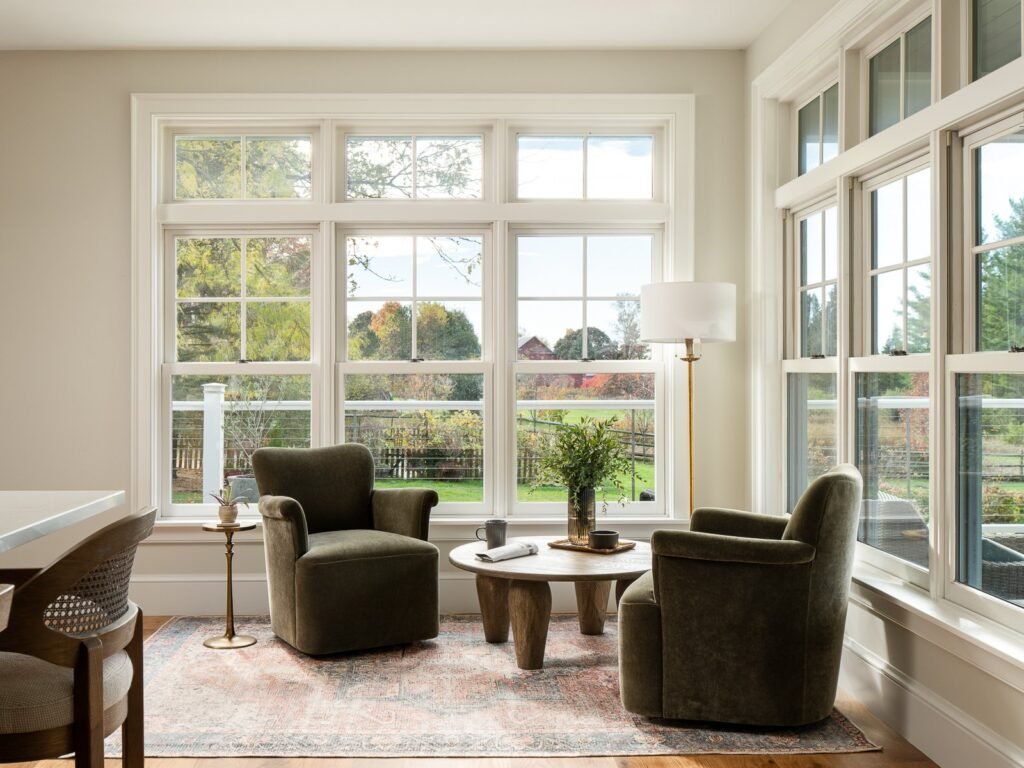
Like many active, growing families, these homeowners needed a more functional, connected space. The original kitchen and dining room were separated by a large, dark hutch, while an oversized hood dominated the sightline to the surrounding rooms. Dark countertops and heavy wood cabinetry made the kitchen feel closed in and dated.
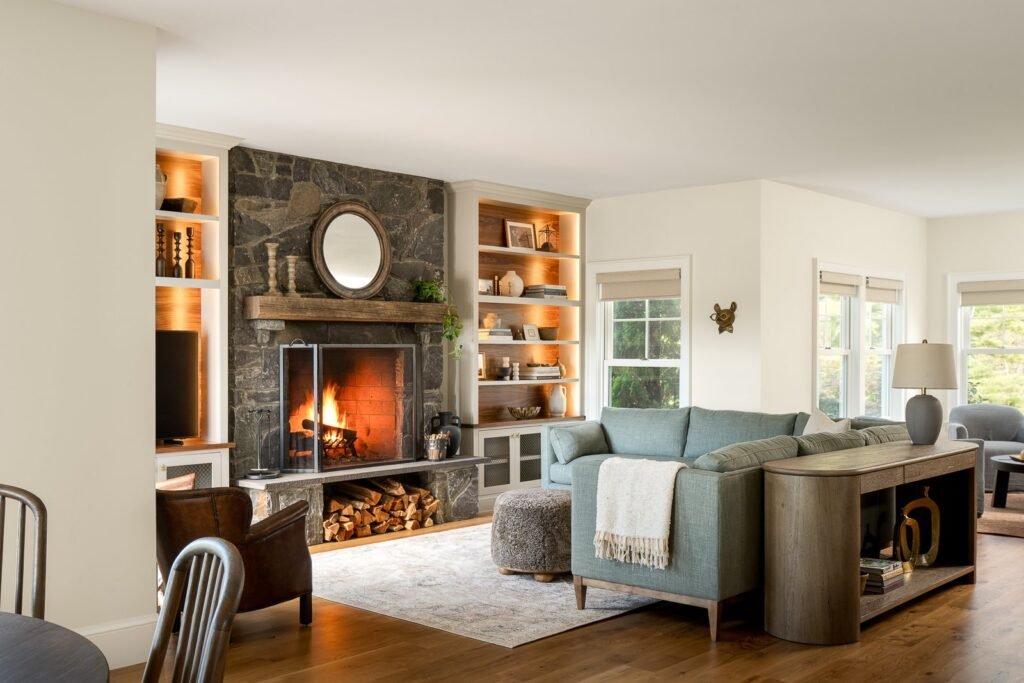
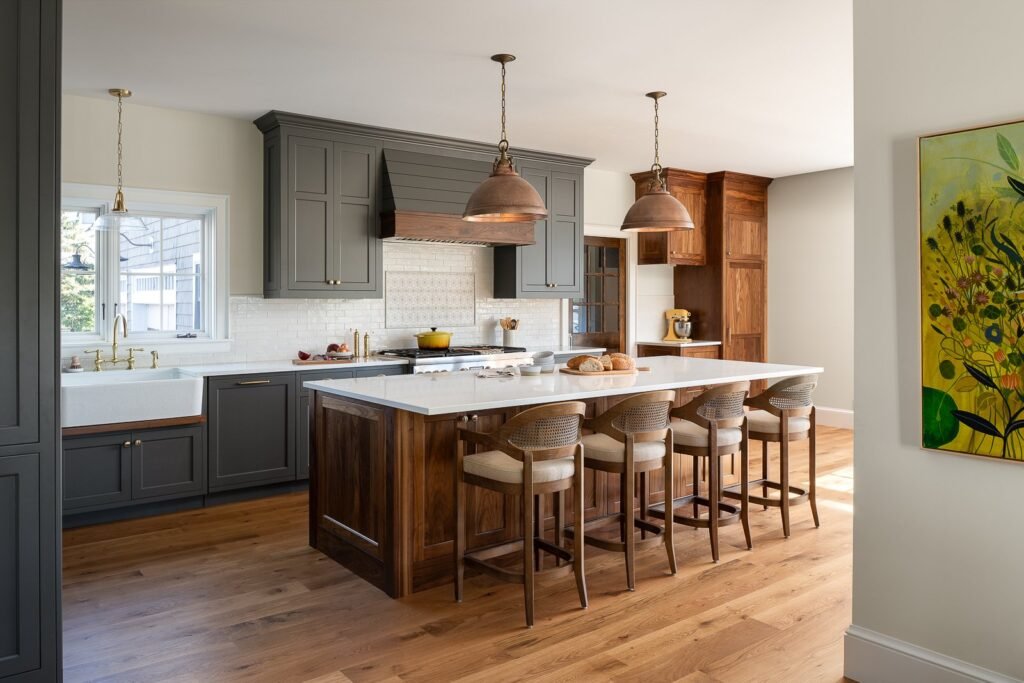
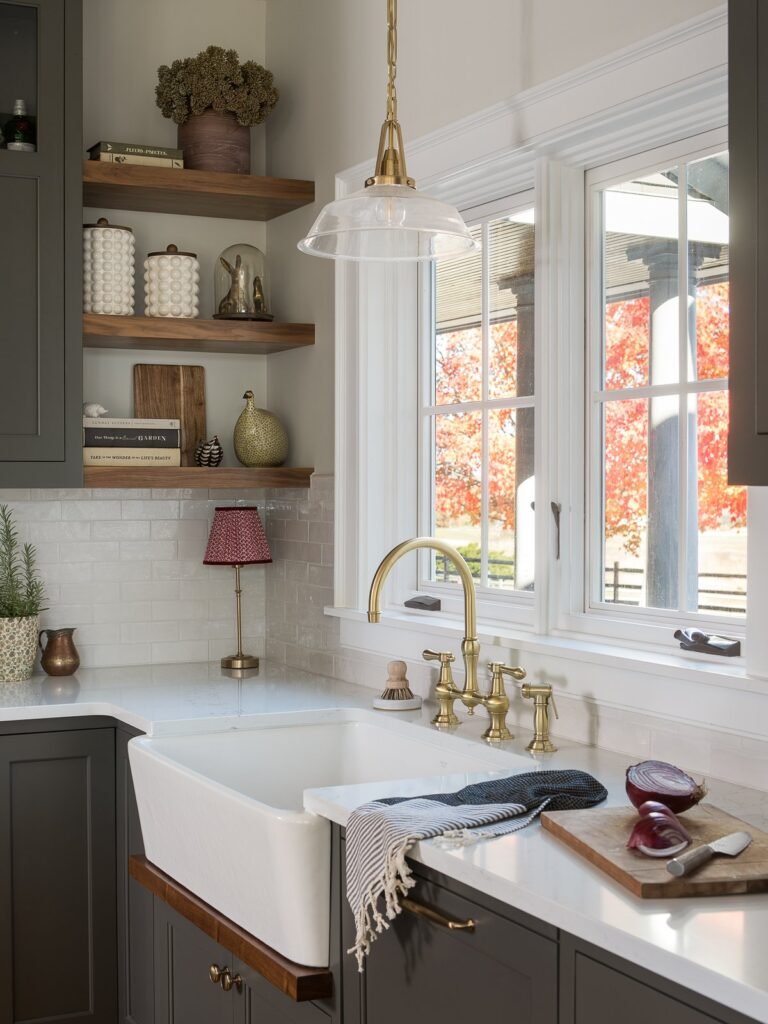
The remodel reimagined the first floor by opening the kitchen to both the dining area and living room, creating a much stronger visual and physical connection between the spaces. Removing the barriers that divided the rooms allowed natural light to travel farther through the home and made it easier for the family to cook, gather, dine, and relax together without feeling separated.
The kitchen became the true heart of the home, with clearer sightlines into the adjoining living spaces and a layout designed around the way the family actually lives. The result is a brighter, more welcoming first floor that feels larger and more cohesive while still giving each area its own purpose.
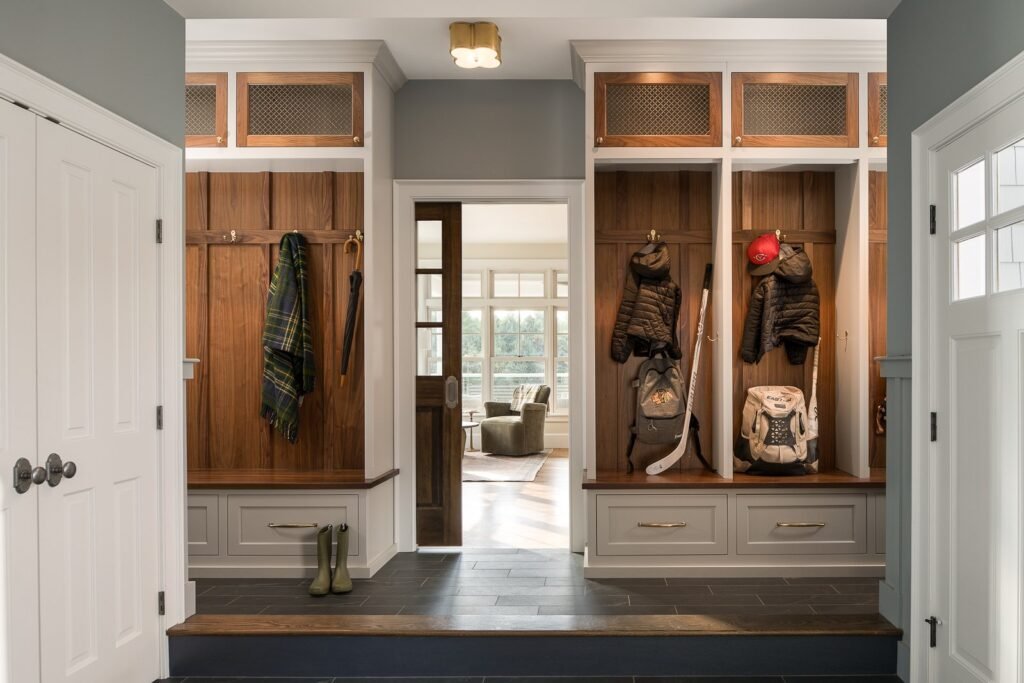
Functionality was also improved at the family’s primary entry. Previously, the mudroom was a small space with most storage hidden behind closed doors and no designated drop zone for backpacks, shoes, coats, or sports equipment. By incorporating space from the former pantry, the entry was enlarged to better accommodate the demands of an active family. Individual lockers were created for each child, giving everyone a dedicated place for everyday gear while helping keep clutter contained and the main living spaces organized.
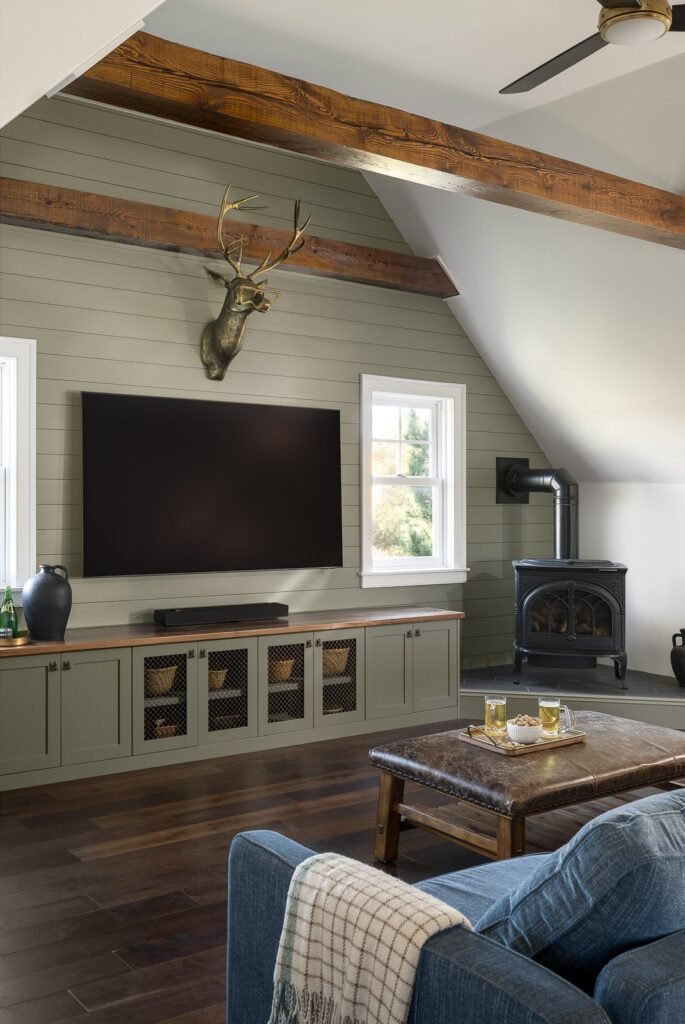
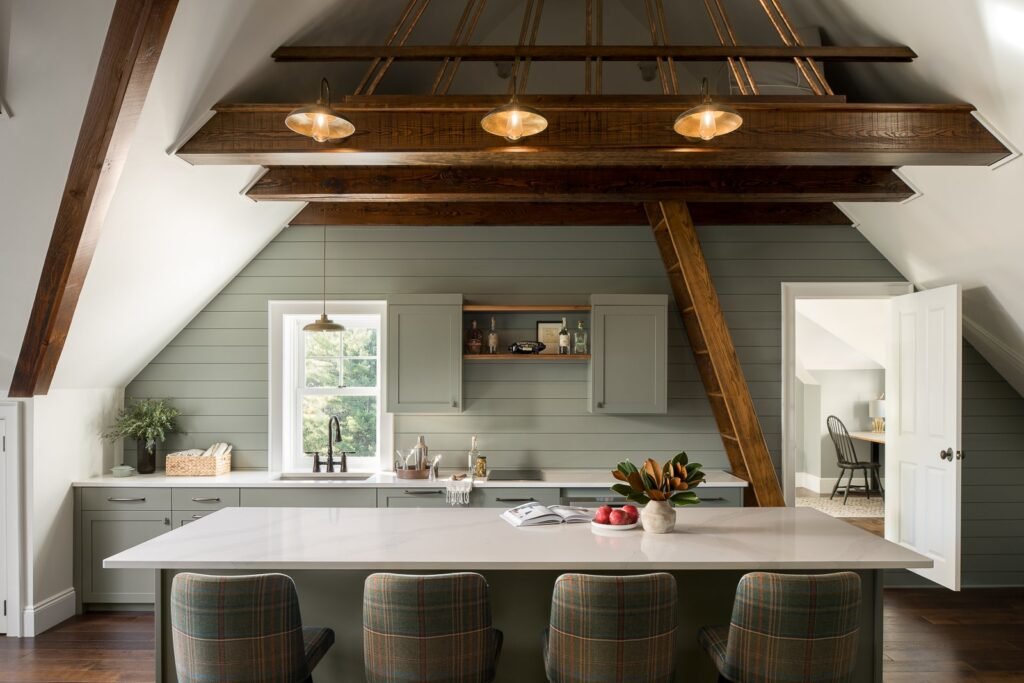
The bonus room above the garage faced similar challenges, with an existing kitchenette that was dark, underutilized, and lacked storage. This space has now been reimagined as an adult escape space and a future teen hangout, complete with a slapshot hockey game. The new space offers a flexible, fun retreat for the whole family.
TS Renovations
Stowe Mountain Renovation
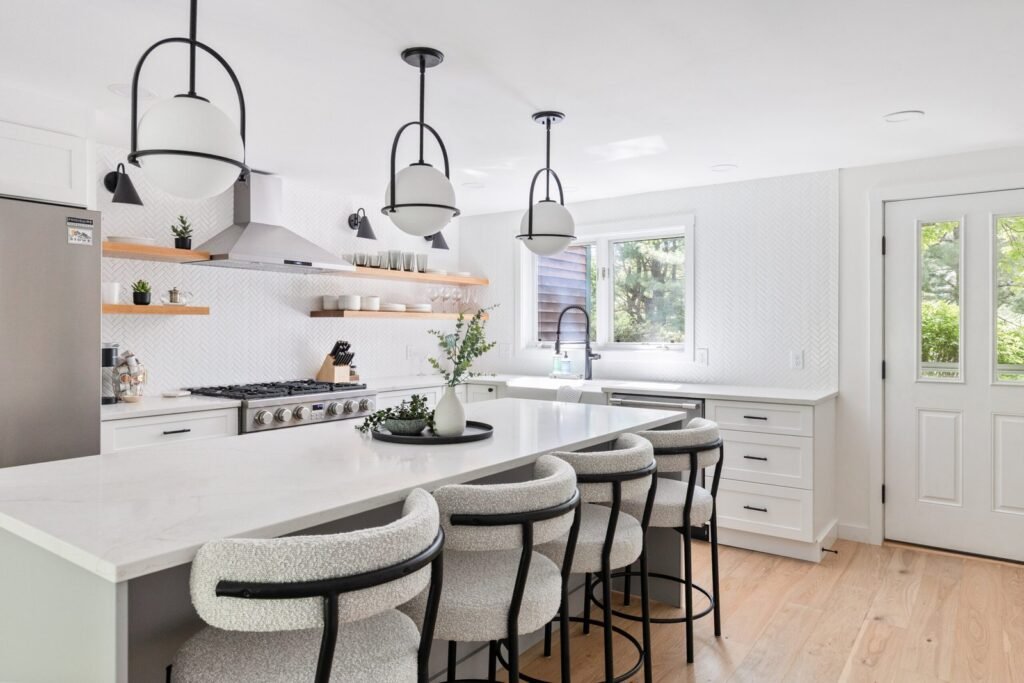
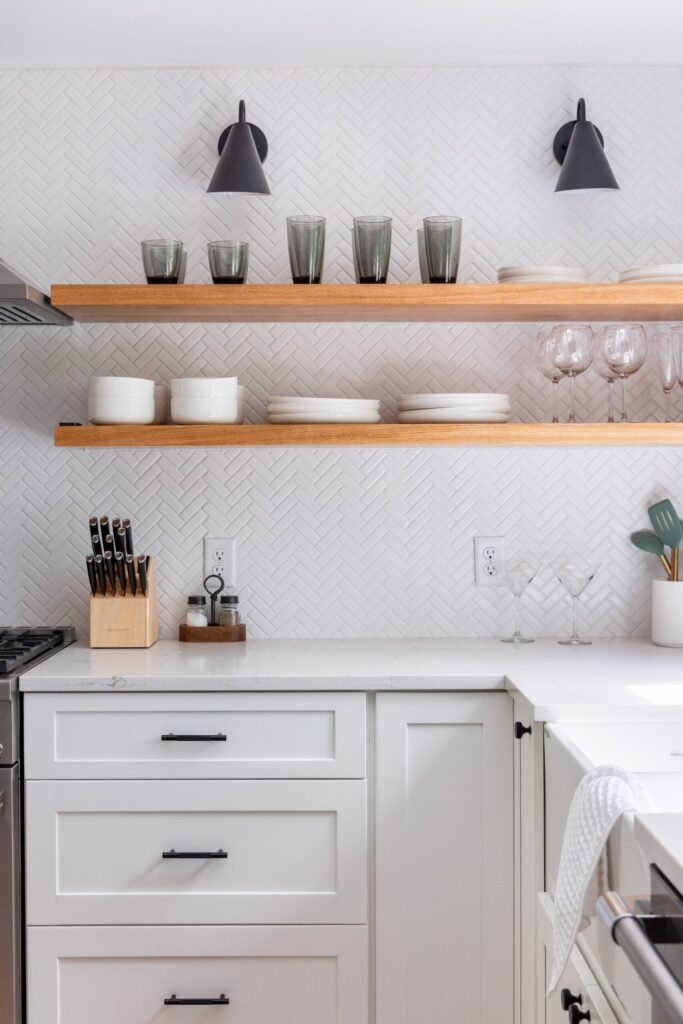
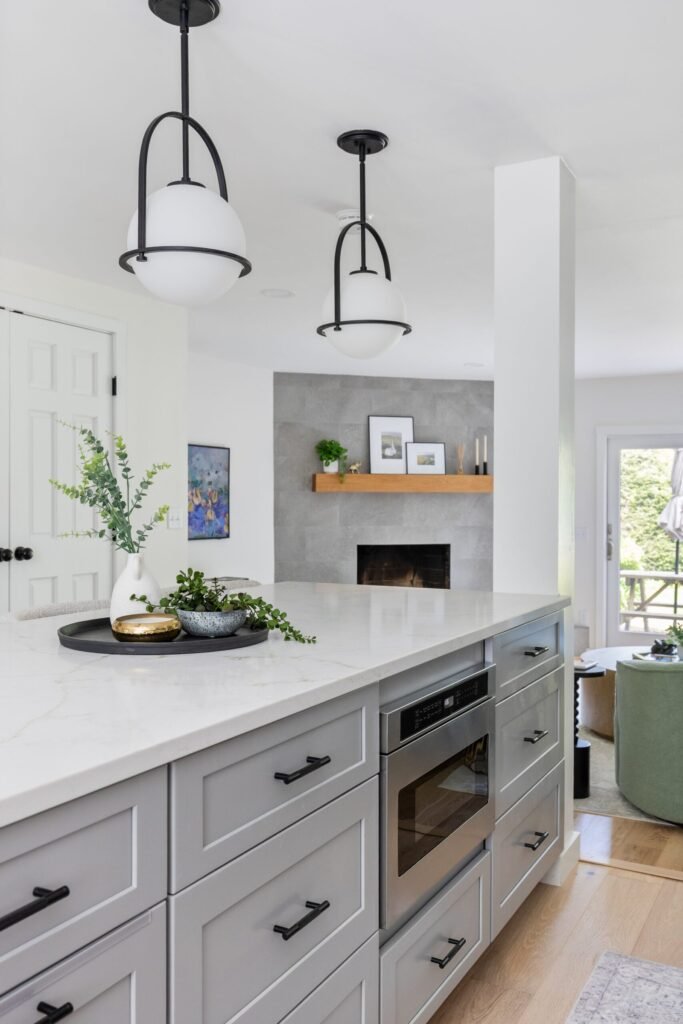
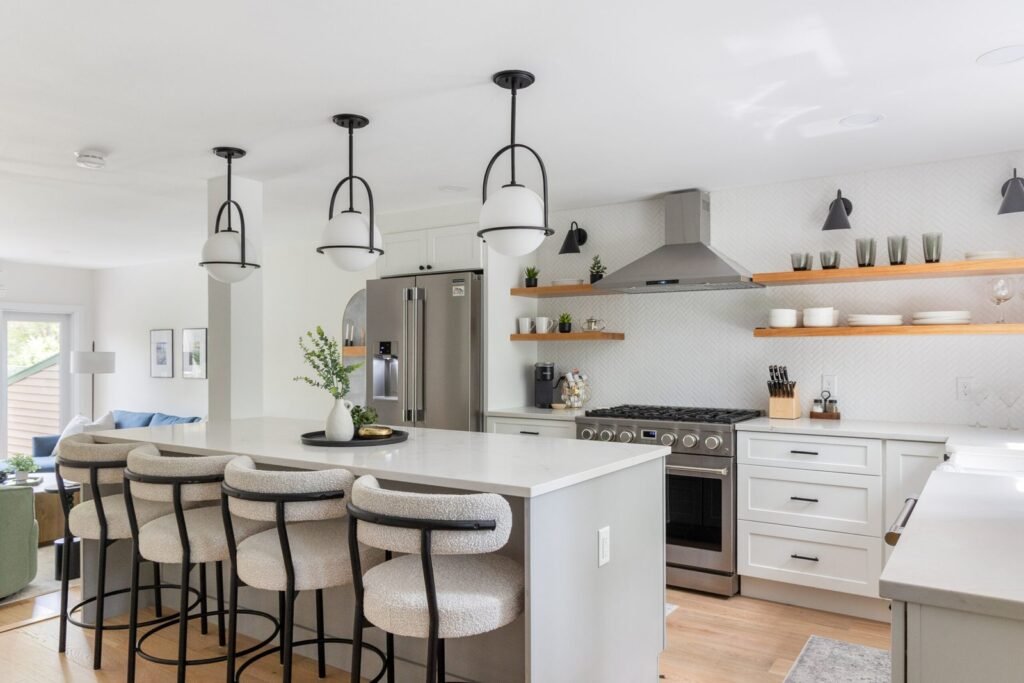
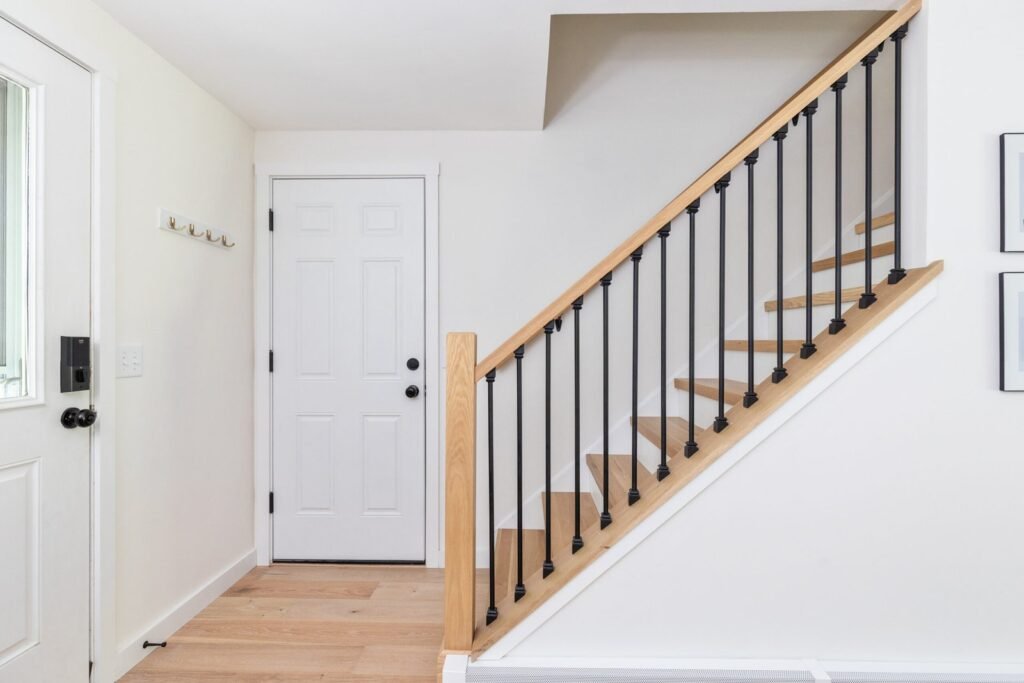
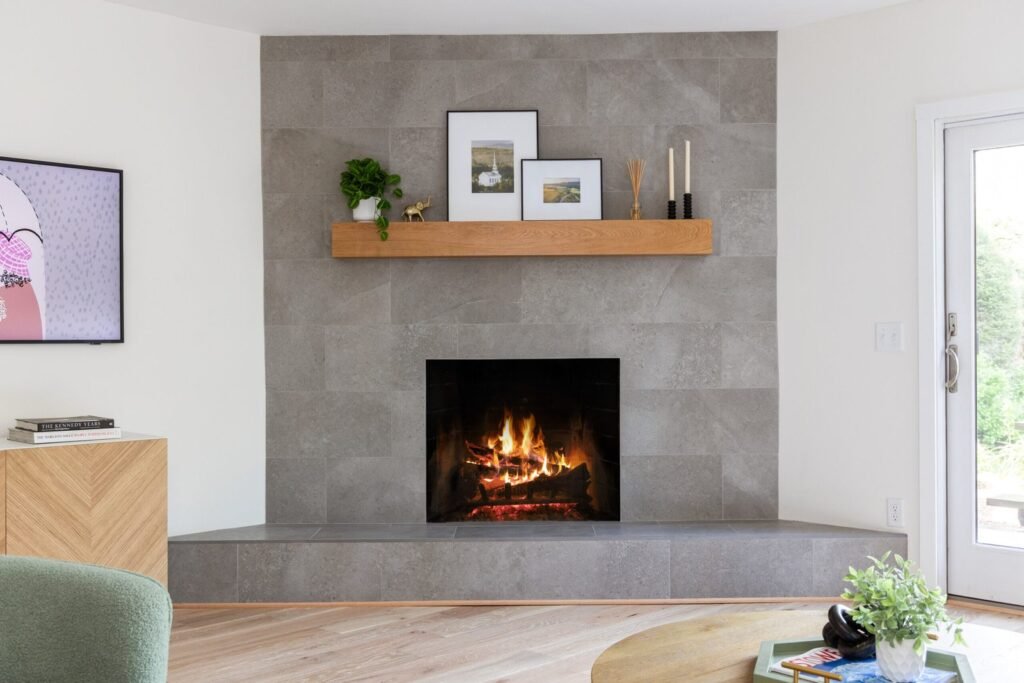
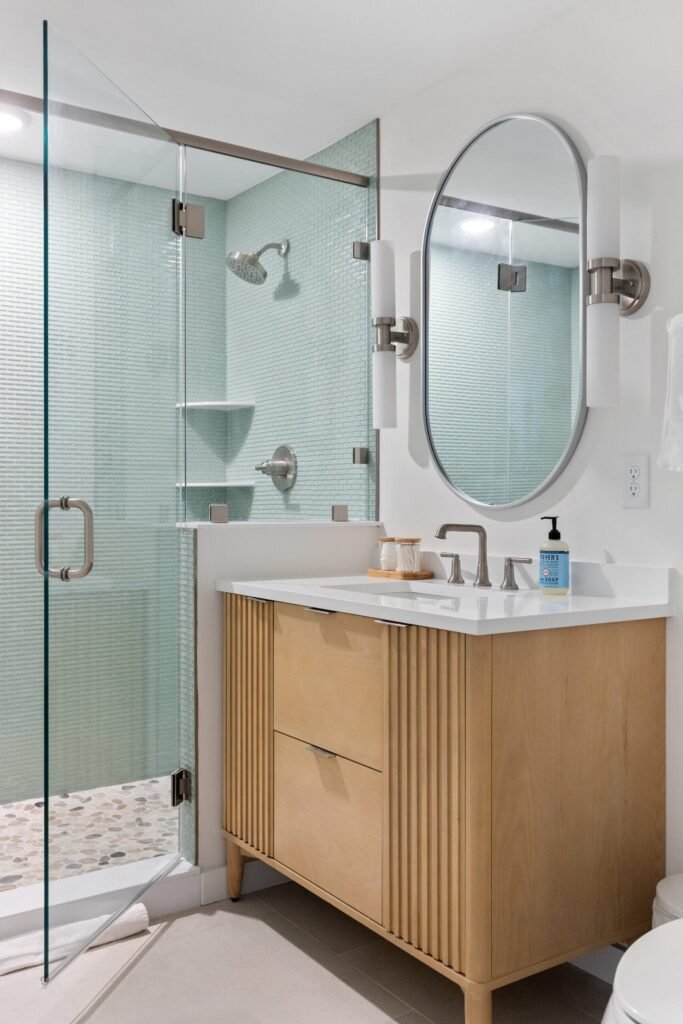
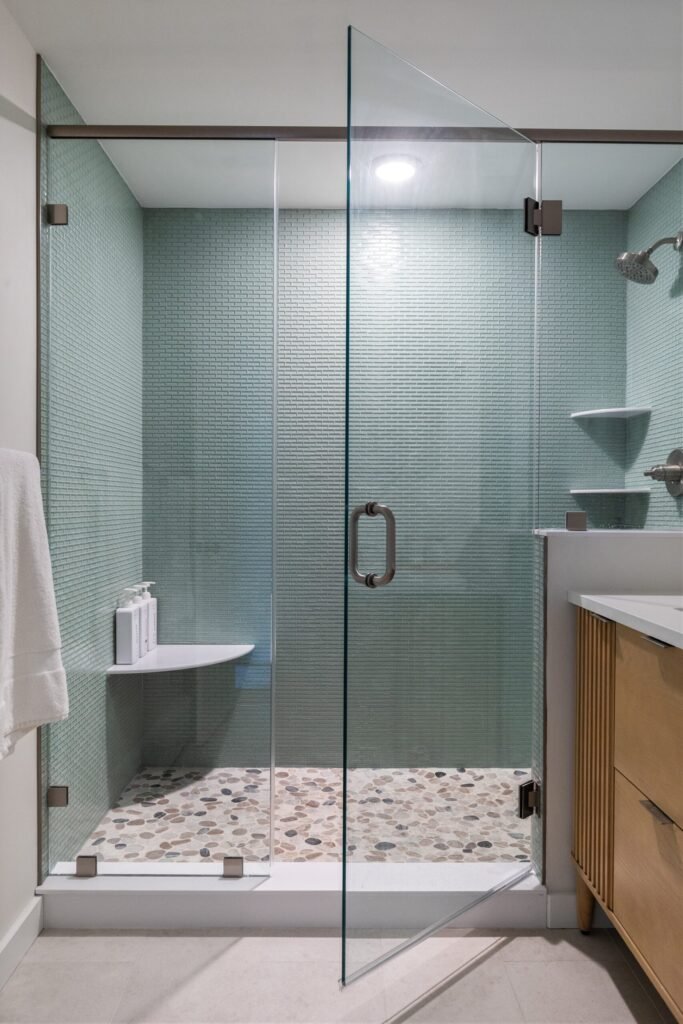
This full condo renovation in Stowe, VT began by opening up a space that used to feel closed in. The kitchen sat behind its own doorway, cut off from the living room, so one of the first things we did was take that wall down. With it gone, natural light finally moves through the whole main level, and the kitchen and living room feel like one continuous space instead of two separate rooms.
The kitchen is two-toned: white cabinetry along the perimeter, a contrasting grey island, both topped in Quartz Calacatta Gold. At the window, a farmhouse sink looks out over the trees. Three statement pendants hang above the island, where new seating already feels like the natural gathering spot. Behind the range, oak floating shelves take the place of upper cabinets, giving the real backdrop room to shine: white herringbone tile that runs all the way to the ceiling.
Just off the kitchen, the stairwell used to be closed off and dark. Now it opens up with oak treads, a matching oak handrail, and black balusters that let light and sightlines pass through instead of closing the space off. New wood flooring carries that same warmth through the rest of the main level, and recessed lighting throughout the condo means every one of these details finally gets to be seen.
The living room’s fireplace went through its own transformation. What was once a brick surround with a rough-hewn mantel, more rustic cabin than mountain modern, is now tiled floor to ceiling in a large format tile, topped with a clean oak mantel that ties back to the wood tones running through the rest of the condo.
The bathroom needed a full layout change more than anything else. It used to be a beige, dated space with a sliding shower door that made the whole room feel smaller than it was. Now translucent, spa-like mosaic tile runs floor to ceiling in the shower, stone pebbles cover the floor underfoot, and a glass door replaces the old sliding track. An oak vanity, new mirror, and new wall sconces round out a space that finally feels complete.
New trim, new interior doors, paint, lighting, heating, plumbing and hardware run throughout, the kind of details that don’t show up in any single photo, but change how the whole condo feels to walk through.
Vote For Best Remodel/Renovation
Best Multi-Family Home – Over 5 Units
Snyder Braverman Development Company
200 Garden Apartments
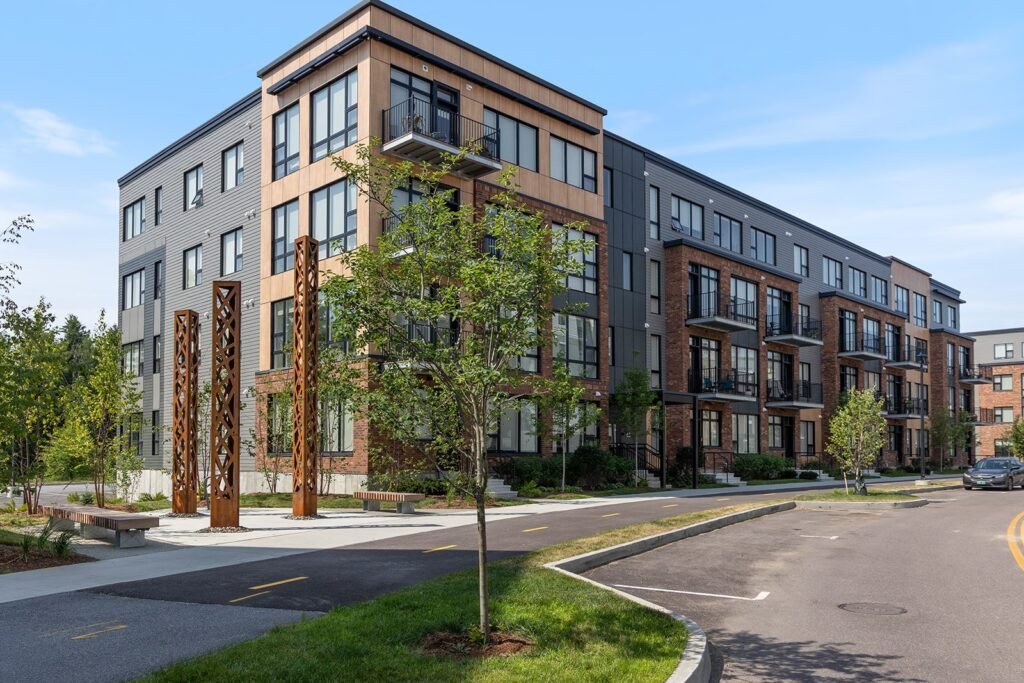
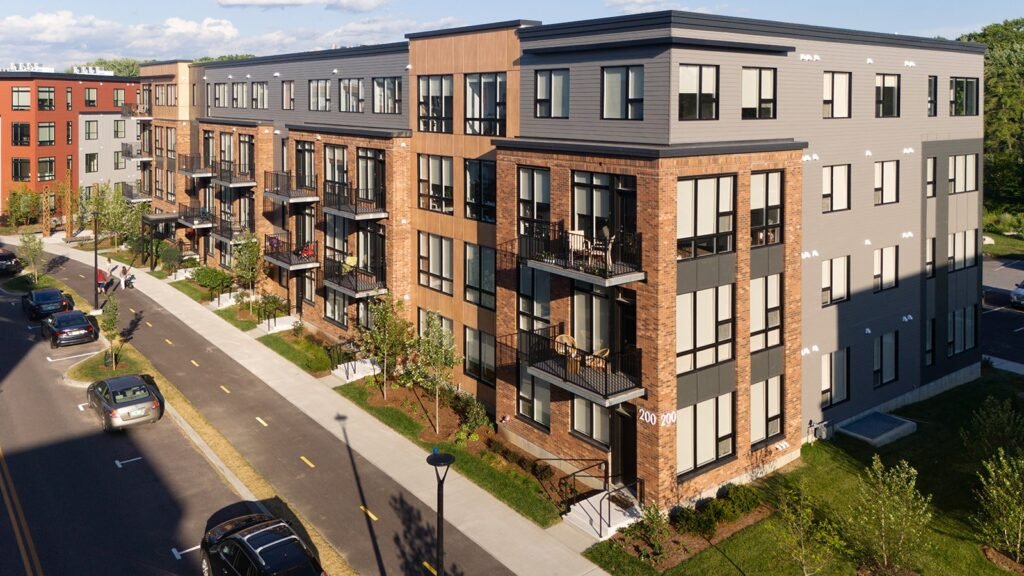
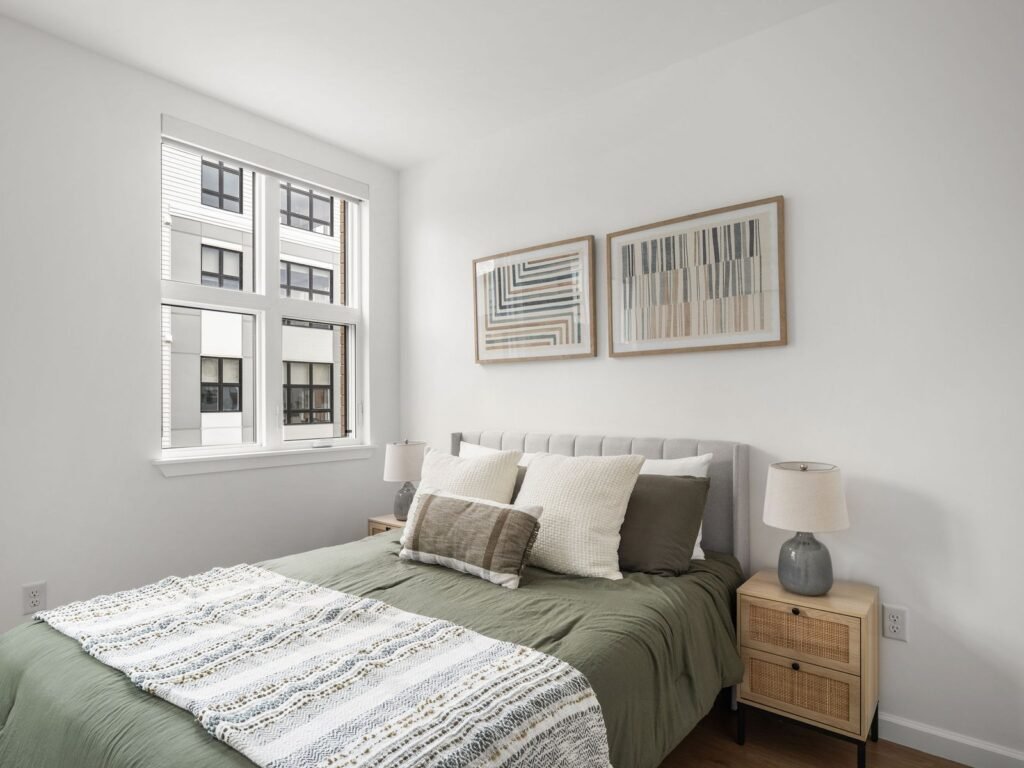
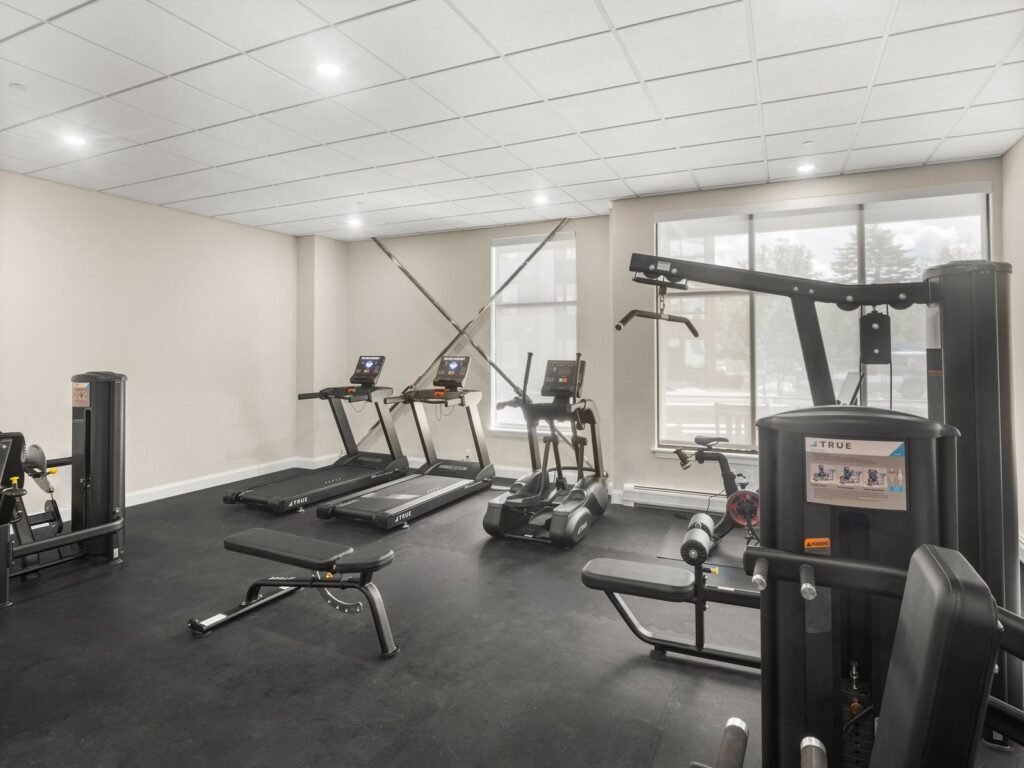
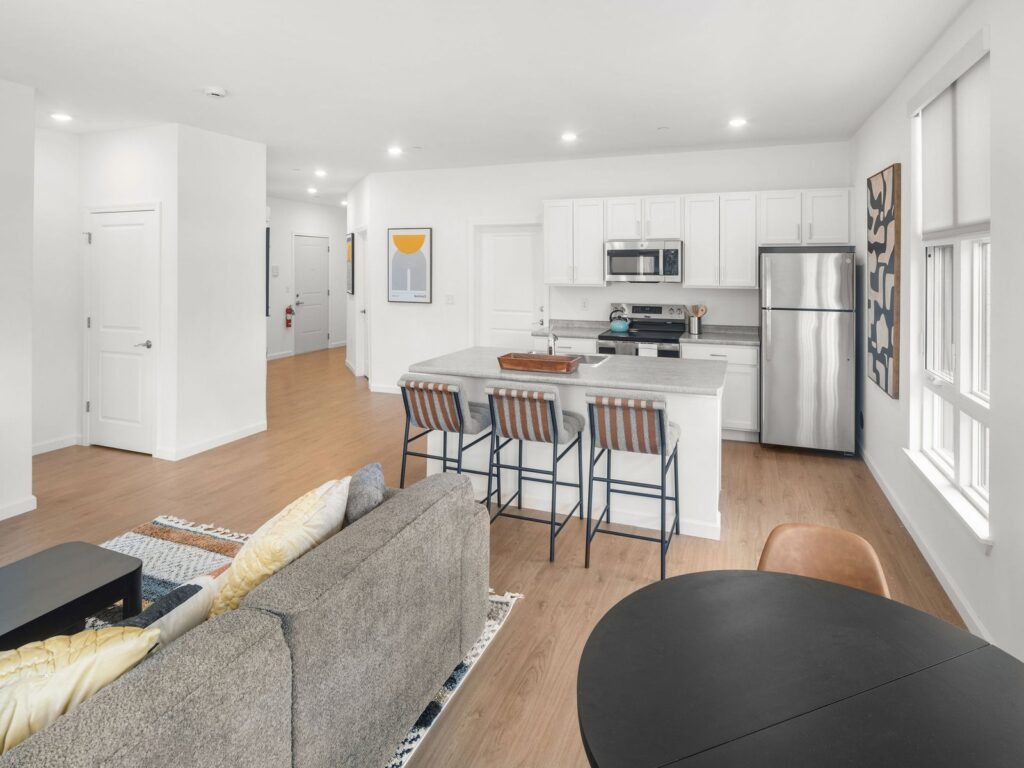
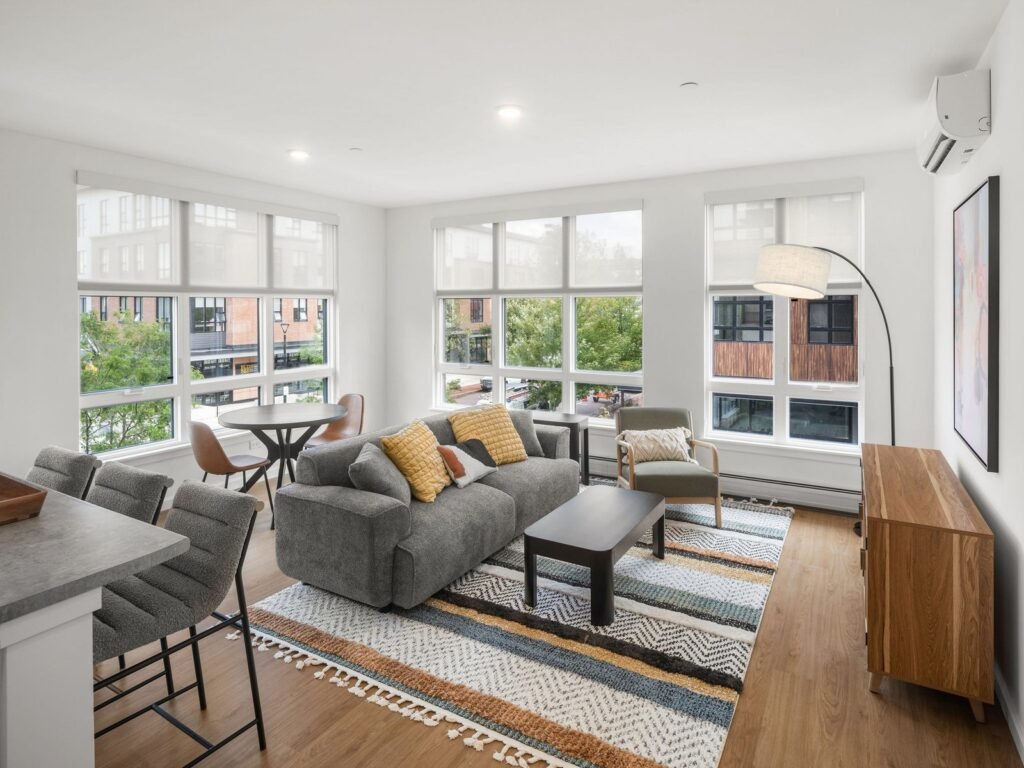
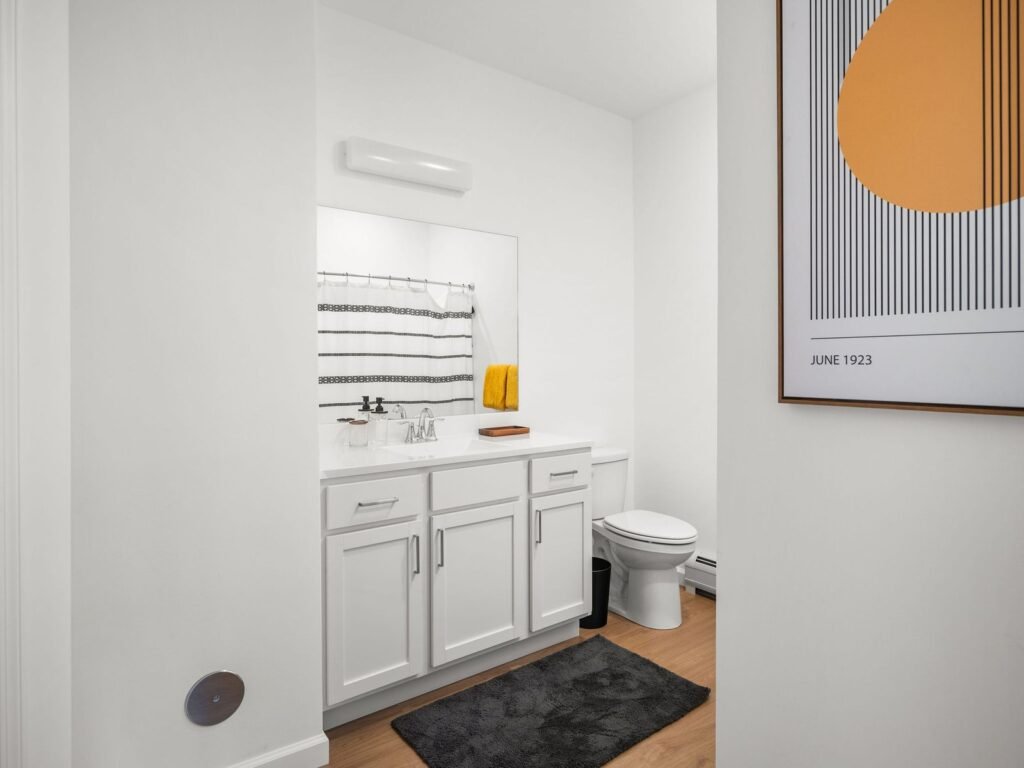
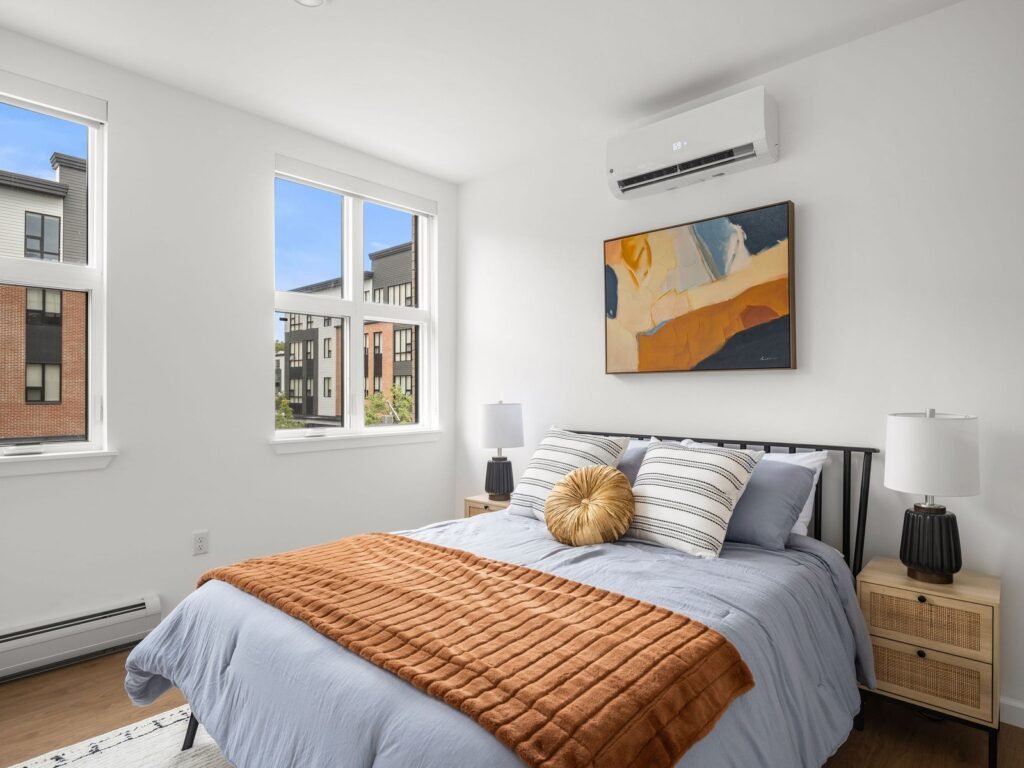
Owner/Developer: Snyder Braverman Development Company
Contractor: Snyder Construction Company
We are excited to be submitting a Better Homes Award to Vermont Homebuilders Association for a 46-unit apartment building located in South Burlington City Center that was completed in March, 2026.
Set within a growing mixed-use district designed to support walkable living, neighborhood-scale density, and convenient access to employment, services, recreation, and transit, the project contributes much-needed housing while reinforcing the City Center vision: a vibrant, connected place where residents can live close to daily amenities and participate in a stronger local community.
This building includes a mix of studio, one-bedroom, and two-bedroom units, offering housing options for a range of residents and household needs. The design emphasizes a comfortable resident experience through practical layouts, along with these included features: a fitness room, underground parking, balconies along Garden Street.
This multi-family building was designed and efficient, all-electric heating system and includes a 115kW rooftop solar array to offset a portion of the building’s energy needs back to the grid.
The project required careful coordination across design, site work, building systems, envelope performance, and interior finishes. The construction of the building focuses on durable exterior assemblies, efficient mechanical systems, comfortable unit finishes and shared spaces that will serve residents well over time.
• Efficient layouts across studio, one-bedroom, and two-bedroom homes that balance comfort, functionality, and long-term maintainability.
• Exceed State of Vermont and City of South Burlington energy code and goals.
• Includes an all-electric heating system
• Durable materials selected for everyday residential use and Vermont’s climate.
• Coordinated building systems designed to support dependable performance and resident comfort.
• Attention to common areas, circulation, underground parking, balconies along Garden Street, and exterior presence to create a welcoming multi-family environment.
This 46-unit apartment building represents the kind of project Vermont communities need: well-located housing, thoughtfully planned density, durable construction, and a design approach that strengthens a growing downtown district. It demonstrates that multi-family housing can be practical, attractive, community-oriented, and built to a standard worthy of recognition by Vermont’s residential building industry.
Vote For Best Multi-Family Home – Over 5 Units
Best Exterior – Roofing/Siding/Window Design/Deck
Sterling Homes
KLH
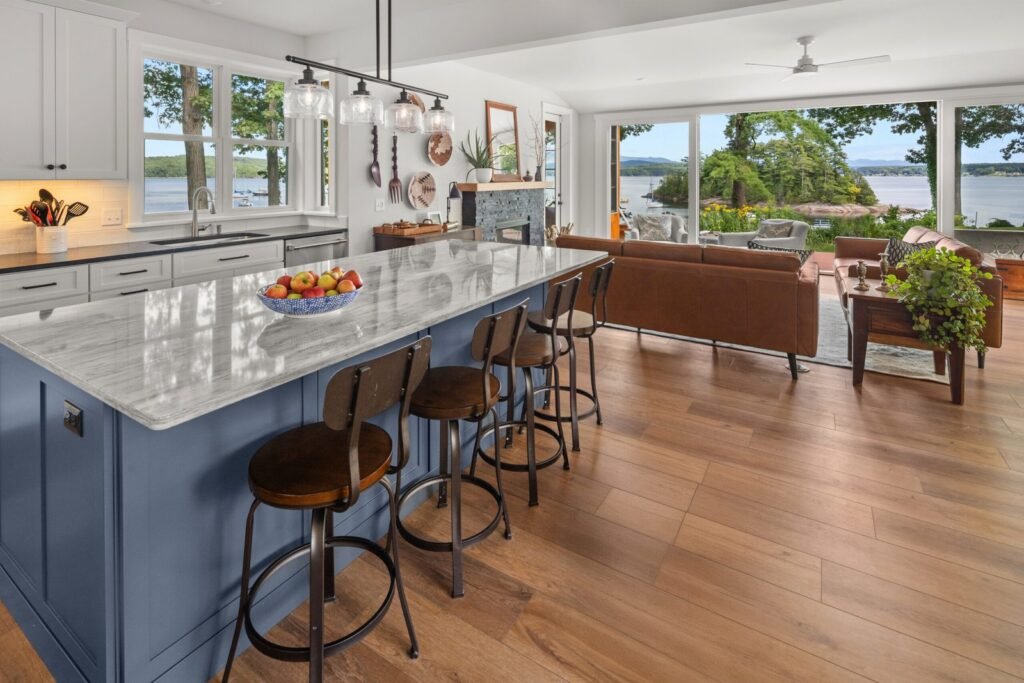
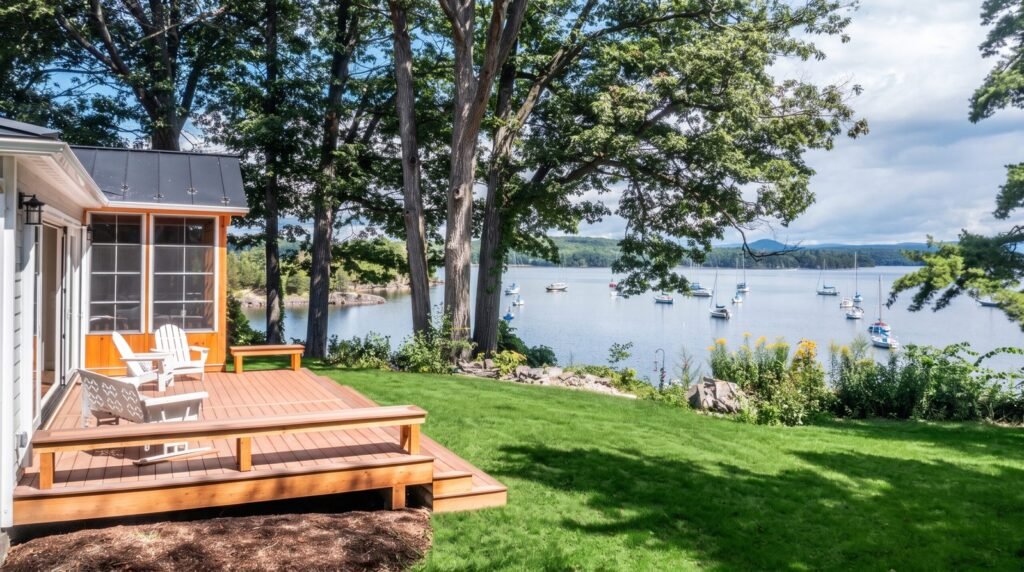
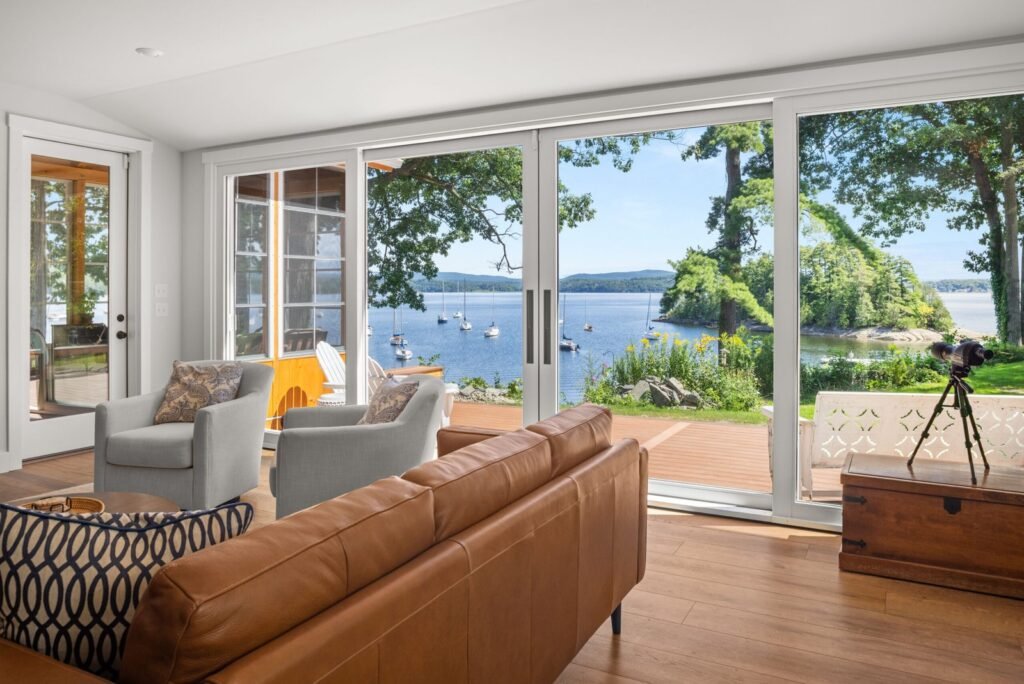
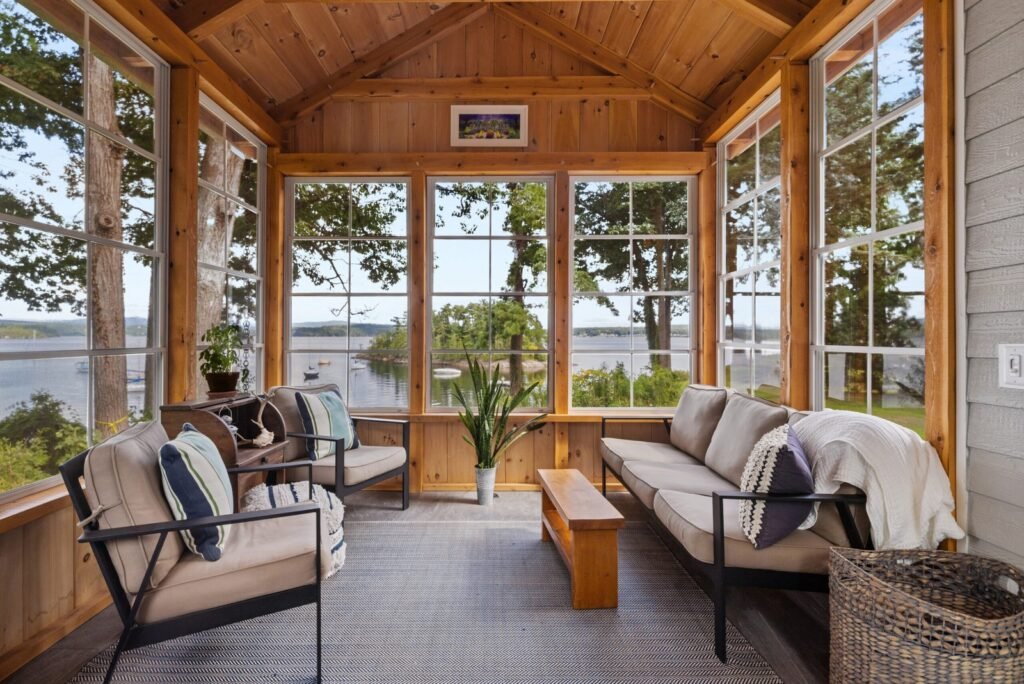
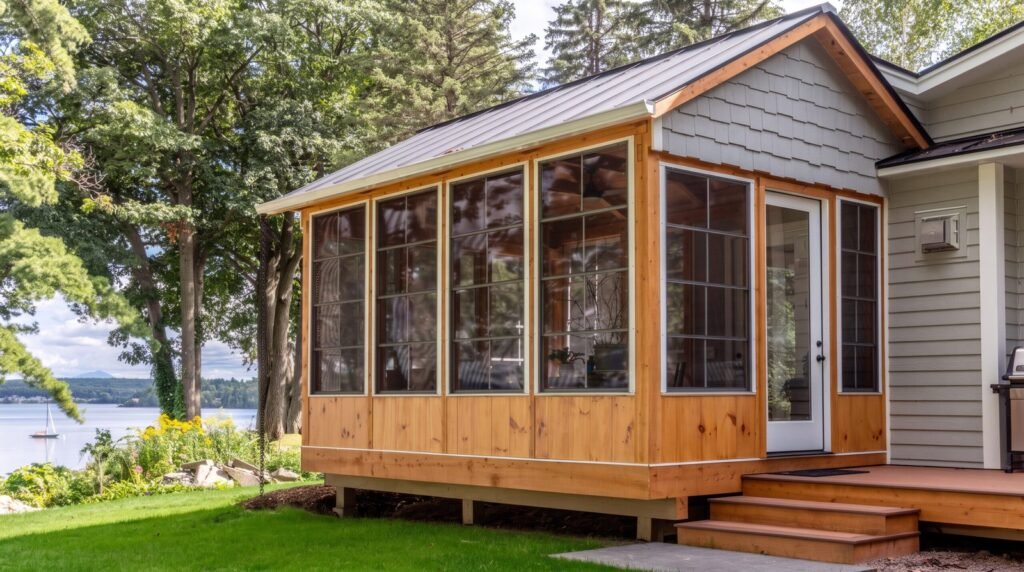
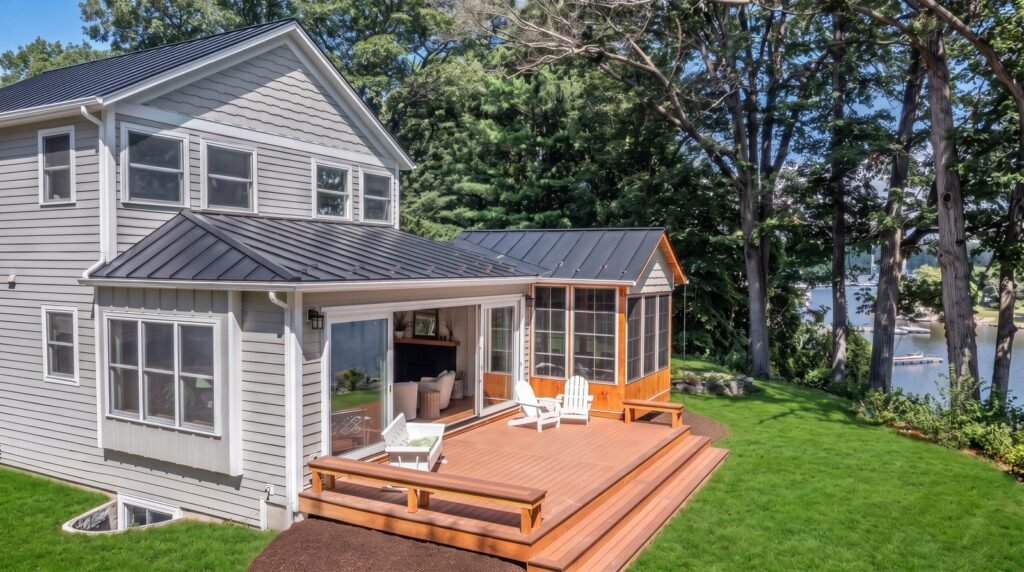
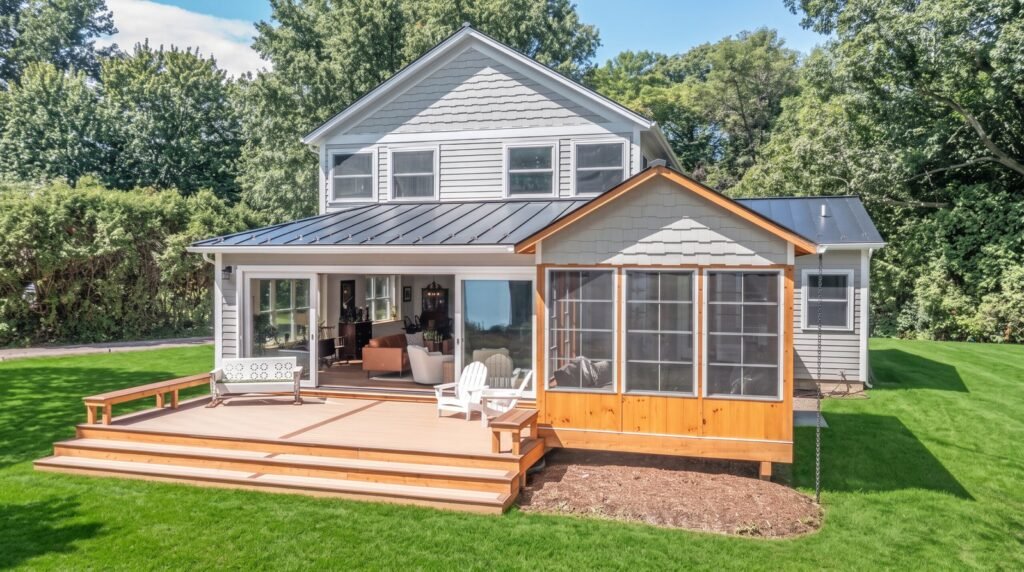
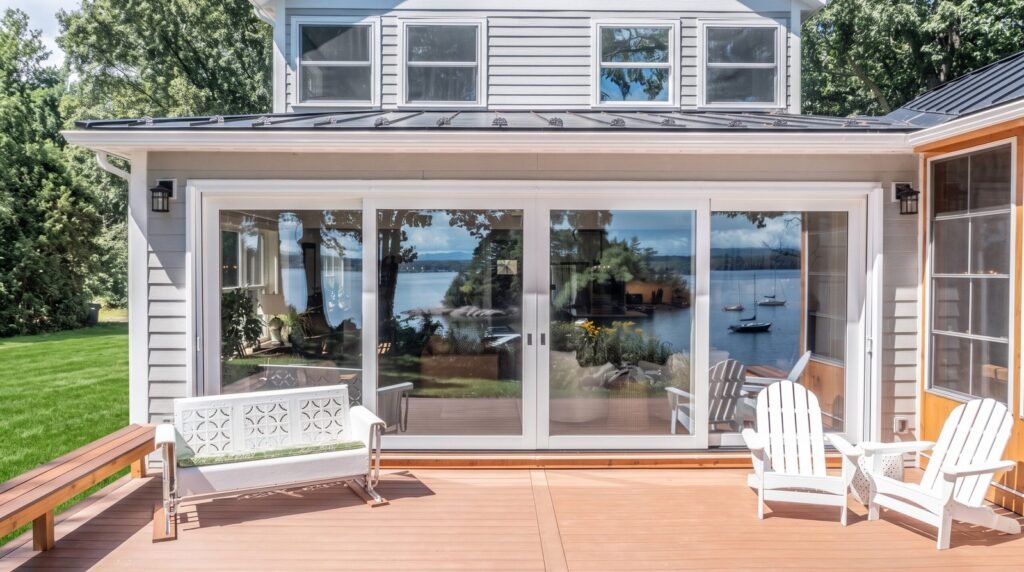
This new custom lakeside home was designed around a simple but powerful idea: make the lake feel like part of everyday life. Every major exterior decision supports that goal, from the calm material palette to the way the porch, deck, stairs, and sliding glass doors work together to capture views of Lake Champlain and Mt. Mansfield beyond. The result is a home that feels open, grounded in its natural surroundings, and comfortable through every season.
The exterior palette sets the tone with a balanced mix of gray siding, crisp white trim, black metal roofing, and warm cedar. The combination is refined without feeling overly formal, giving the home a quiet lakeside character that feels appropriate for its setting. The use of cedar is especially important, adding natural warmth and texture against the cleaner painted surfaces while helping the architecture feel more connected to the surrounding trees, shoreline, and changing light.
The exterior succeeds because its key features work as one cohesive design system. The three-season porch, open deck, broad stair system, and large sliding glass doors create a clear progression through the home and site: from the interior living spaces to the sheltered porch, across the deck, down toward the lawn, and finally to the lake.
The three-season porch anchors this experience. Its cedar timber framing brings craftsmanship and warmth to the gray LP SmartSide siding and white trim, creating a space that feels both substantial and inviting. Large screened openings frame the lake and mountains beyond while allowing light, air, and breezes to move through the space. The porch gives the homeowners a protected place to enjoy the waterfront through much of the year, whether they are gathering with friends, sitting quietly in the morning, or watching the weather move across the water.
From the porch, the design opens naturally onto the deck, which becomes the home’s main outdoor gathering space. Built with AZEK TimberTech decking from the Vintage Collection, it offers the warmth and character of natural wood with the durability and low-maintenance performance needed in a waterfront environment. Built-in benches along the side provide additional seating while also creating a practical barrier at the deck edge, helping define the gathering area and adding a sense of comfort and security. The deck’s generous dimension supports dining, relaxing, and entertaining, but it remains carefully balanced with the home’s architecture so the outdoor living area feels integrated rather than oversized.
The broad stair system continues that movement outward. More than a way to reach grade, the stairs guide the elevated deck down toward the lawn and lake, giving the exterior a sense of invitation and rhythm. Their width and placement make the transition feel generous and intentional, encouraging the home to flow into the landscape instead of stopping at the edge of the deck.
The large sliding glass doors complete the sequence by bringing the outdoor experience back inside. When open, they allow the interior living areas, porch, and deck to function as one continuous gathering space. When closed, the expansive glass keeps the lake, trees, and changing seasons in view, so the waterfront and mountain setting remain present in daily routines. This connection is one of the home’s strongest design achievements: the exterior does not simply surround the house; it extends the way the home is lived in.
Together, these details create an exterior that feels thoughtful, welcoming, and deeply tied to the lakeside environment. Cedar framing, aligned rooflines, contrasting trim, expansive glass, broad stairs, and clean deck detailing all support the same vision: a custom home designed for beauty, durability, and everyday connection to the water.
This home’s thoughtful design turns the lake into more than a view. It becomes part of the home’s rhythm—visible from inside, accessible from outside, and woven into the daily experience from the first design decision to the final detail.
Blue Sky Roofing & Custom Exteriors
Oakledge Energy Retrofit & Standing Seam
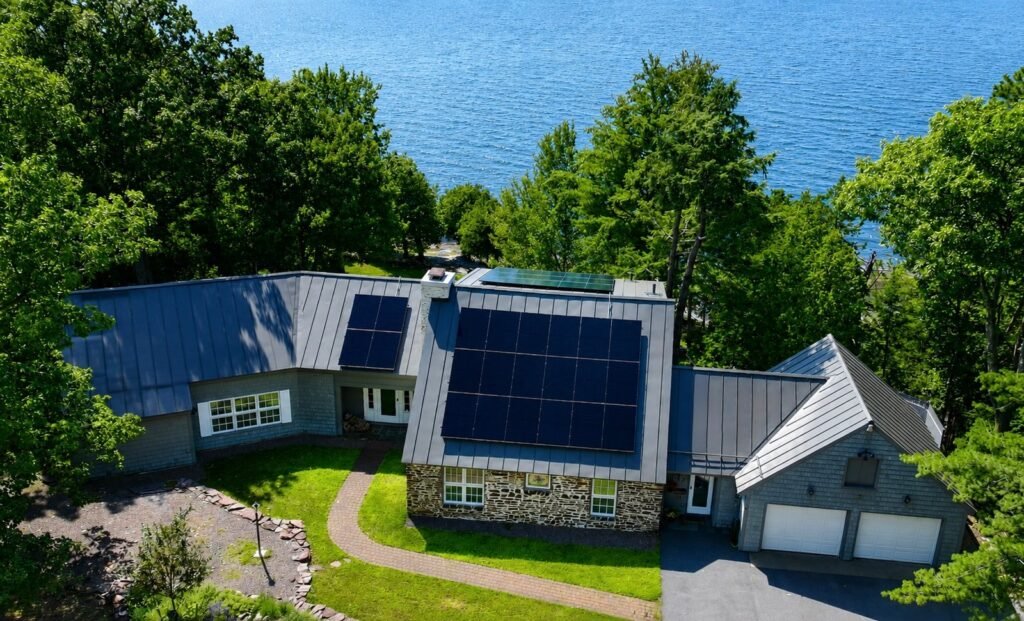
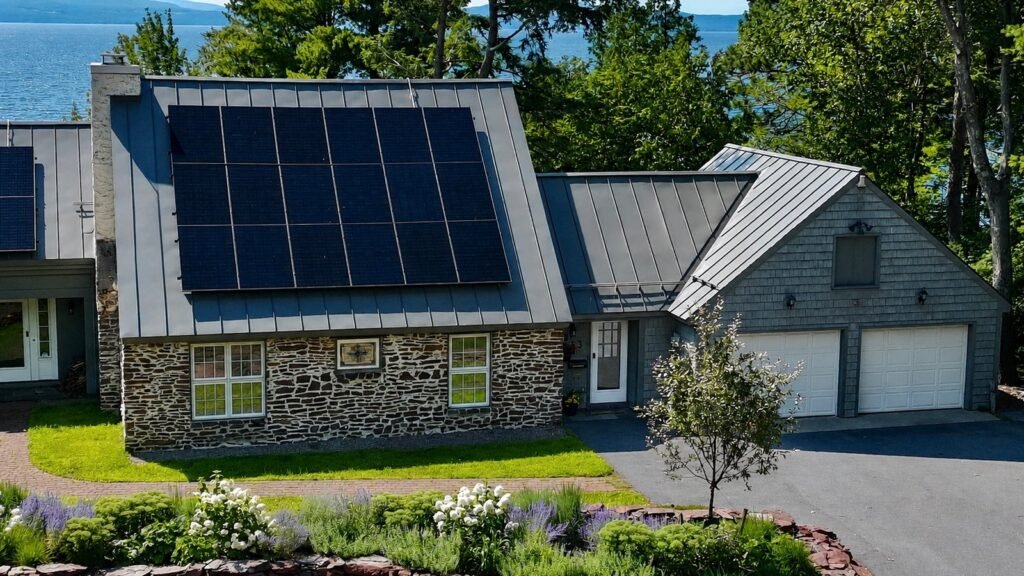
This project transformed an aging lakeside residence into a high-performance, energy-efficient building envelope through a comprehensive deep energy retrofit and premium standing seam metal roofing system.
Blue Sky Roofing & Custom Exteriors removed the existing asphalt shingle and EPDM roofing systems, along with the original R-19 and R-30 fiberglass insulation. To maximize thermal performance, the existing roof sheathing was removed, allowing Building Energy to install R-53 closed-cell spray foam within the roof assembly and R-23 closed-cell spray foam in the knee walls. A code-compliant intumescent fire-protective coating was then applied throughout the attic spaces.
Throughout the insulation process, Blue Sky Roofing coordinated daily with Building Energy to ensure the structure remained weather-tight, despite the roof remaining open during portions of construction. This level of collaboration was critical given the property’s exposure along Lake Champlain.
To create a durable, high-performance vented roof assembly, Blue Sky installed 5 inches of continuous rigid insulation above the roof deck, followed by vertical strapping and 5/8-inch AdvanTech sheathing, creating an uninterrupted ventilation channel from soffit to ridge. Existing soffit ventilation was preserved and enhanced to promote long-term roof performance and moisture management.
The finished roof consists of Englert 24-gauge standing seam metal roofing with factory powder-coated accessories, including snow retention, pipe flashings, exhaust vents, and matching trim components. Additional exterior improvements included paint-matched Boral fascia and new stucco detailing to modernize the building envelope while maintaining architectural integrity.
The completed assembly was designed to support a rooftop solar array, resulting in a highly durable, energy-efficient roofing system that dramatically improves thermal performance, reduces energy consumption, and provides decades of low-maintenance service. The project demonstrates how traditional reroofing can evolve into a comprehensive building performance upgrade through collaboration, innovative detailing, and quality craftsmanship.
This project exemplifies the integration of advanced insulation strategies, continuous exterior insulation, ventilated over-roof construction, premium architectural metal roofing, and renewable energy—setting a benchmark for sustainable residential construction in the challenging climate of northern Vermont.
Vermont Custom Handrails & Metalwork LLC
Epic Multi-Level Deck Transformation
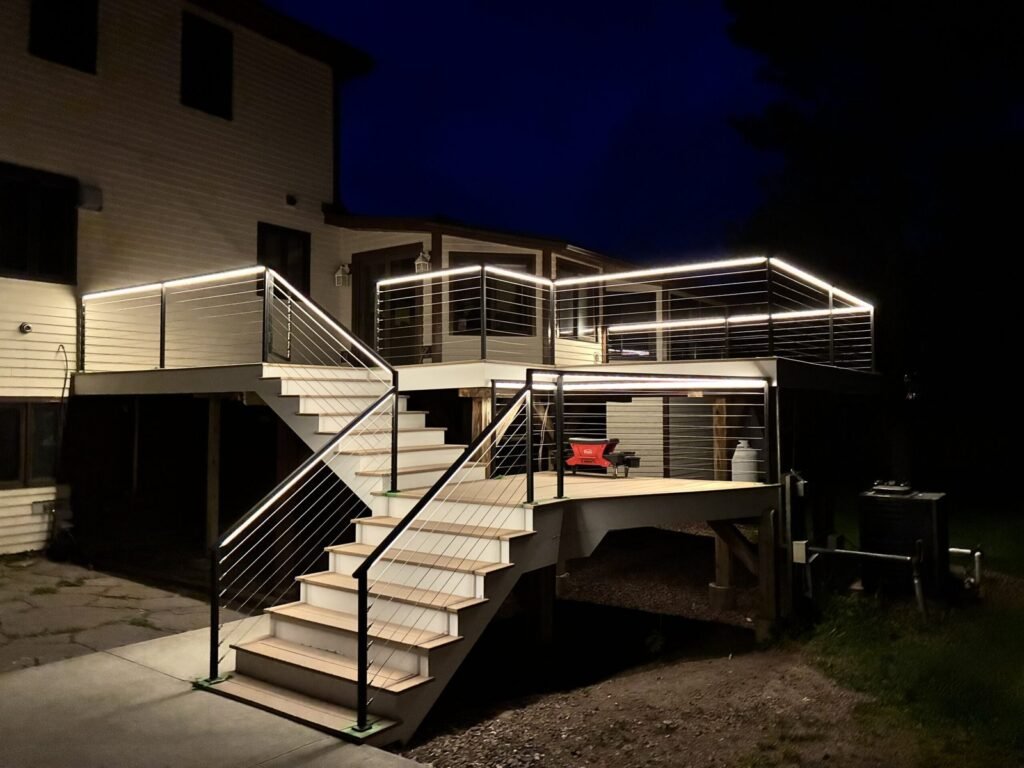
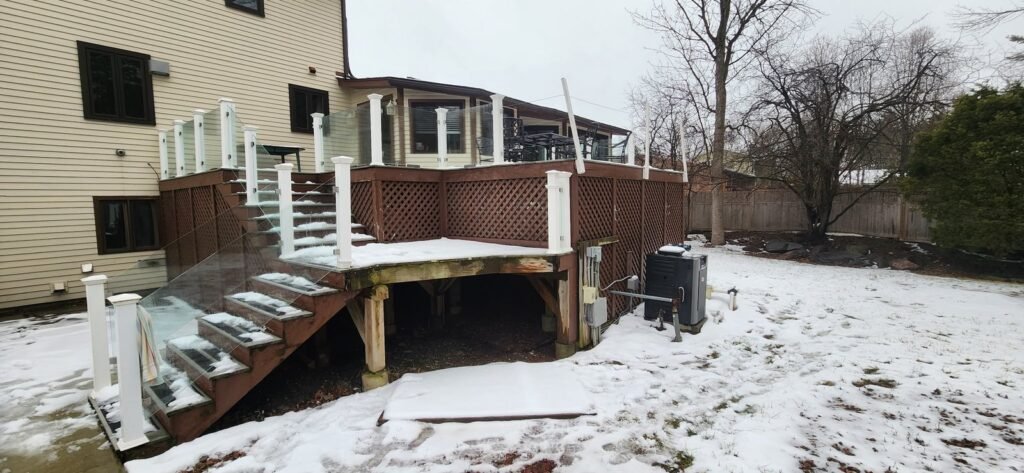
Deck rebuild with LED cable railings…
wrappung up this deck rebuild. We rebuilt the stairs and landing as well as other framing work to repair some rot, blocked it out for a proper parameter nosing, and added structural support as needed.
Decked it with @trexcompany carmel enhanced decking. Added composite fascia all around, with properly mitered skirt boards and risers on the stairs.
Finished it off with our custom 1.5″ custom LED cable railing.We transformed this rotting deck into an epic masterpiece for this awesome customer in Burlington.
Here is a video reel of the project from start to finish:
https://www.facebook.com/share/v/1DLCXAoi1x/
Vote For Best Exterior – Roofing/Siding/Window Design/Deck
Best Accessory Dwelling Unit (ADU)
TS Renovations
The Spruce
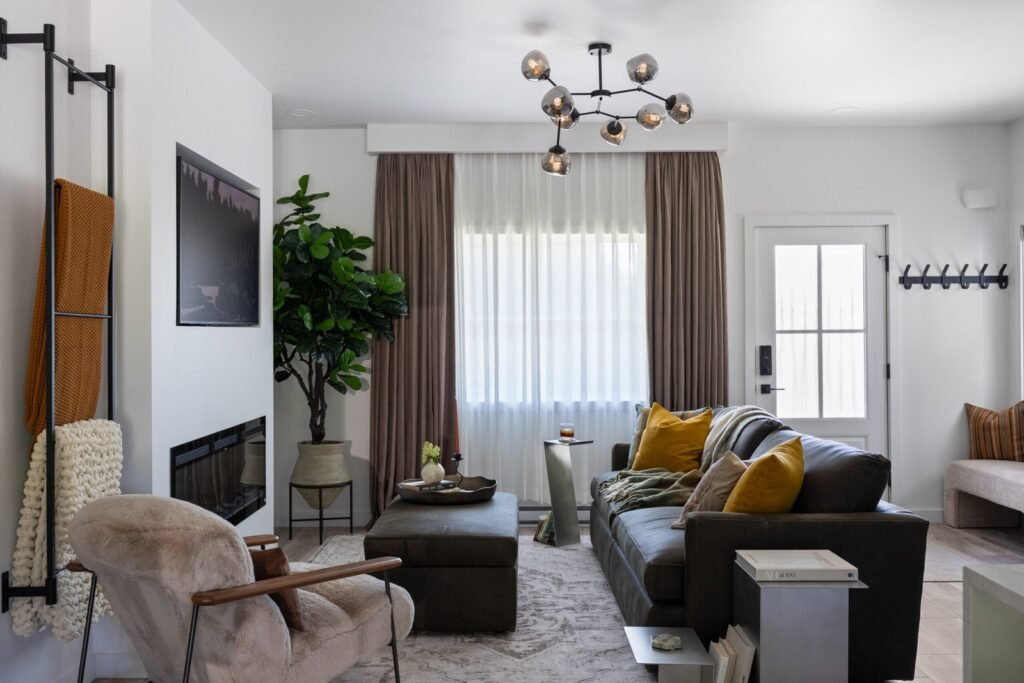
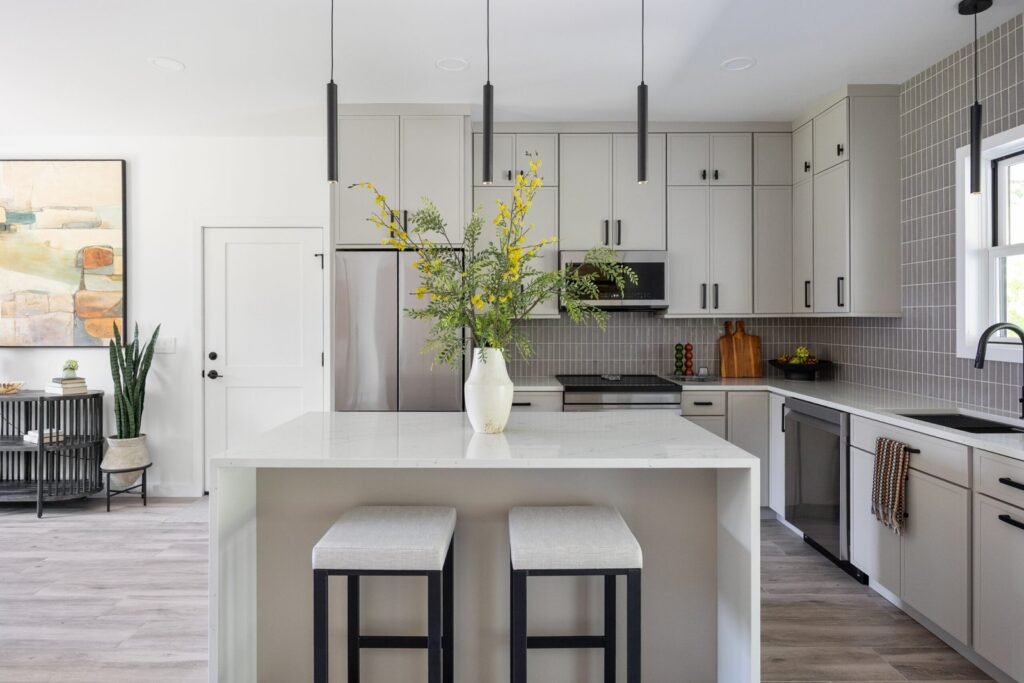
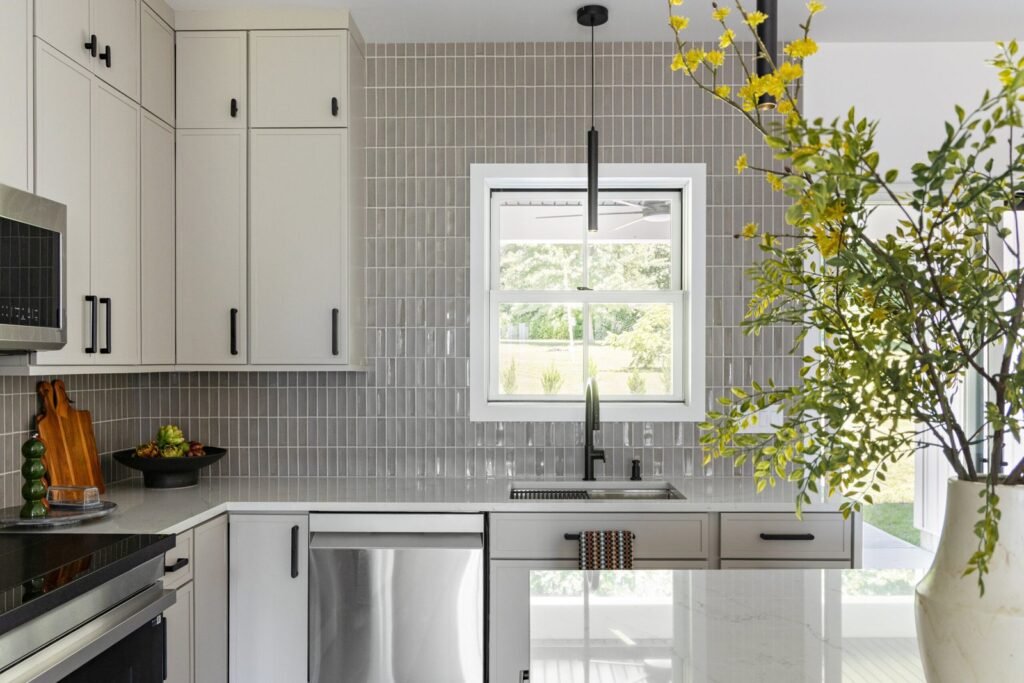
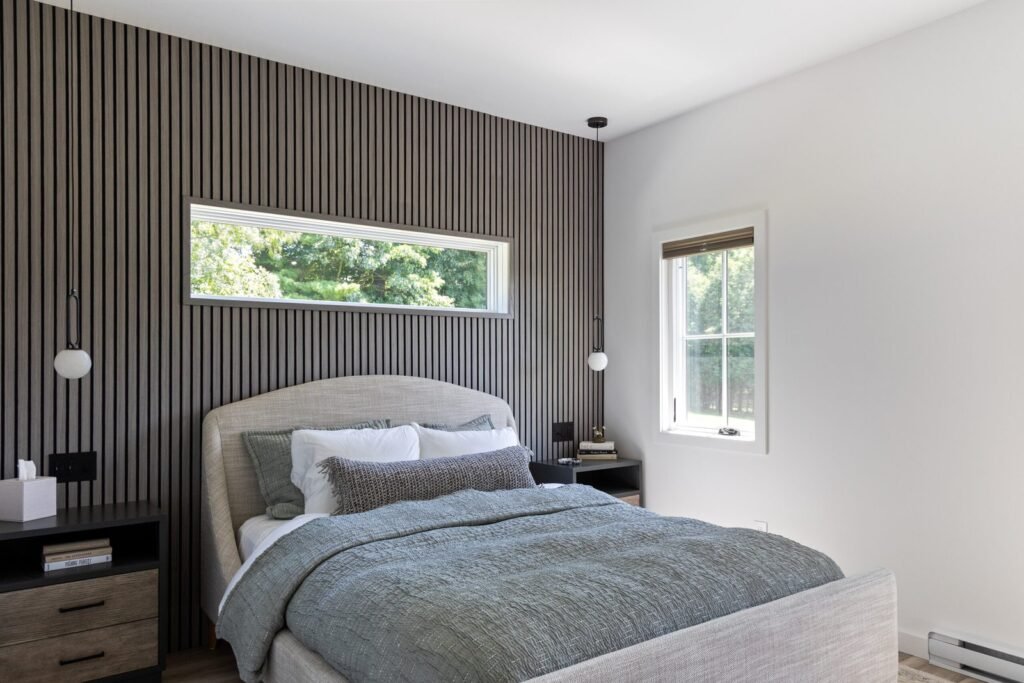
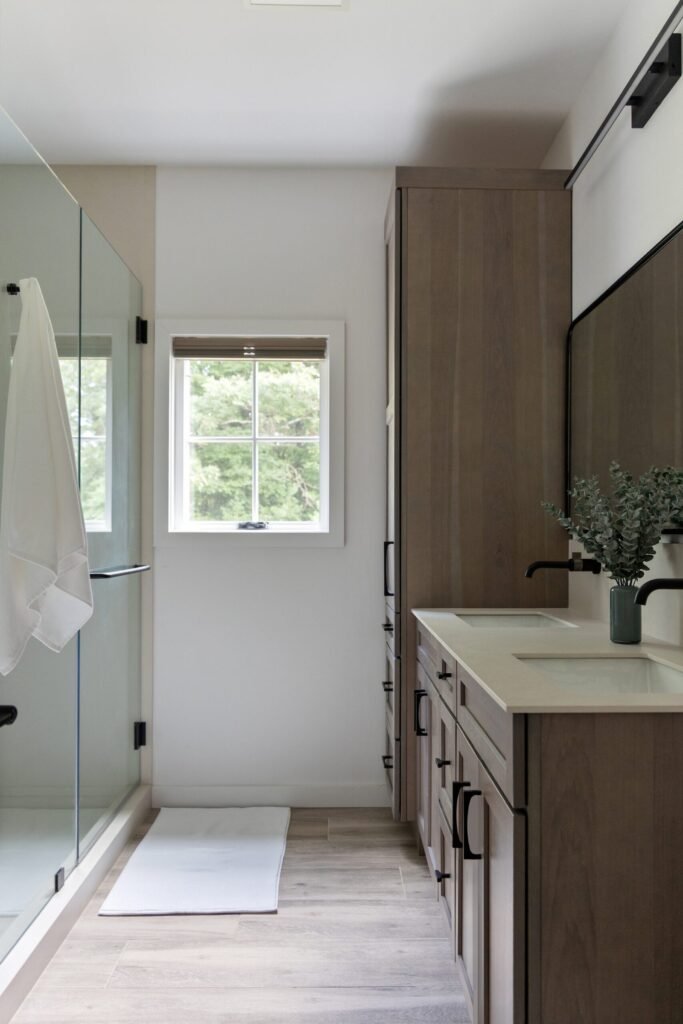
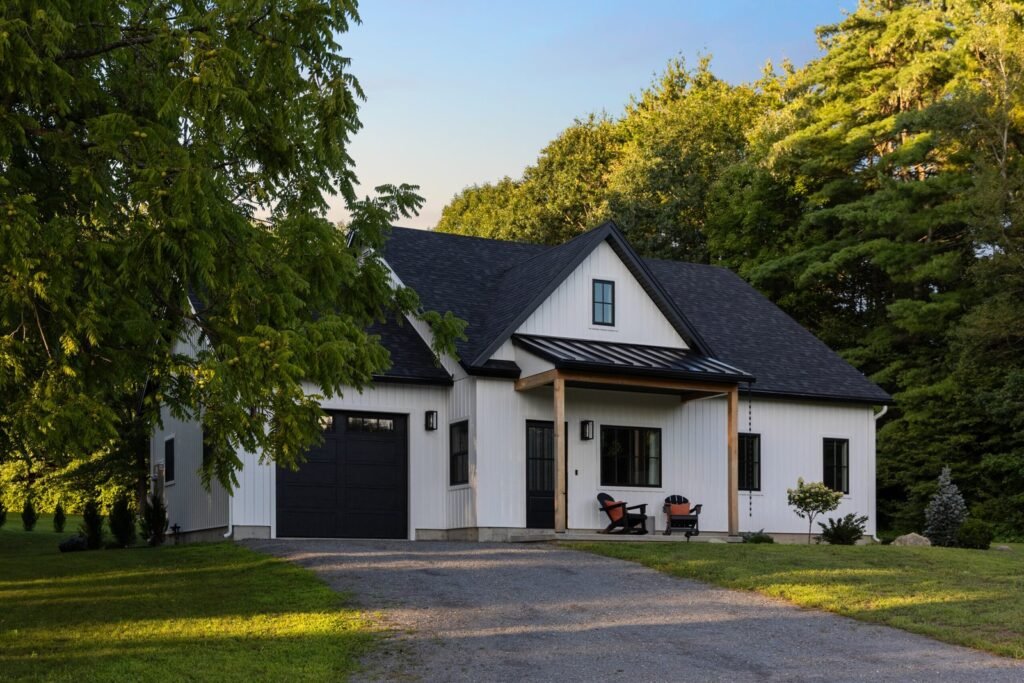
The Spruce is a 900-square-foot accessory dwelling unit in Milton, Vermont, designed and built entirely in-house start to finish. At two bedrooms, one bath, and a one-car garage, it stands as proof that a small footprint, approached with real intention, can offer the same comfort and finish as a full-sized home.
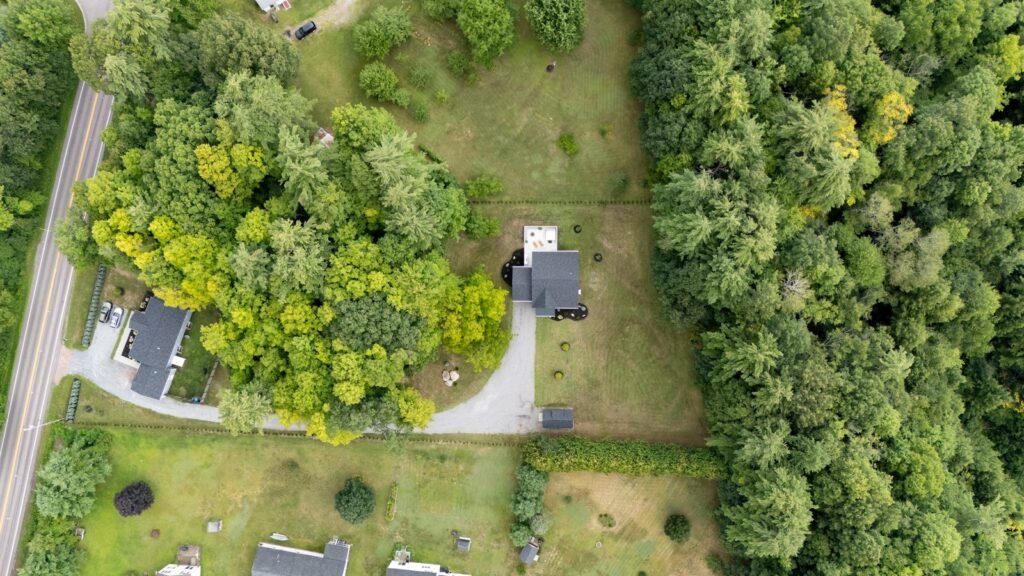
The Spruce was built as a detached home tucked into a private, wooded section of the lot, ready for family when the time comes for them to live closer, and generating rental income in the meantime. Surrounded by trees and set apart from the main house, it works equally well for family and for guests. With that long view in mind, the materials and the aesthetic were both chosen to last, nothing trendy enough to feel dated in five years, nothing built to be replaced.
Every decision on this project, from the layout down to the pillows on the couch, was made in-house and carried through from framing to furnished. That continuity, one thread of decisions from start to finish, let the project push further than a typical ADU build usually allows, treating a small footprint as an opportunity rather than a constraint. The goal was never to prove that 900 square feet could feel adequate. It was to prove that it could live large.
Step inside, and that intention shows up first in the kitchen, where cabinetry runs floor to ceiling in Wellborn Forest’s Auburn Plains door, a micro-shaker profile finished in Moonlight, a soft, warm taupe set against the cool white veining of MSI’s Calacatta Venato quartz on the island, its pattern running straight down to the floor in a waterfall edge. The backsplash behind it, WOW’s Skin Mink tile, alternates matte and gloss in a vertical stack set in iron grout, running the full height of the wall, the same material read two different ways. Marvin windows run throughout, letting in the kind of natural light a space this size depends on to never feel small.
Building an ADU at this level demands nearly the same infrastructure as a full house, just compressed onto a much smaller footprint. The Spruce needed its own tie-in to town water, its own septic system, its own driveway, and utilities run to its own corner of the lot, tucked away from the main house, before a single finish material went in. The design challenge ran parallel to the construction one, fitting a genuinely comfortable two-bedroom home into 900 square feet without it ever reading as compressed. Nine-foot ceilings throughout carry much of that weight, quiet and grounded from the outside, unexpectedly open once you’re in it, paired with a layout planned around how the space gets lived in and moved through, day to day.
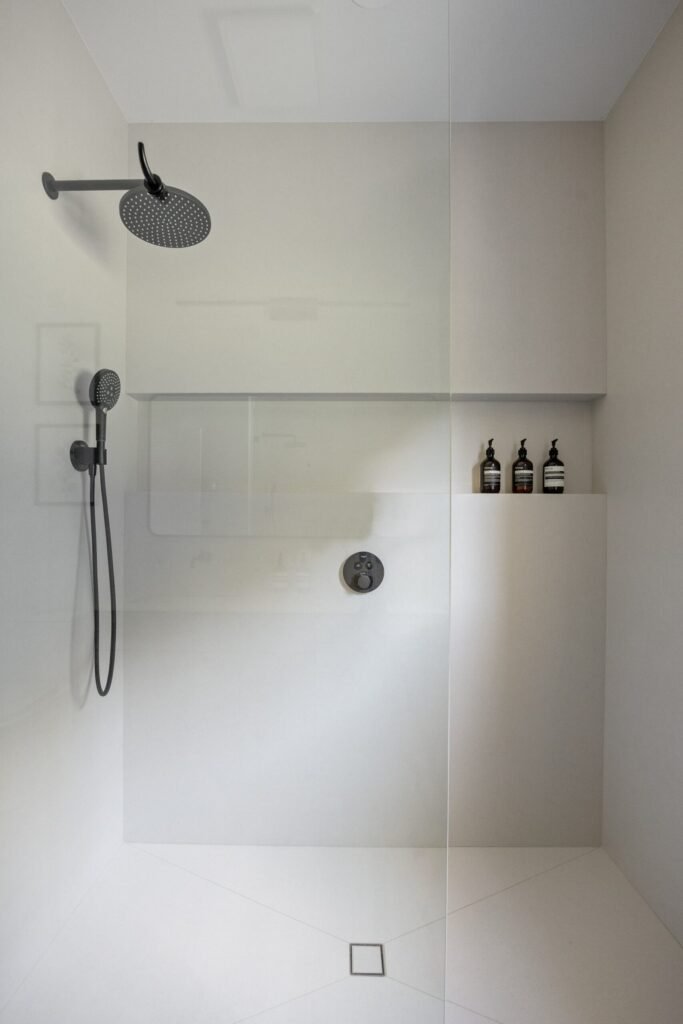
The bathroom took the same idea somewhere different. We’ve always loved tile for the texture and pattern it can bring into a space, but here we reached for something else. Dekton is a highly compacted surface usually seen on countertops, and we wanted it here for its clean, minimal look, a quieter counterpoint to the warmth built into the rest of the house. We ran it wall to wall into the niche and mitered every edge, curb included, so the whole shower reads as one continuous surface.
Completed in 2026, The Spruce stands as a clear answer to what a small space can become when every choice, inside and out, is made with intention rather than convention.